Kernel: building for food security at the University of Michigan
30% of students at the University of Michigan are food insecure.
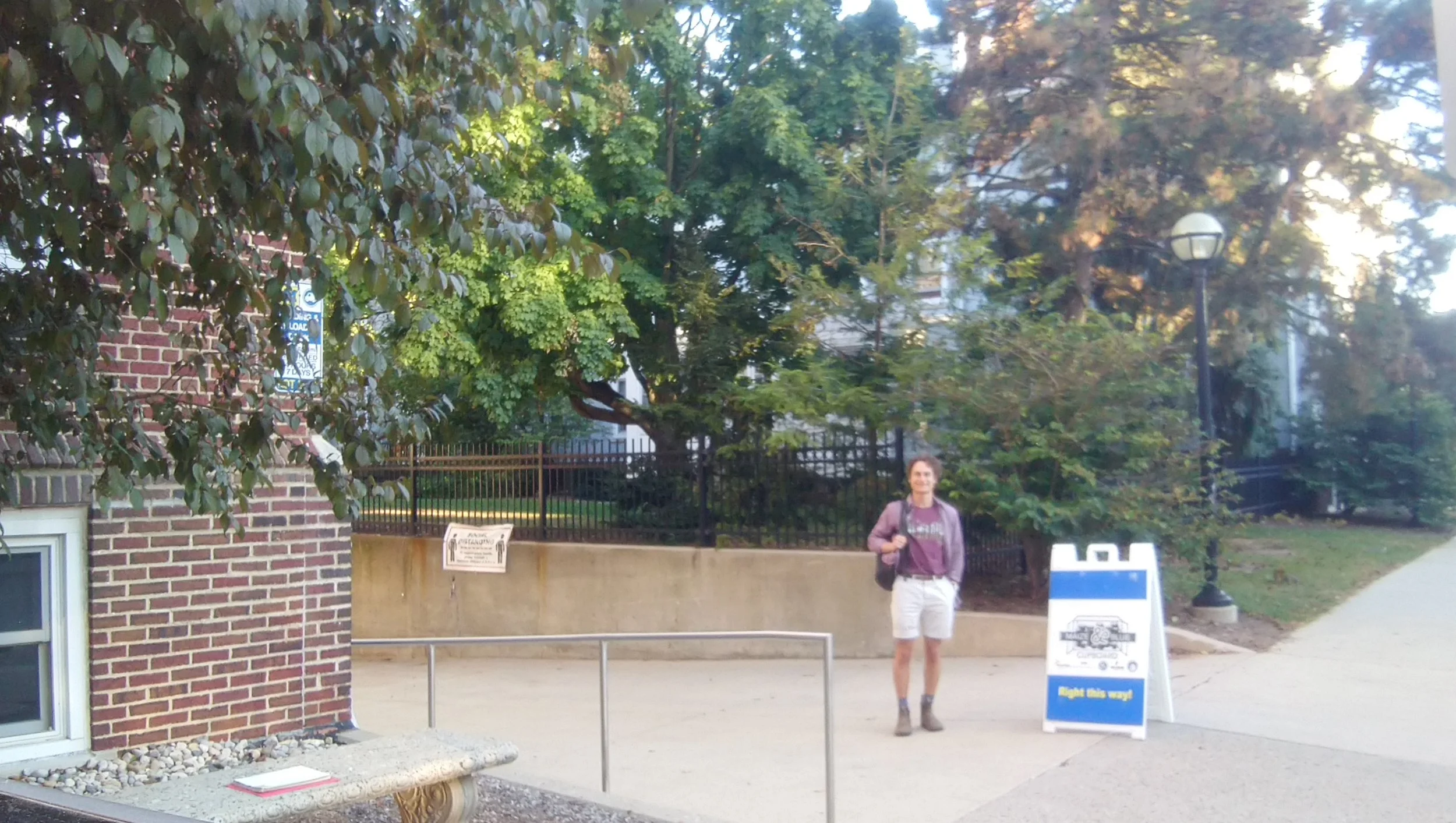
Me, standing by the sandwich board for the Maize & Blue Cupboard.
What’s the problem?
Imagine a student who is self-supported. The cost of living in Ann Arbor is $38,838. Tuition for an undergraduate out of state is $33,555. To save money, they live in a surrounding area with affordable housing. As a result, access to campus resources like study rooms, counseling services, and libraries are limited. More time is spent commuting through public transportation. On snow days, busses are inconsistent. They miss classes. What about a life? They cannot go out with friends on weekends because student nightlife activities happen downtown. Their social life erodes, and that loss of community and belonging leads to self-isolation, lower self-esteem, and worse overall wellbeing. Furthermore, the lack of access to nutritious foods diminishes quality sleep. That leads to trouble concentrating. They lose the merit scholarship they depend on to supplement living expenses. They skip meals.
This work is dedicated to them.
What’s the solution?
Kernel was a semester-long project. It was self-led. It was part of a course. Perhaps it’s unsurprising given these constraints, I did not solve this problem. But I made some progress. One year later, a group of students contacted me as someone who was recommended a subject matter expert.
The goal of this project was to solve food insecurity. Now, I realize how ambitious that was. Of course, I used my research to inform, direct, and scope my work. Behind this were deeper “root-cause” problems like education and awareness, privacy and stigma, and the intersectional issues I just mentioned.
All of this is worthy of attention, but the challenge that seemed to promise the greatest impact was creating more time for humans to solve these problems. In other words, I wanted to increase the capacity of staff. What I observed in research again and again were small issues and large issues that staff had ideas for but no time. As a result, this work, “Kernel,” fills information gaps of shoppers, volunteers, management, and donors.
What’s the motivation?
For the curious, as part of this class, I had to choose a problem space. I think this is an important insight into how I think about problems and which are worth solving. I thought about housing, fitness, productivity. Ultimately, I chose to research and design a solution around food. Here’s why:
I had engaged in this problem space before as a low-income food and housing scholarship recipient, personally
I had in mind a community partner, Maize & Blue Cupboard, which I always prefer because I want my work to have real impact and meaning
It’s a real problem
Discovery
For this project, I completed background research and visited MBC. I even picked up a few volunteer shifts.
Background Research
I found background research had four important benefits:
I learned how food pantries work. For example, one study at the University of Florida identified four barriers to pantry use. This would sharpen my sense of what to look for on-site and think critically about problem definition within the space.
I learned important vocabulary (like partnerships, inventory, space, storage, programming, operations, and privacy). That would help me formulate questions and communicate effectively with stakeholders in interviews.
I learned innovative solutions. One example is “residential housing have initiated swipes programs where students can donate extra meals from their dining hall meal plans to those who may be food insecure.”
I learned international trends. I could be teleported to countless food pantry operations through my readings. Reviewing the literature helped me see what was a consistent problem and what was an outlier.
However, I also found secondary research had limitations.
It didn’t teach me about my specific context.
I didn’t teach me anything of direct relevance to MBC.
It didn’t teach me the stakeholder vision—the volunteers, shift managers, donors, and directors.
For that, I had to make a trip.
Primary Research
This was an insightful part of the project. I conducted five semi-structured interviews: with two MBC shoppers, one non-MBC shopper, one MBC worker, and one non-MBC worker. (I see value in interacting with fringe and adjacent users.)
I did this because I knew I could gather richer, more human-specific data that would complement my background research.
I also worked two volunteer shifts, a light autoethnography—and held an interview with the director of the pantry to understand the program.
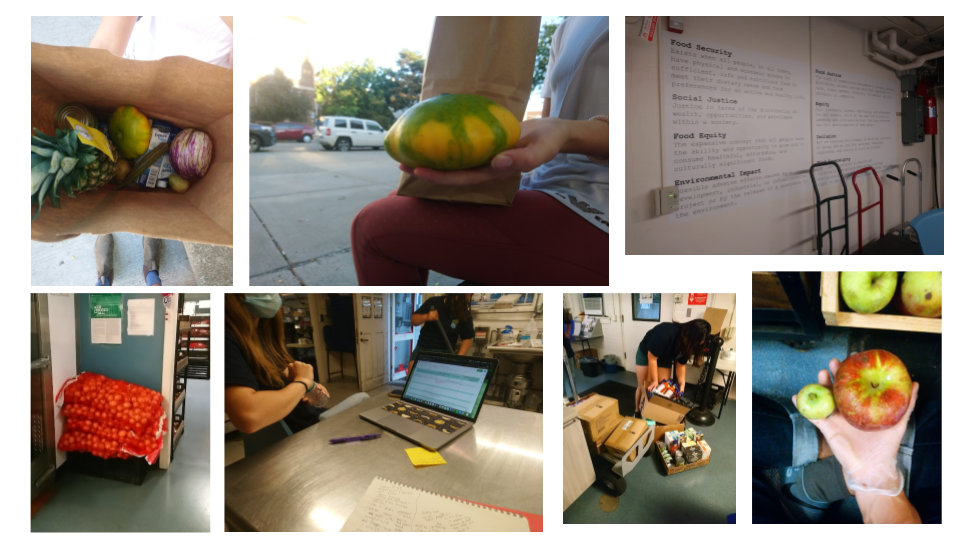
Observations from the field. (Ask me about the apples.)
My field research led to three insights:
Shoppers want fresh produce
Participant 1: “Oh my godddd, fresh fruit… Today was a success. I got pineapple, eggplant, okra, and squash.”
Participant 5: “I went in [to Target] to get cold brew, then I saw the pineapple, so I got it”
Participant 1: “I’m a vegetarian, so I worry about protein.”
Connection to the literature: an article from the background research says high-demand items are fresh produce, baked goods, and dairy items.
Management is strained
Participant 2: “…today we were supposed to have four volunteers, but none showed up.”
Participant 5: “The food we cannot serve [at M-Dining] goes to the Campus Farm to compost, and some of the near-expiration products we send to the MBC.”
Observation: staff had to stop what they were doing to handle a large donation of 20+ pounds of fresh eggplant unexpectedly.
MBC Shoppers deal with inconveniences
Participant 1: “luckily this is a day my roommate can pick me up. Canned food is heavy, and I live about a mile away, in Arrowwood Hills Cooperative.”
Observation: many shoppers use headphones. Maybe to be discrete?
Observation: two shoppers came specifically for bread and there was none.
Observation: the plastic bags are thin and sometimes rip. Most shoppers use brown paper bags.
Definition
Sketching
Given what I’d researched, I sketched potential solutions to find a creative direction using crazy 8s.
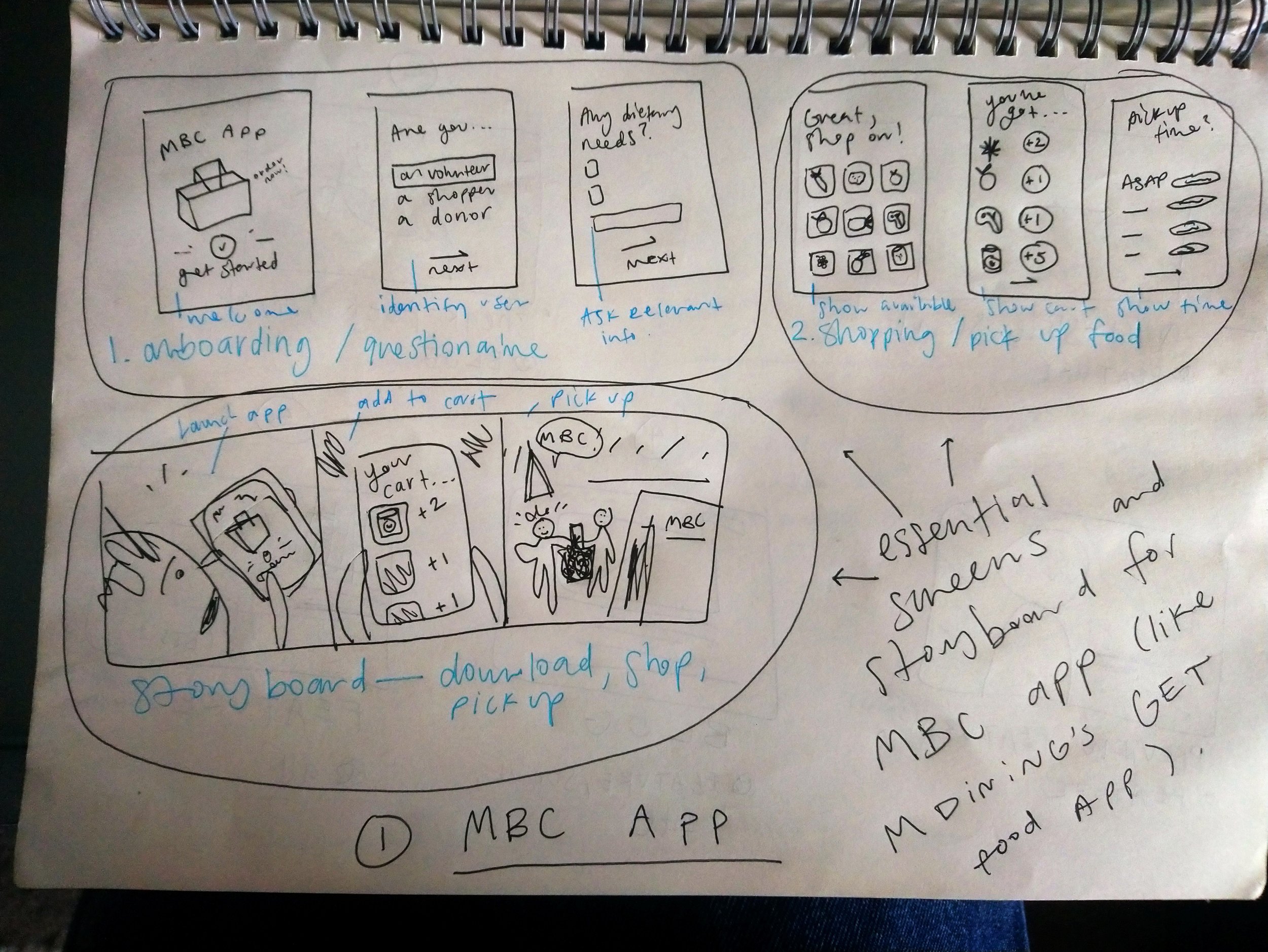
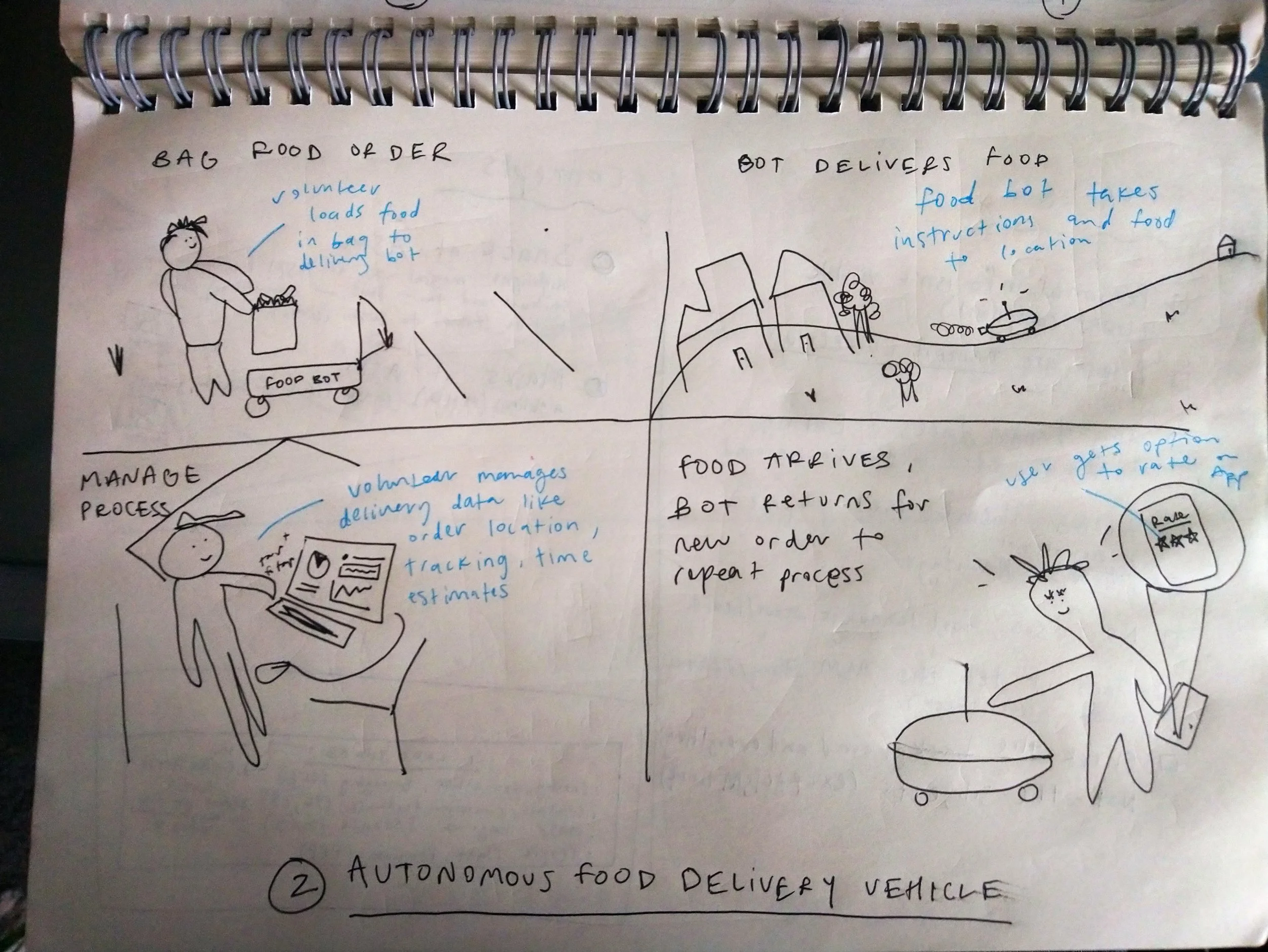
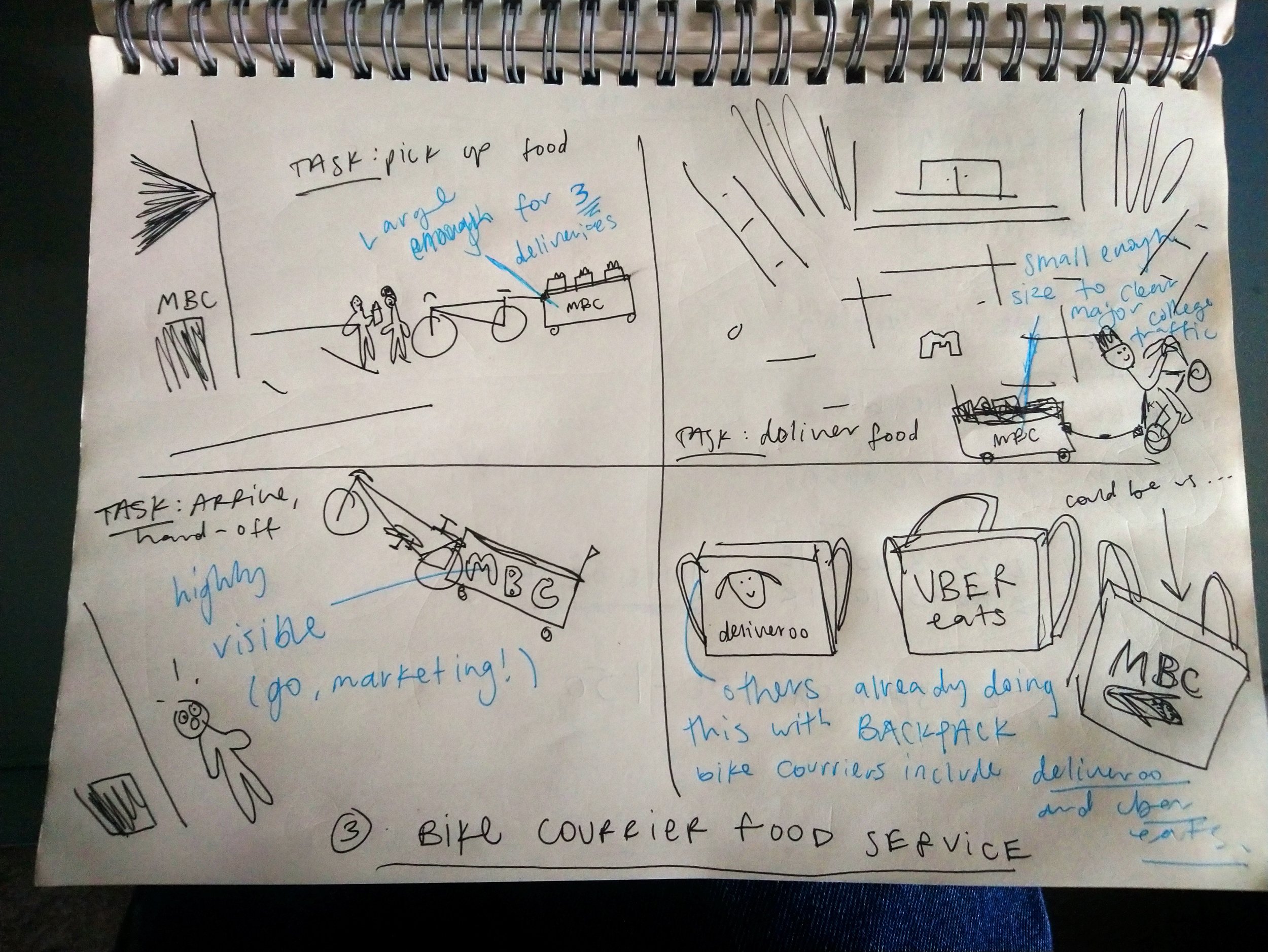
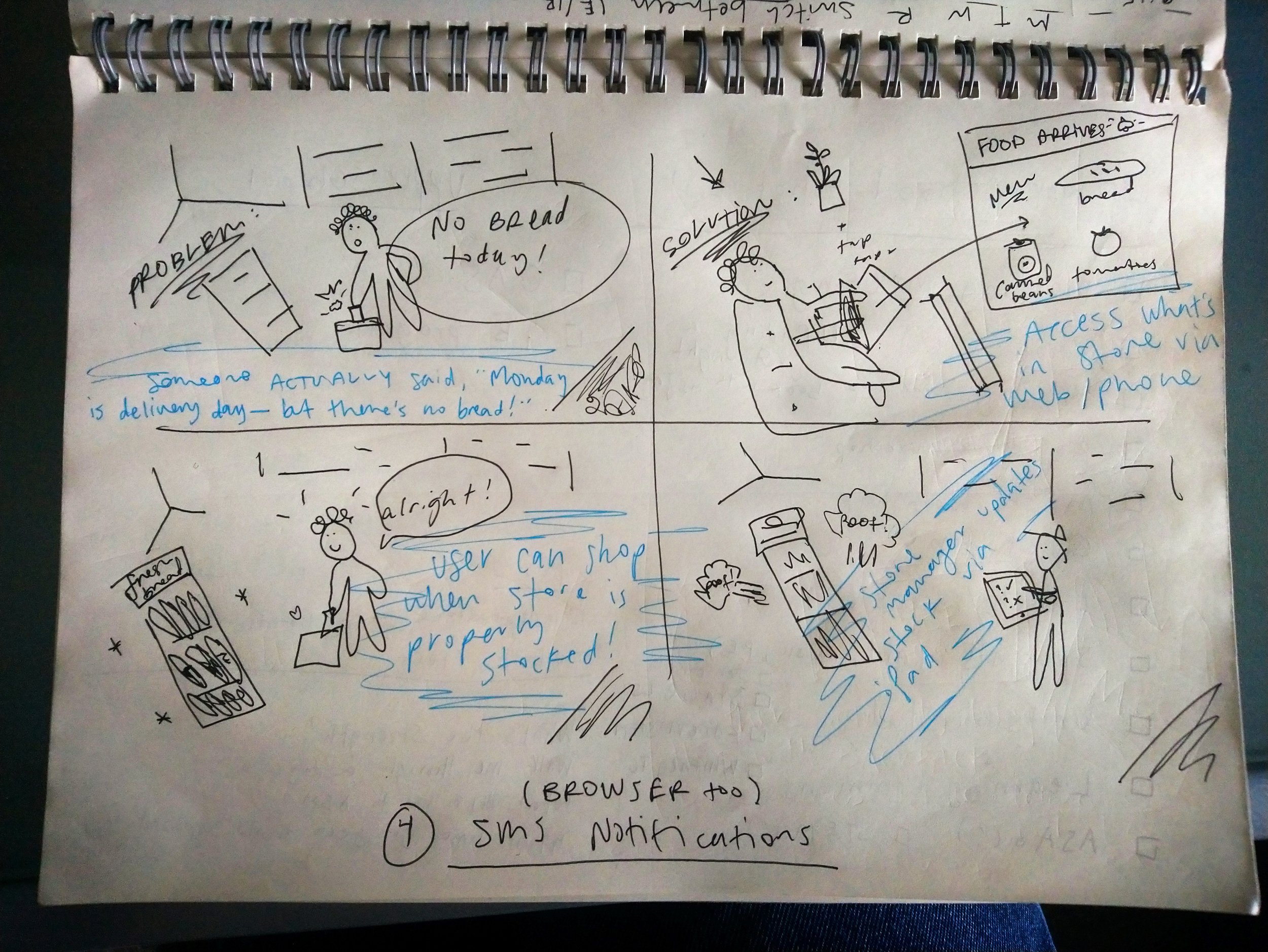
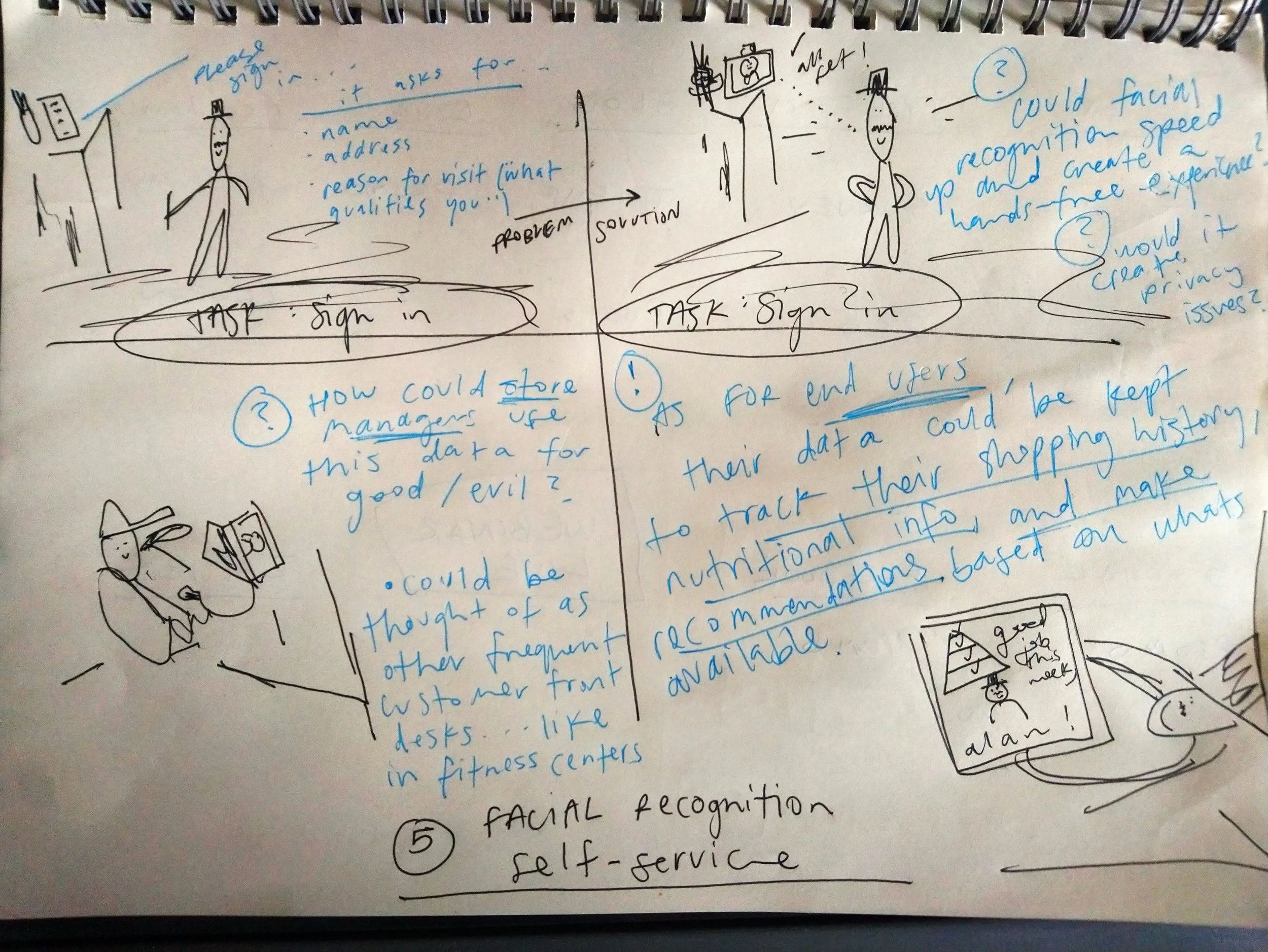
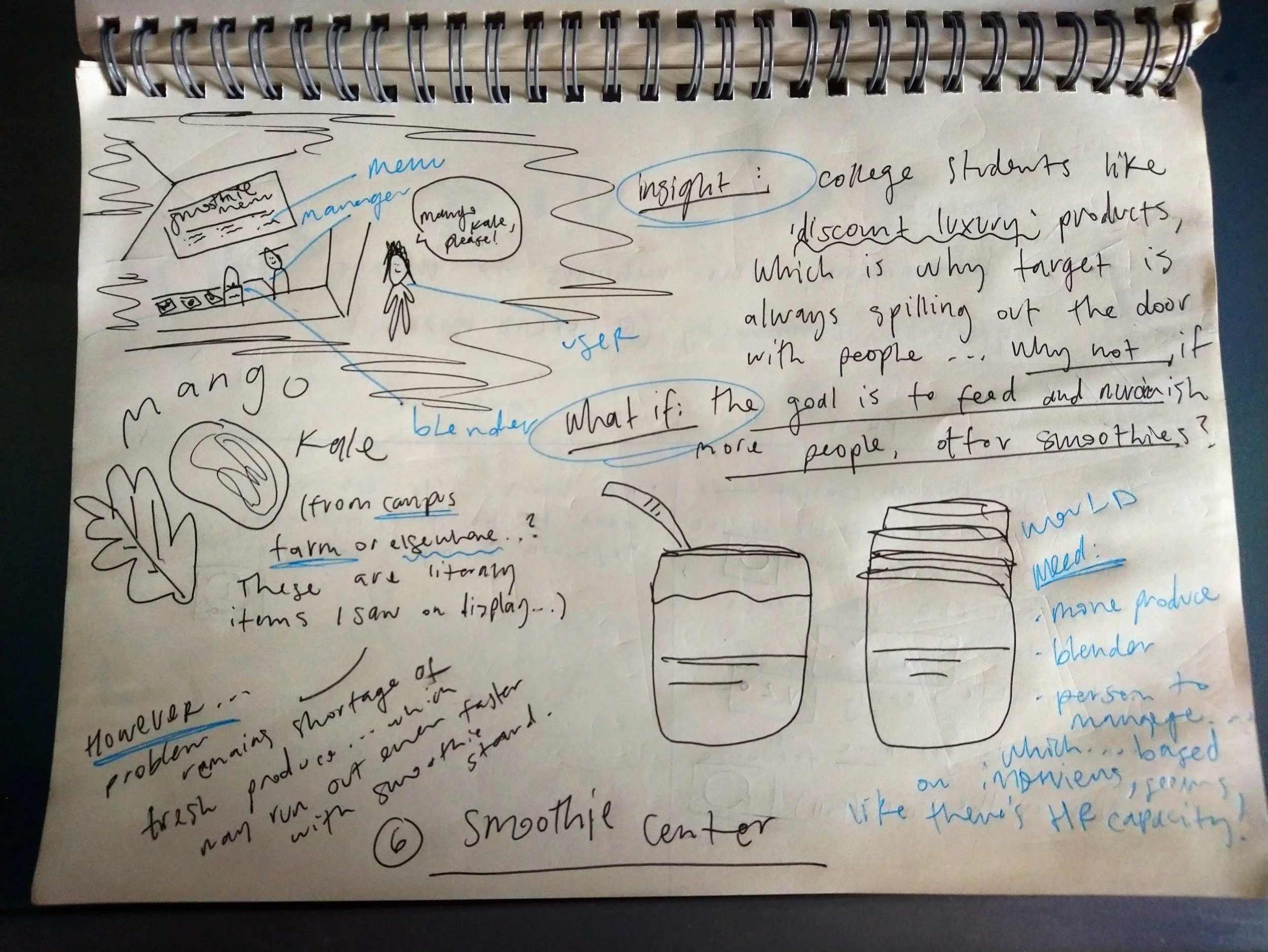
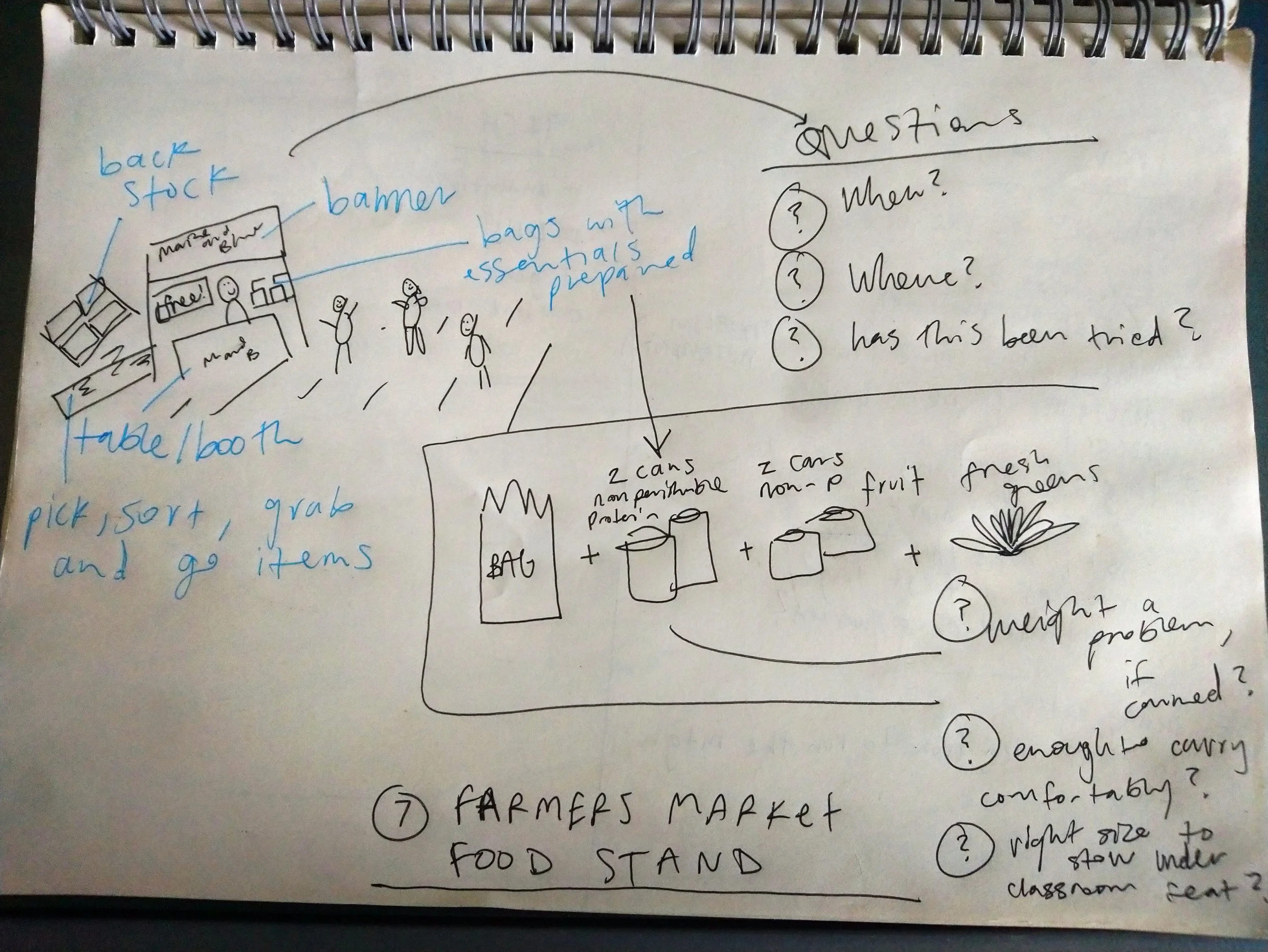
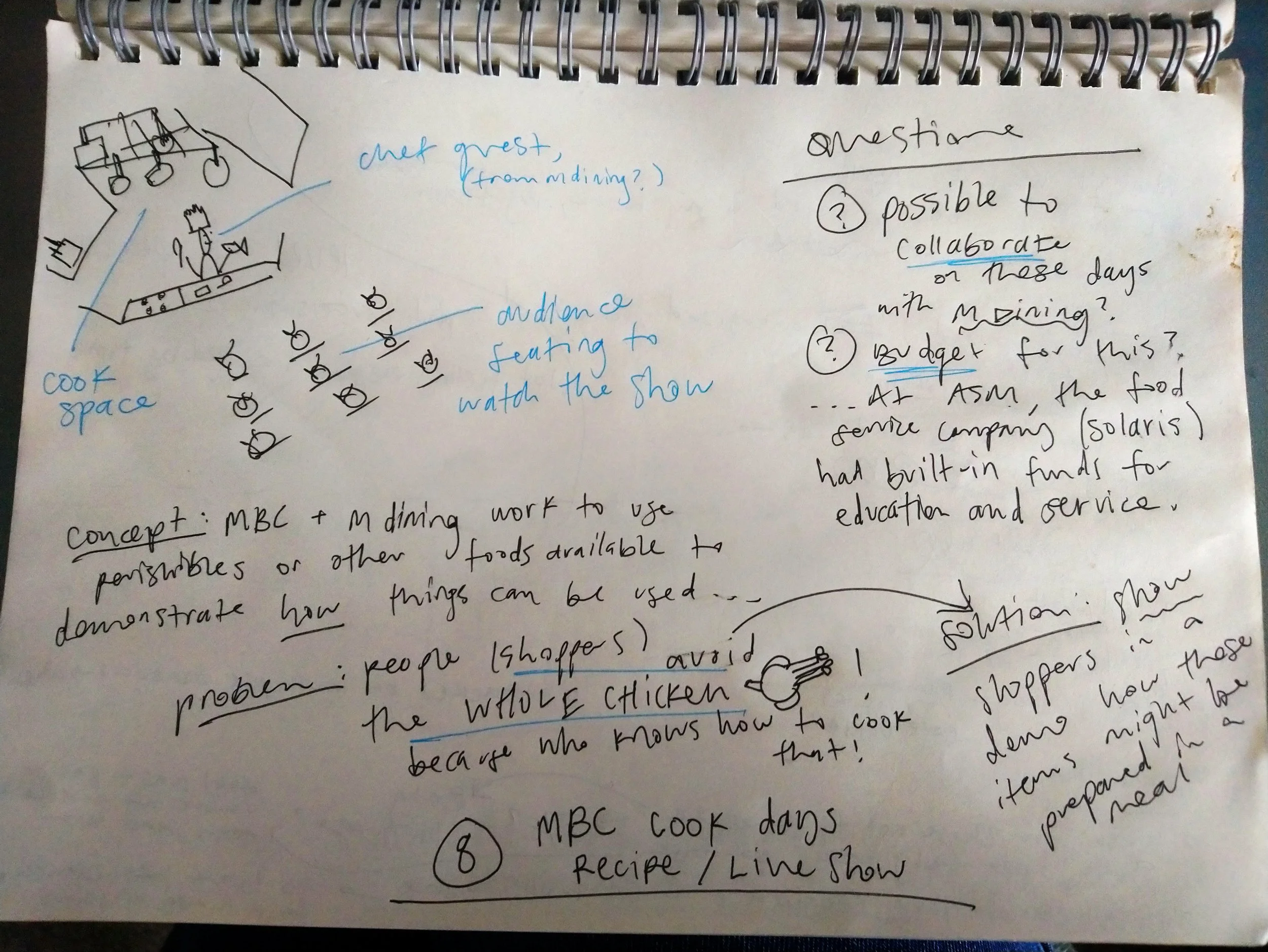
Sketching helped me think through specific aspects of my designs (action, emotion, points of interest) and share my thinking with others. I like sketching, and I’m working on making them more clear, easy to read and follow.
These concepts were firmed up in a slide deck, which I got feedback on from two colleagues. With their feedback, I had settled on an app solution. To refine it, I created user personas.
Personas
I then built personas based on my primary research. I have experience building personas, and I am happy to see improvement every time—in how effective they call out wants/needs that are clear and relevant to decision making in the design process.
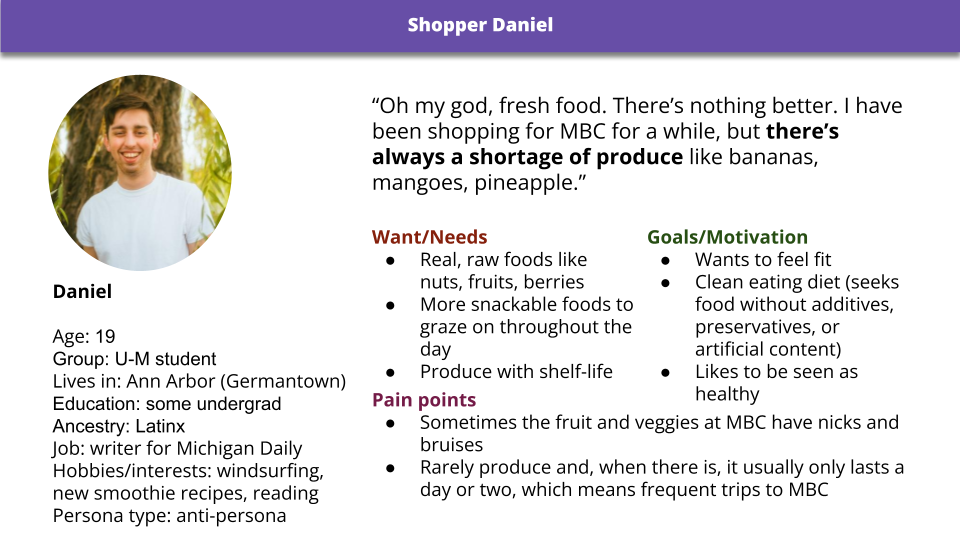
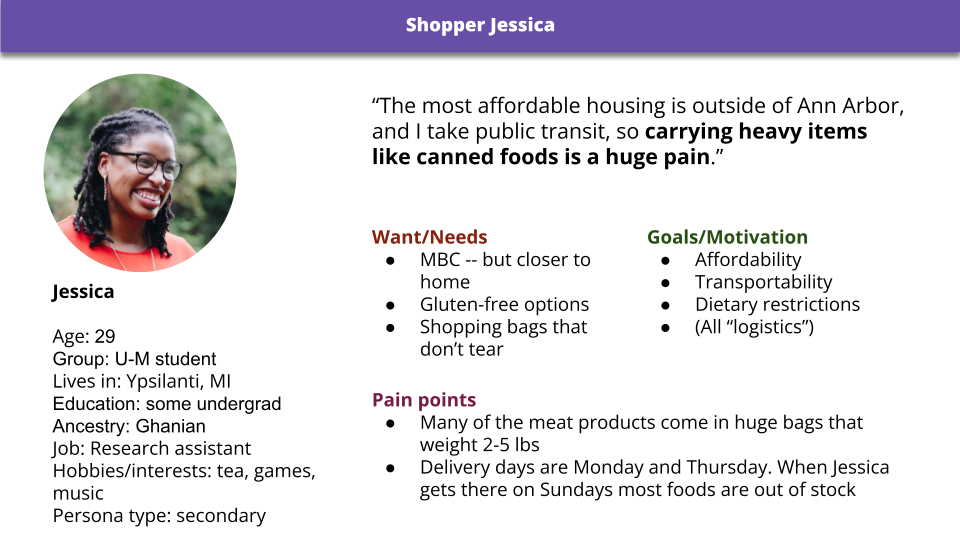
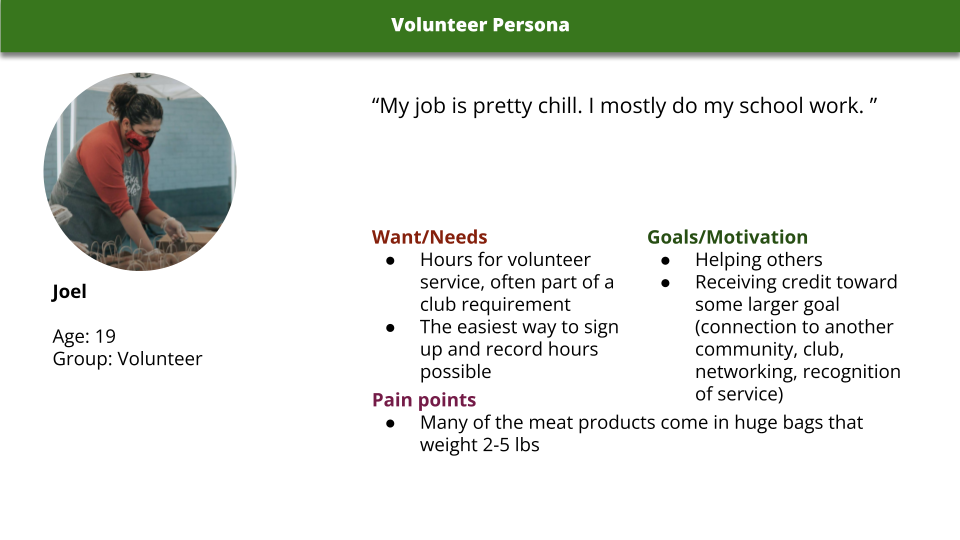
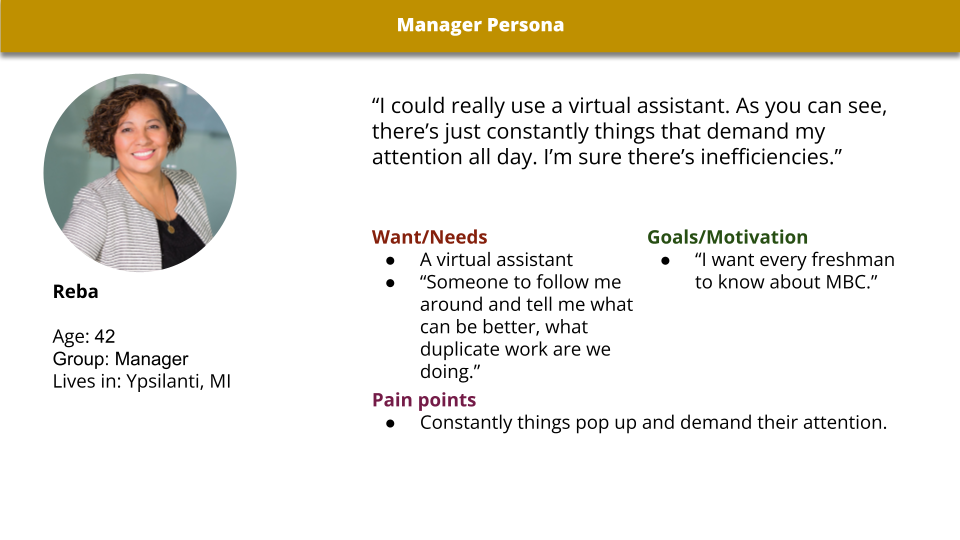
It wasn’t until later I realized I would want to include volunteers and managers. They were crucial to my product, though I wouldn’t know it for several weeks. So, I created the personas for Joel and Reba.
Revision and flexibility is important to me when the project calls for it.
Development
I then created a basic user storyboard and scenarios to flesh out the solution. How would the app work? How did it meet different users’ needs in context? How was it different from competitors?
My instructors were looking for a particular style for the scenarios. They pushed for richer details with specific features being used by the personas.
That’s how I came up with features like…
“recommended recipes” for Deb
a nutrient-balanced “bundle” of items for Kishore and
“notifications for watchlist items” for Jessica.
I love feedback because it leads to some of the best ideas.
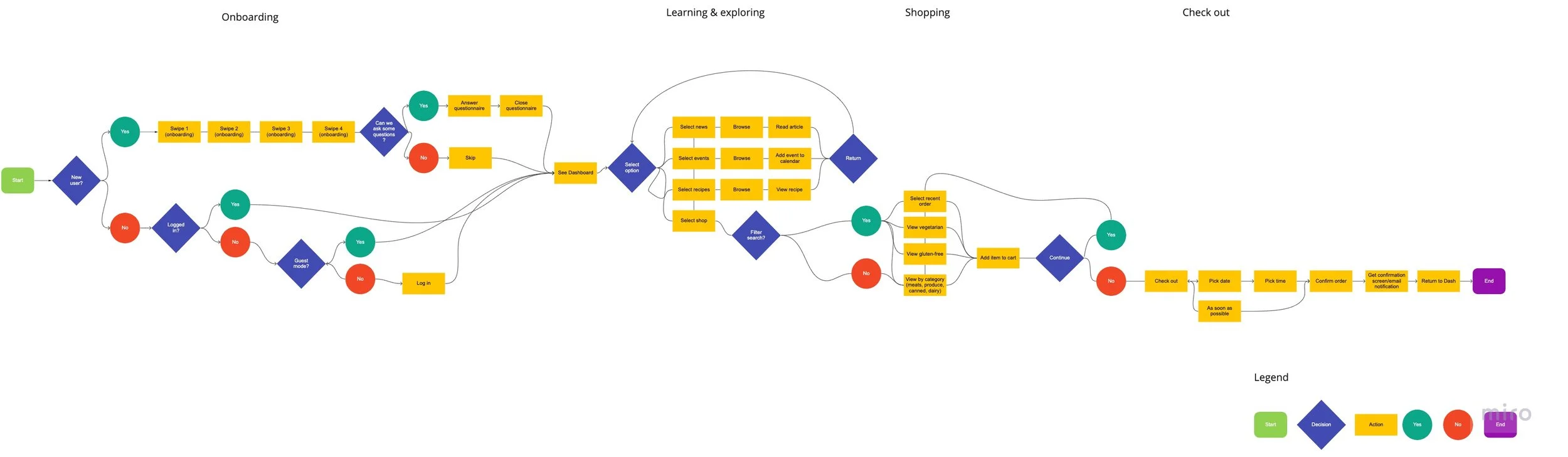
Flow chart
I created a product map to chart the actions users could take. This was helpful for visualizing users’ choices, buttons/screens I would make, and logic loops. It helped me see connections overall.
Storymapping
Then I made storymaps. This was helpful for visualizing how user personas might experience a certain flow. How was the app dynamic in meeting different needs?
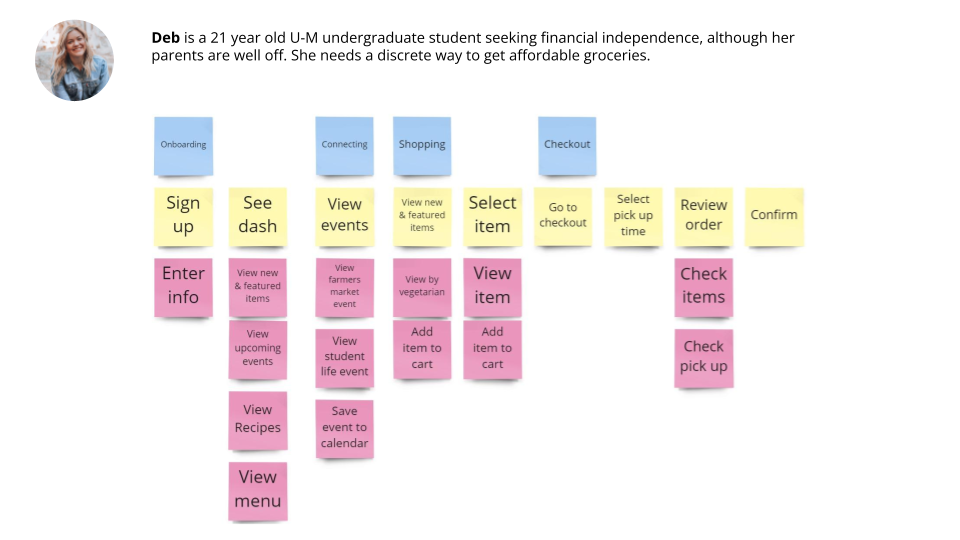
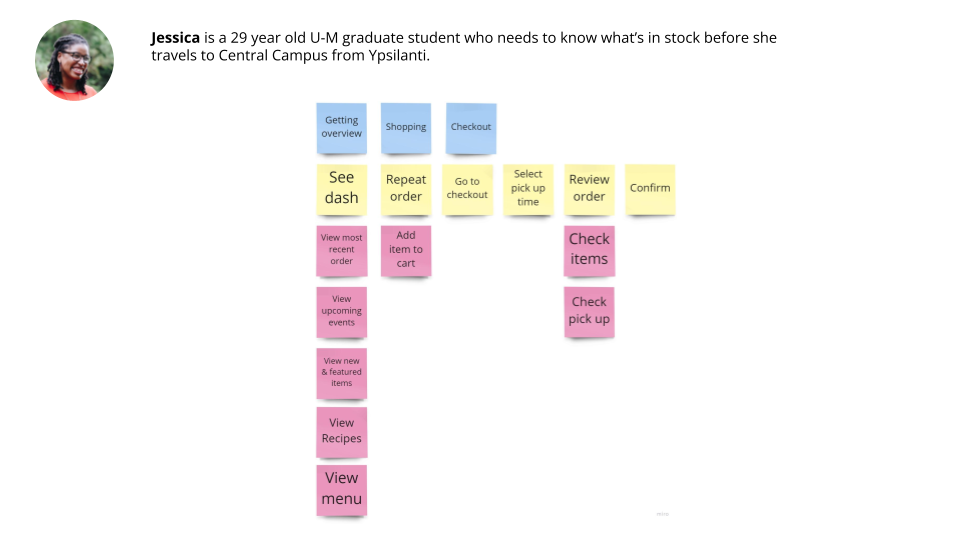
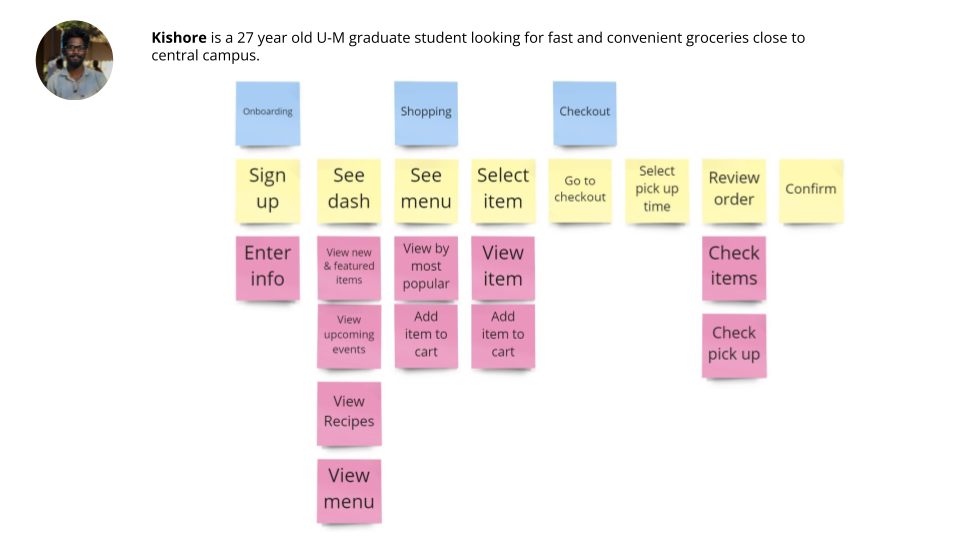
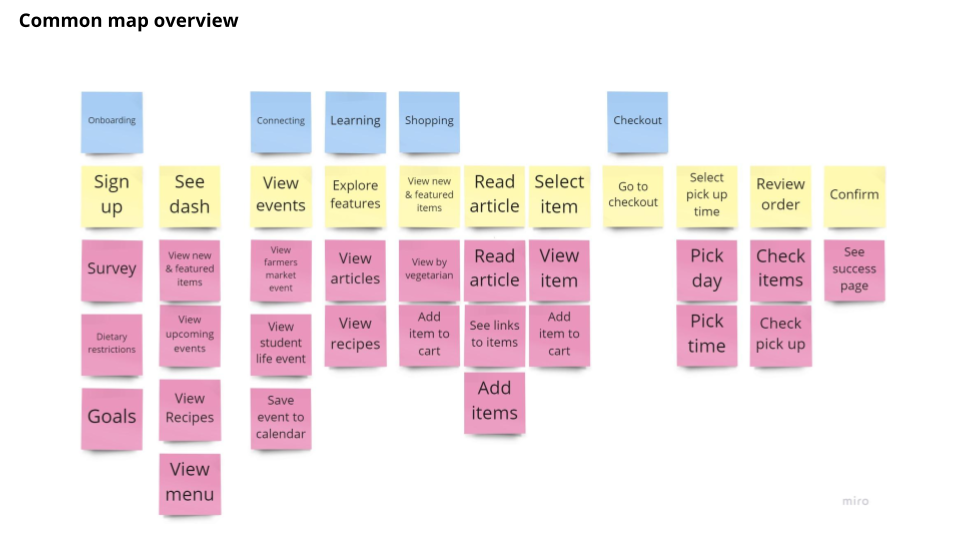
The feedback I got was “Jessica is very similar to the first and second story mapping.” That was a great point. I started to wonder: was my app generic? Did it genuinely respond to users’ needs? Users needed fresh produce, bread on the shelves, help managing random drop-offs. My features in this first round were not built for that. They were just what I had seen from competitors. I started to realize I was just scraping the surface and could go much deeper.
This was the most intellectually rewarding and challenging part of the project.
My plan of action was to check my assumptions, revisit my research, and open myself up to new possibilities. It felt like going back to the drawing board.
Delivery
Mid-fi prototype
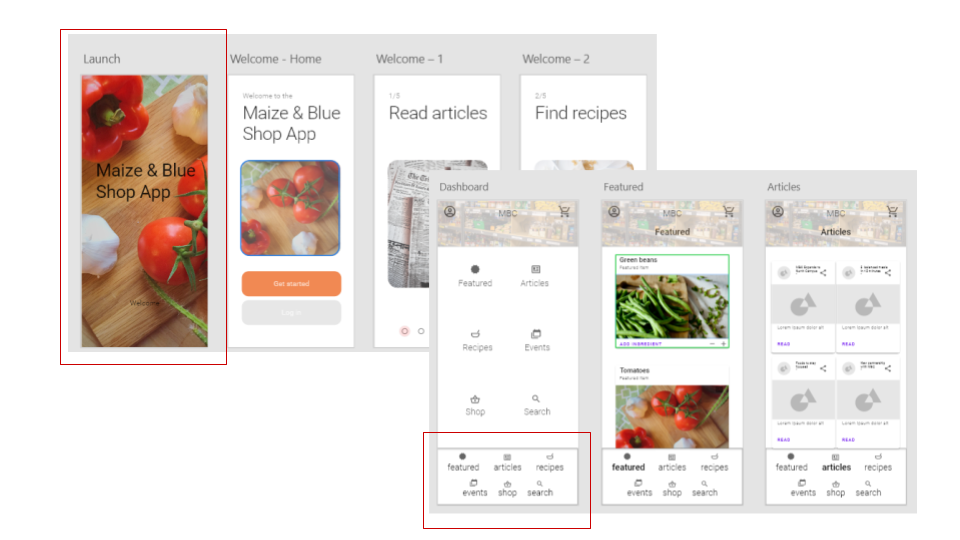
By this time, I had already I had already sketched and developed a mid-fi prototype. My instructor gave me a rigorous critique. This included, for example, two issues highlighted in red below:
the Launch screen has low contrast (bad for accessibility) and
the Dashboard has two rows of icons and labels in the bottom navigation (does not follow conventions).
Revisiting research
My product was in need of serious attention, both in UX and UI. I revisited my findings to see where it all began. Several needs and relevant features jumped out.
“Volunteers come from all over, some never show up, some can’t lift 10 lbs”
- MBC Manager
Inspired feature: ‘Volunteer’ section
“There’s just so many projects to improve MBC, none are connected”
- MBC Manager
Inspired feature: ‘Projects’ section
“I never know if MBC has bread, I can only visit when I’m on campus”
- MBC Shopper
Inspired feature: alerts/notifications
This boosted my clarity and motivation.
New sketches
At this point, I was no longer afraid about just getting a good grade for my Interaction Design graduate studies course. I was doing what I needed for the project to work.
I started sketching what this new modified version of a shopping app would look like.
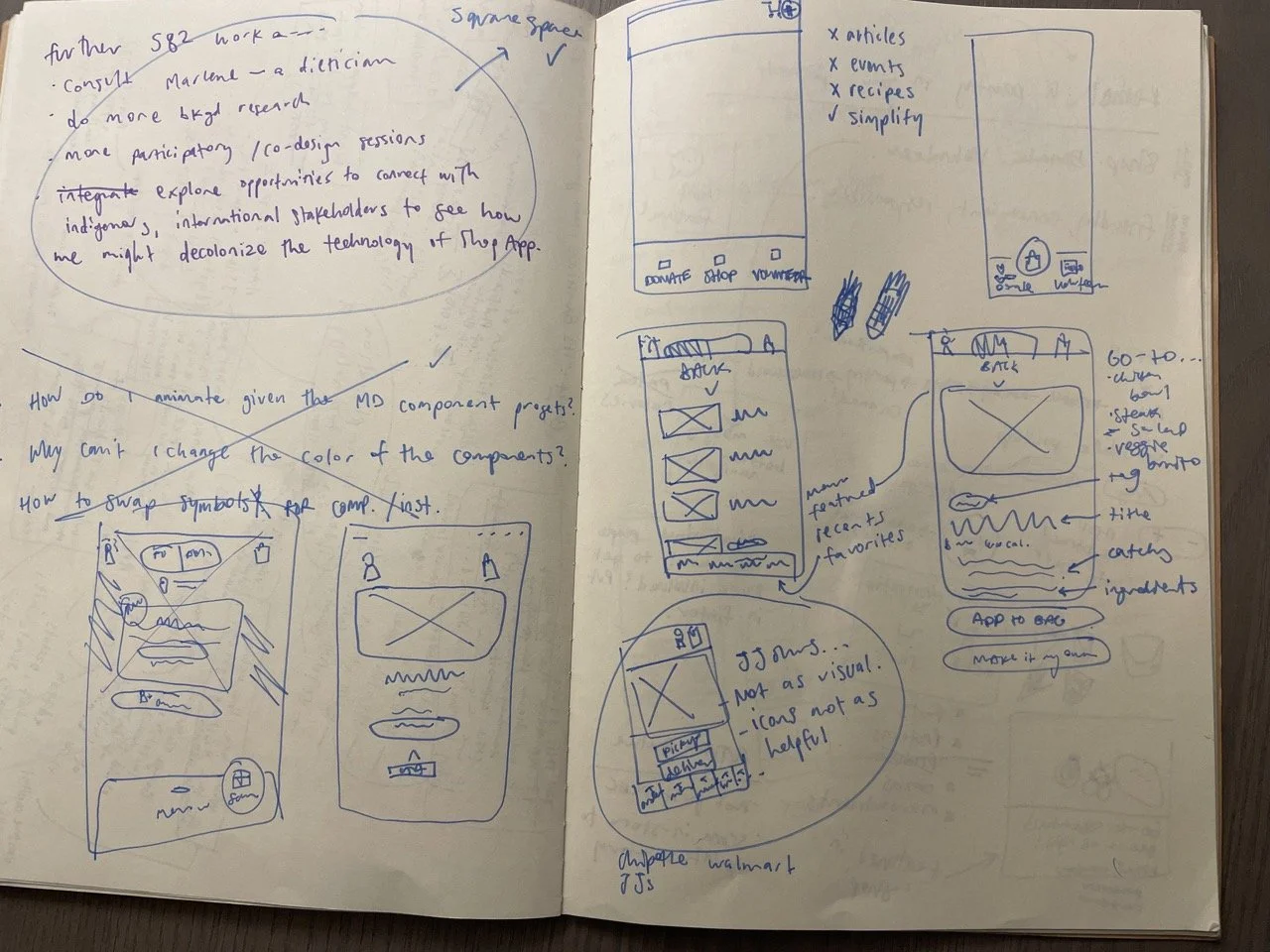
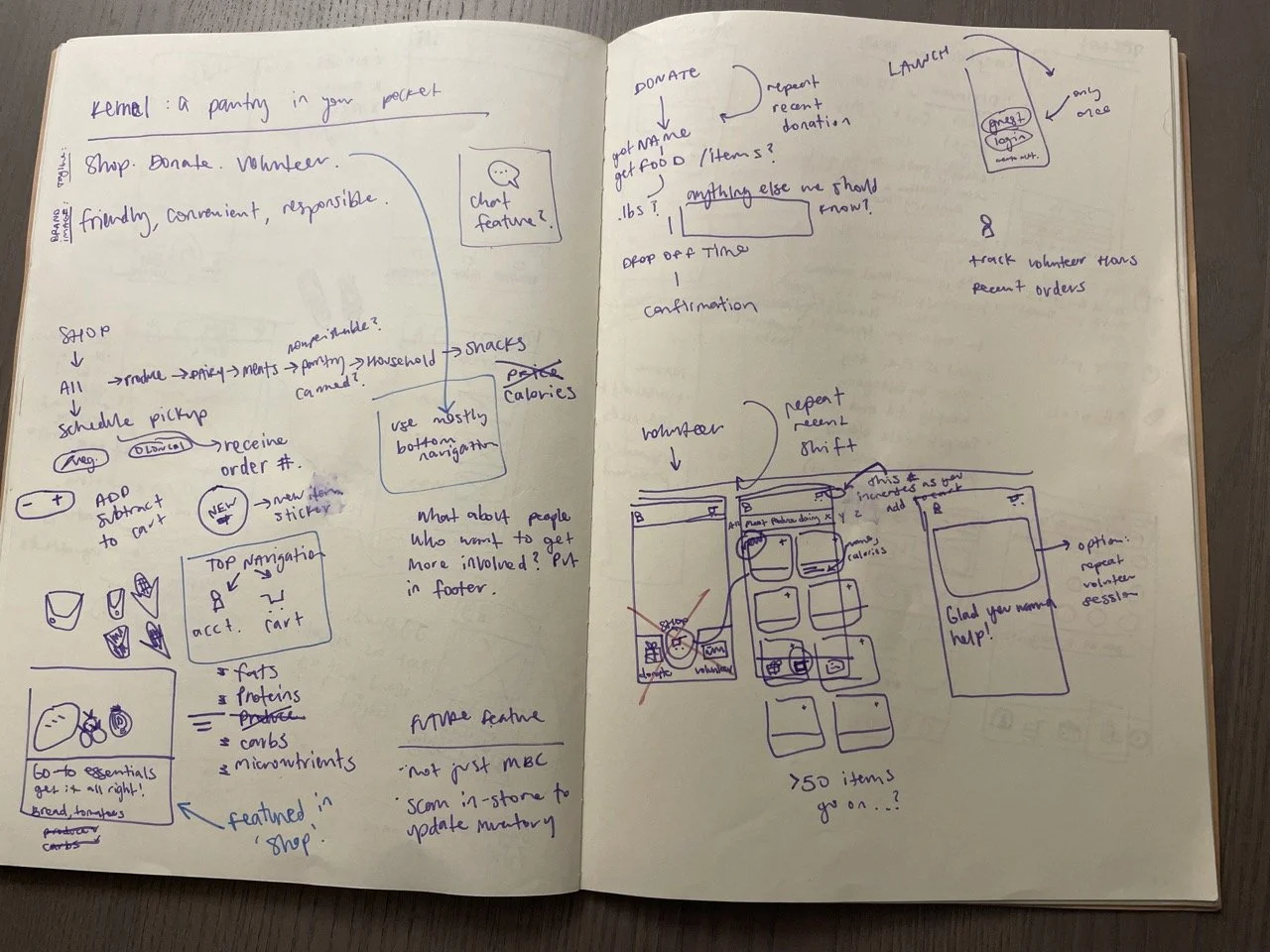
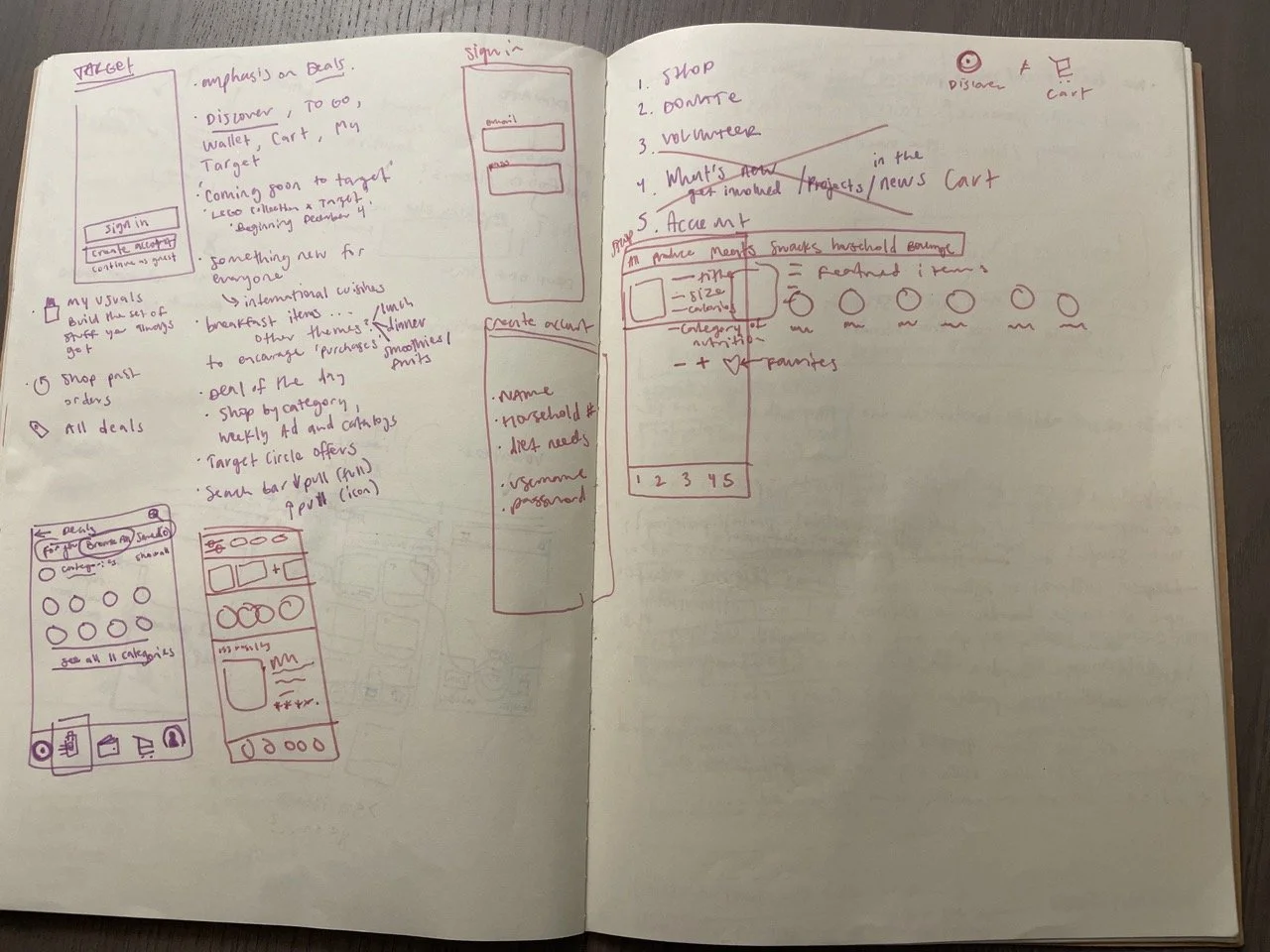
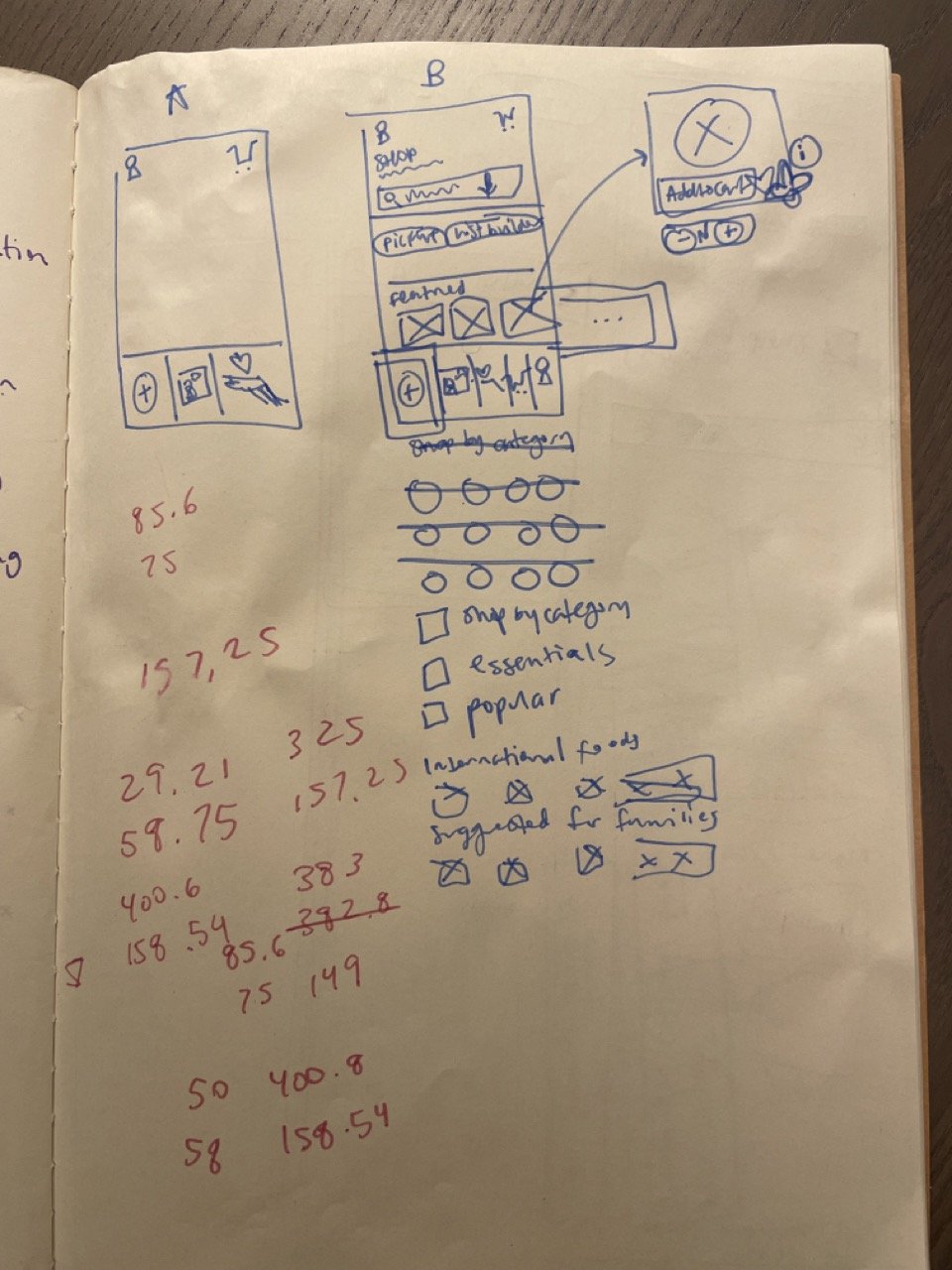
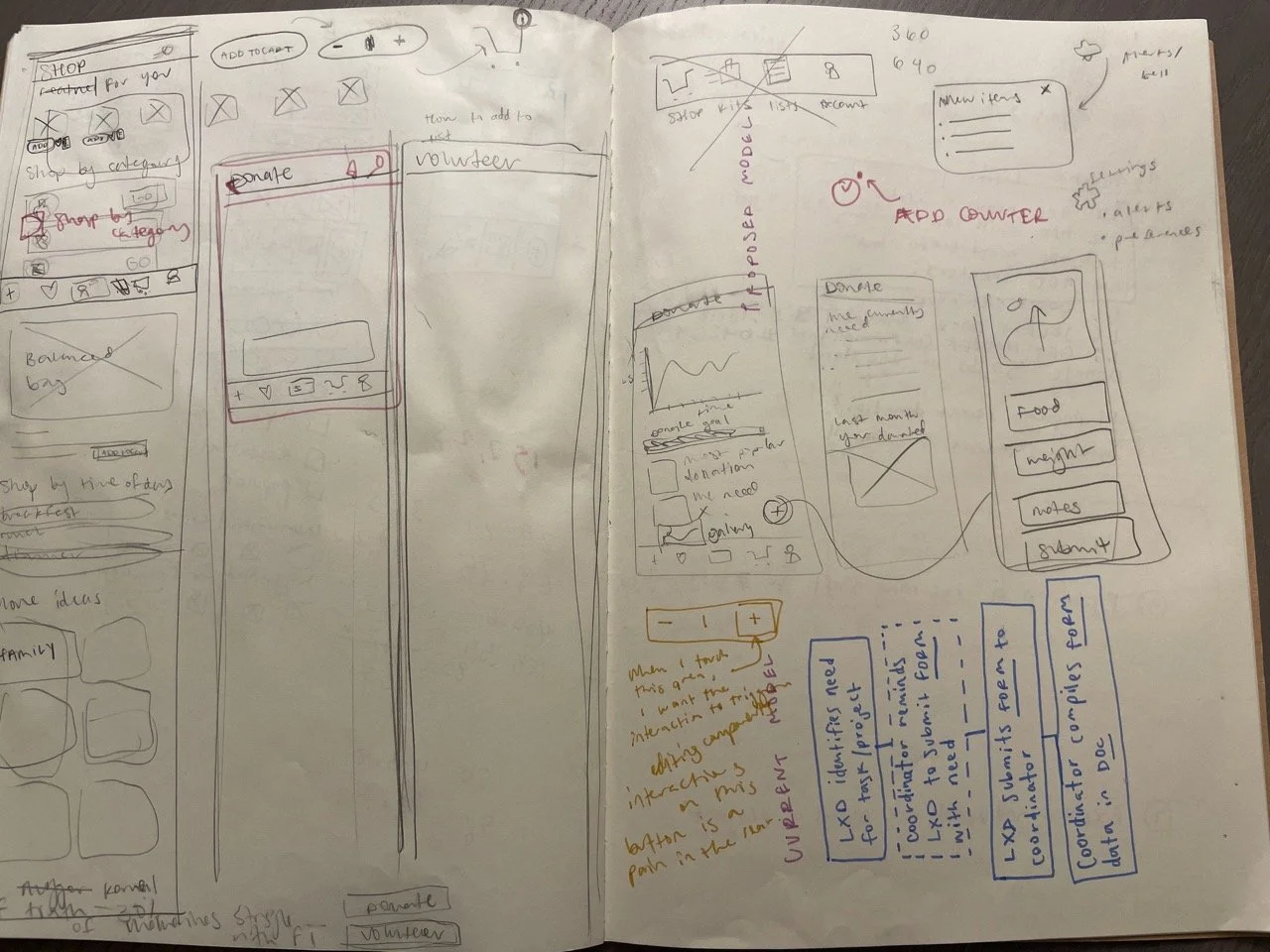
This was a very productive period.
I was spending a lot of time reading the documentation on Material Design and trying things out in Adobe XD, which I see reflected in these sketches. I was thinking deeply about the do’s and don’ts of Floating Action Buttons (FAB), bottom navigation, and consistent visual hierarchy—and what they mattered for my product.
In the marginalia, I see I was also comparing other shopping and food experience apps like Target, Walmart, and Jimmy Johns. As well, I developed the initial concepts for the Kernel brand.
These were considerations that weren’t on my radar even a week earlier. I really enjoyed getting myself up to speed and felt myself falling in love with the logic and beauty of Material Design and iOS.
This is an area I would love to become proficient in, building MD systems on the fly.
The competitive advantage
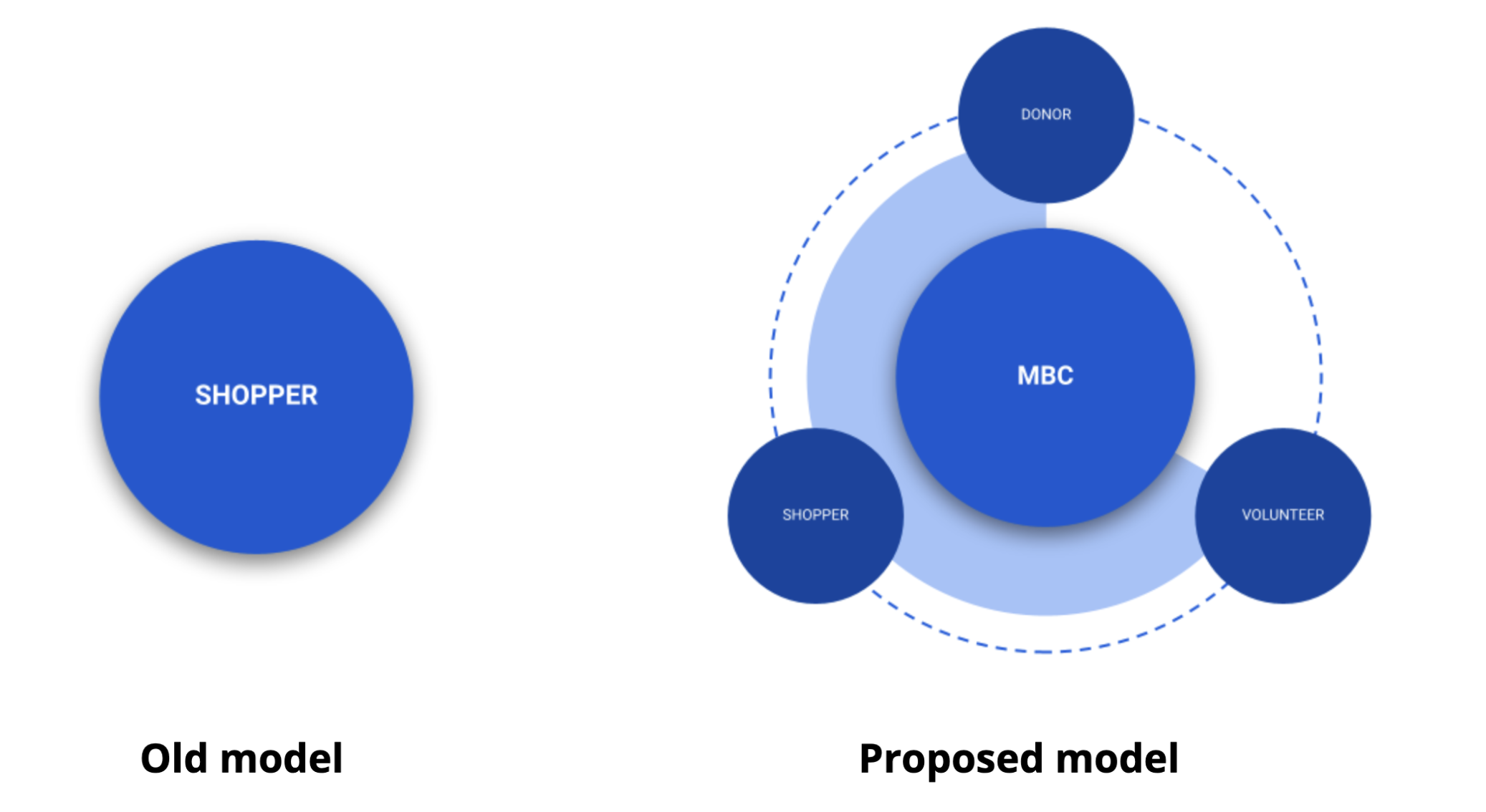
Once I decided on these revised my features, I saw what separated my product from others like Blue Maize, Food Yards, and Food Finder was an awareness of the total system: donor, shopper, volunteer, and staff. I was surprised no one had spotted this before because it was the main takeaway from my research.
What mattered wasn’t a convenient app that allowed shoppers to add-to-cart. What mattered was the connectivity between parts of the overall system. Unexpected deliveries, no-show volunteers, and shoppers expecting but finding no bread on the shelves were the real problems.
To solve this I put the MBC system, not the shopper, at the center of the experience.
Revised mid-fi prototype
I learned a lot about minimal functionality. I aimed for that here, but I also didn’t get the opportunity—within the scope, being new to Adobe XD—to do things I really wanted like data visualizations, leaderboards, badges, and other gamified elements for the Donate, Volunteer, and Projects sections. Given the chance, I would love to deck those out.
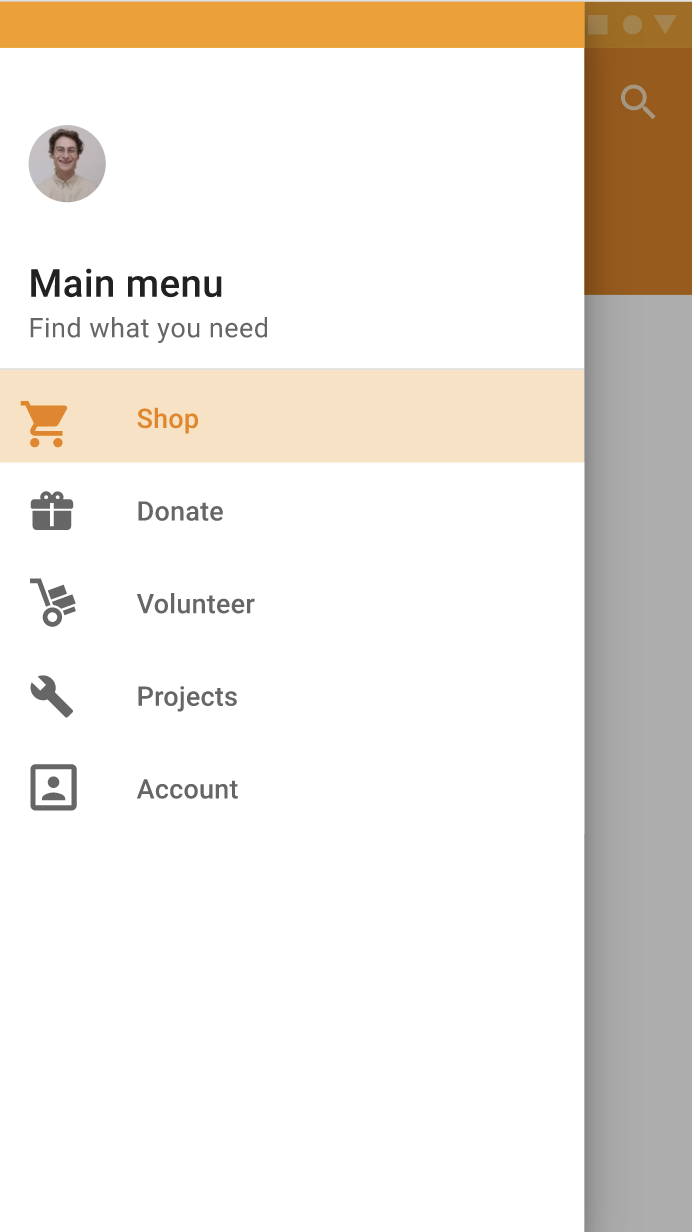
Main menu
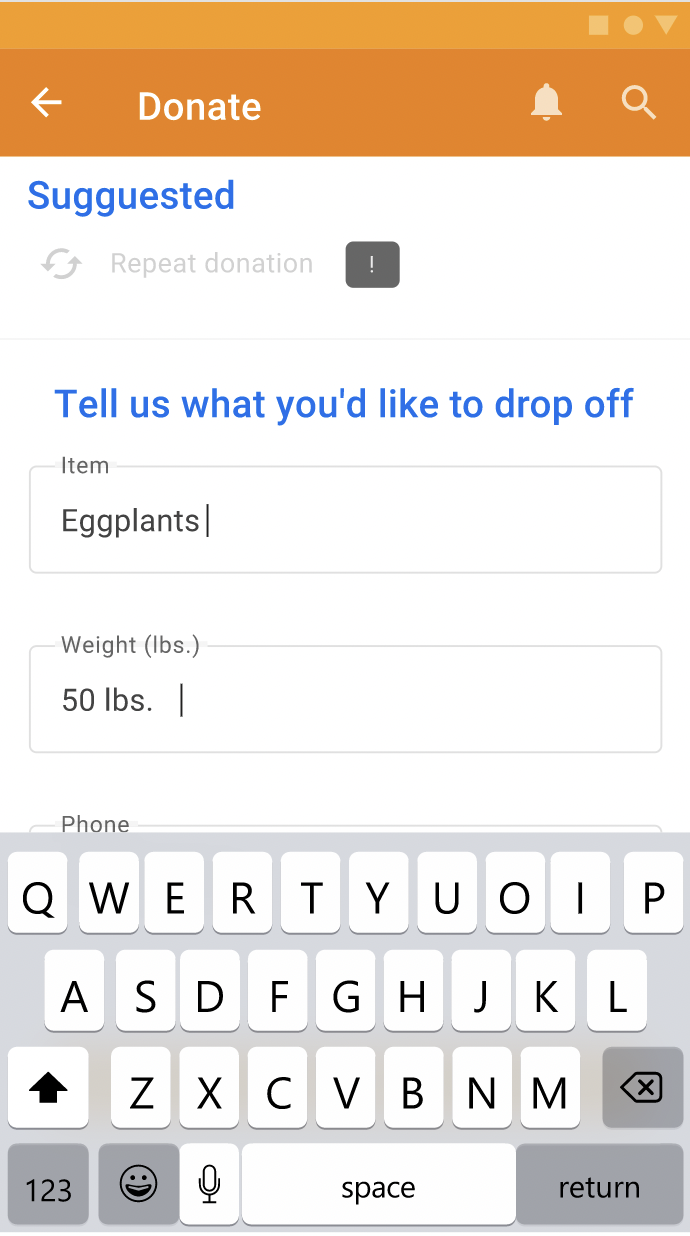
Donate
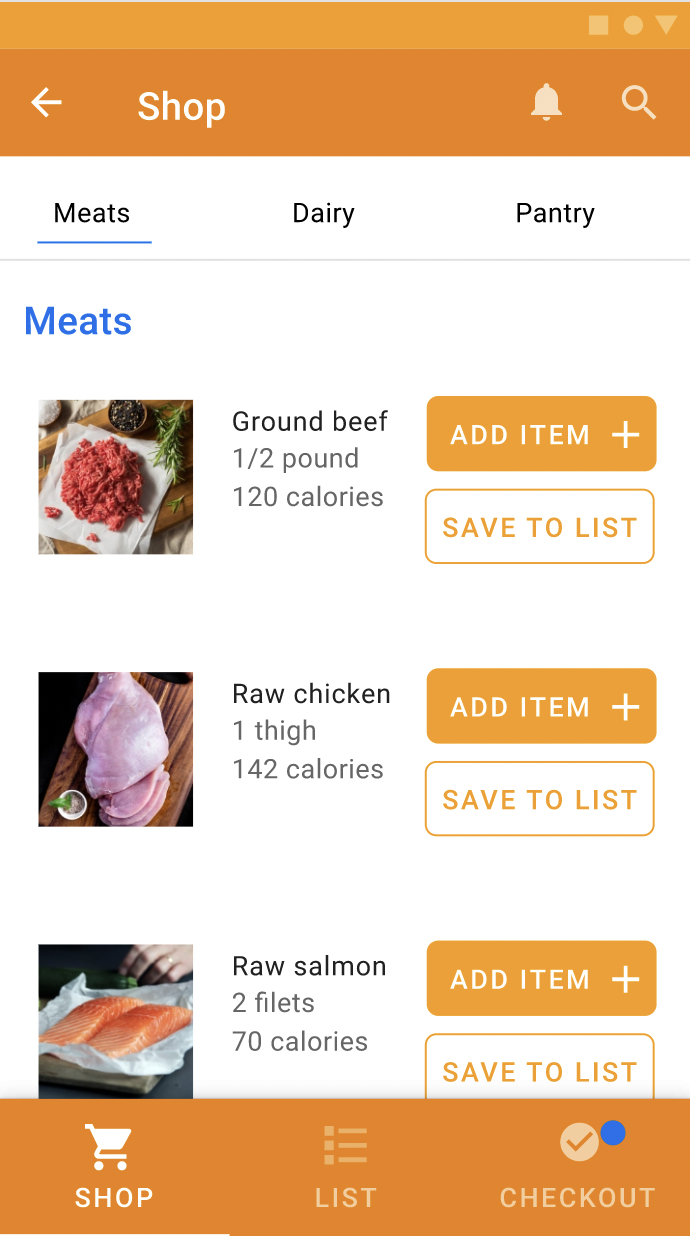
Shop
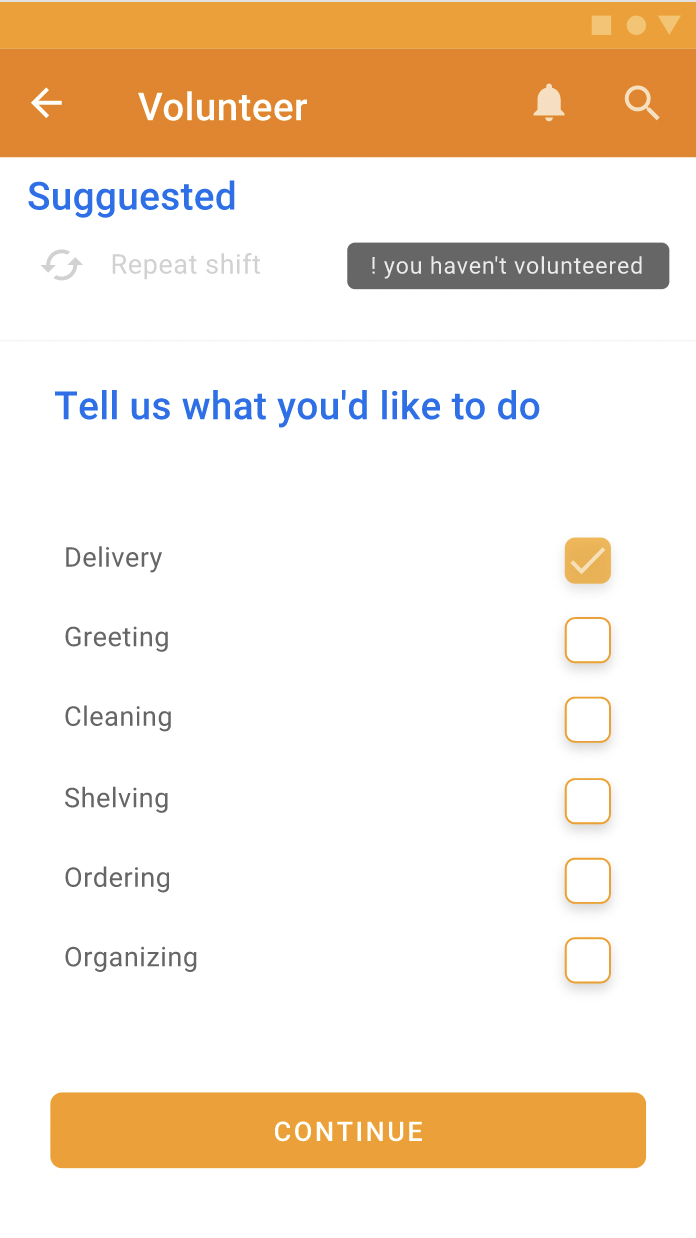
Volunteer
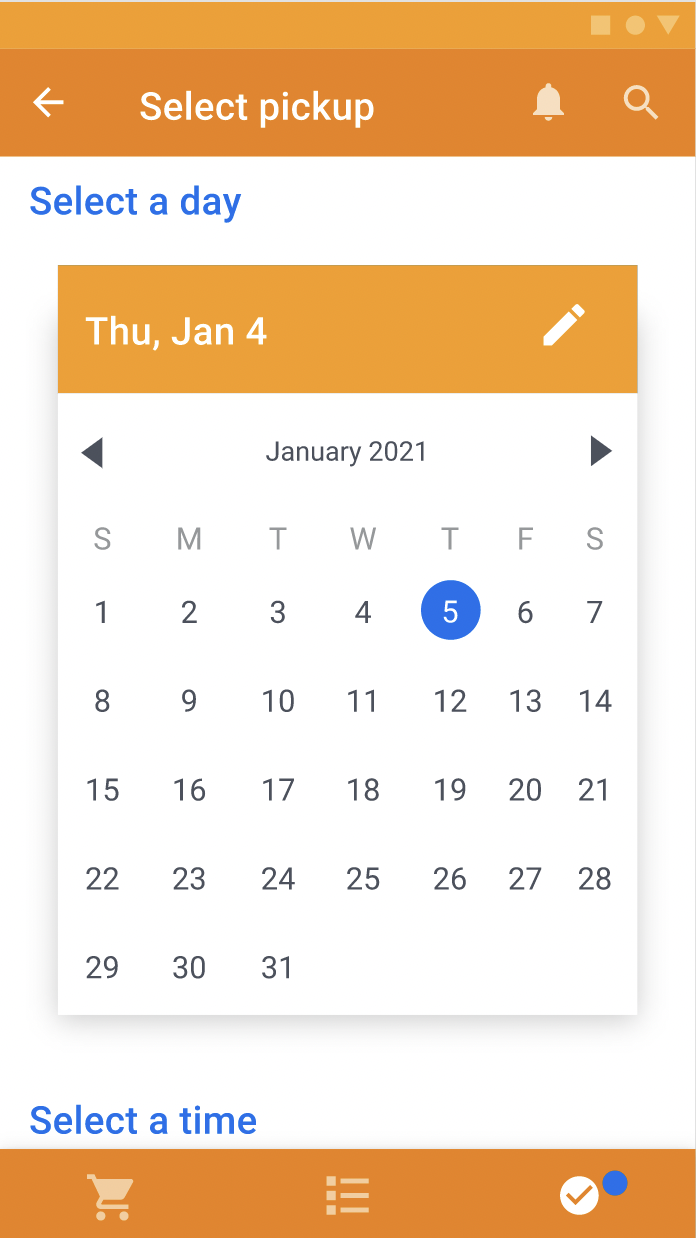
Pickup
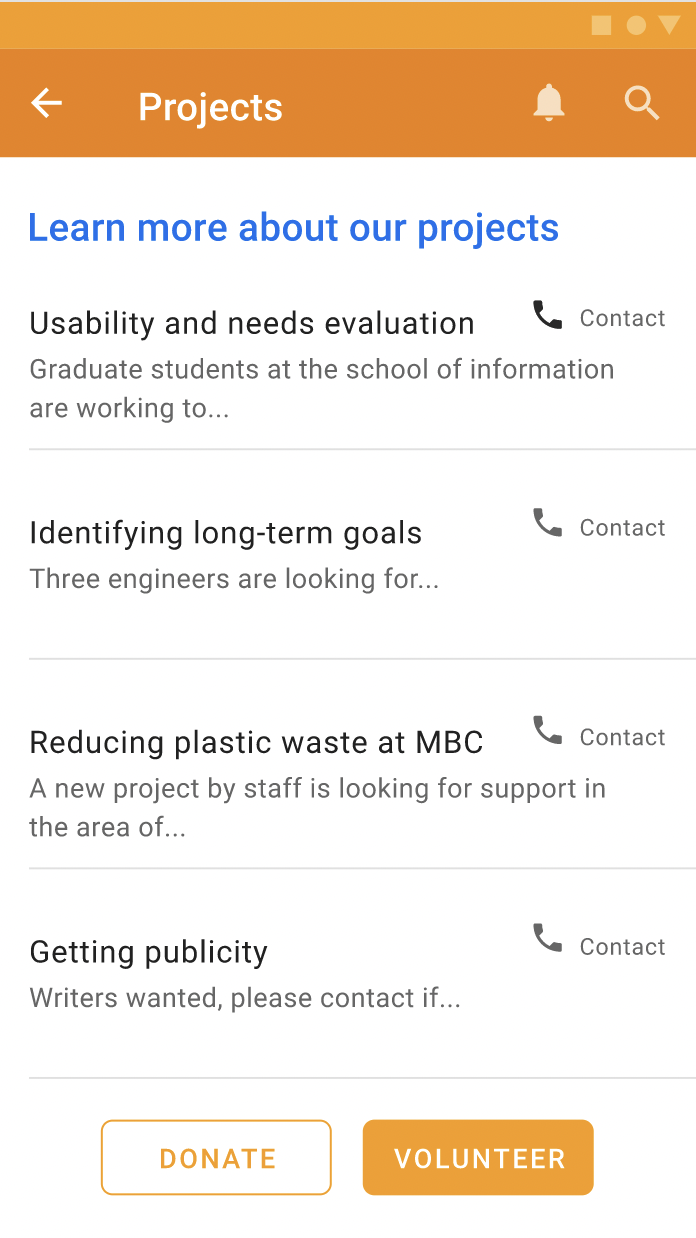
Projects
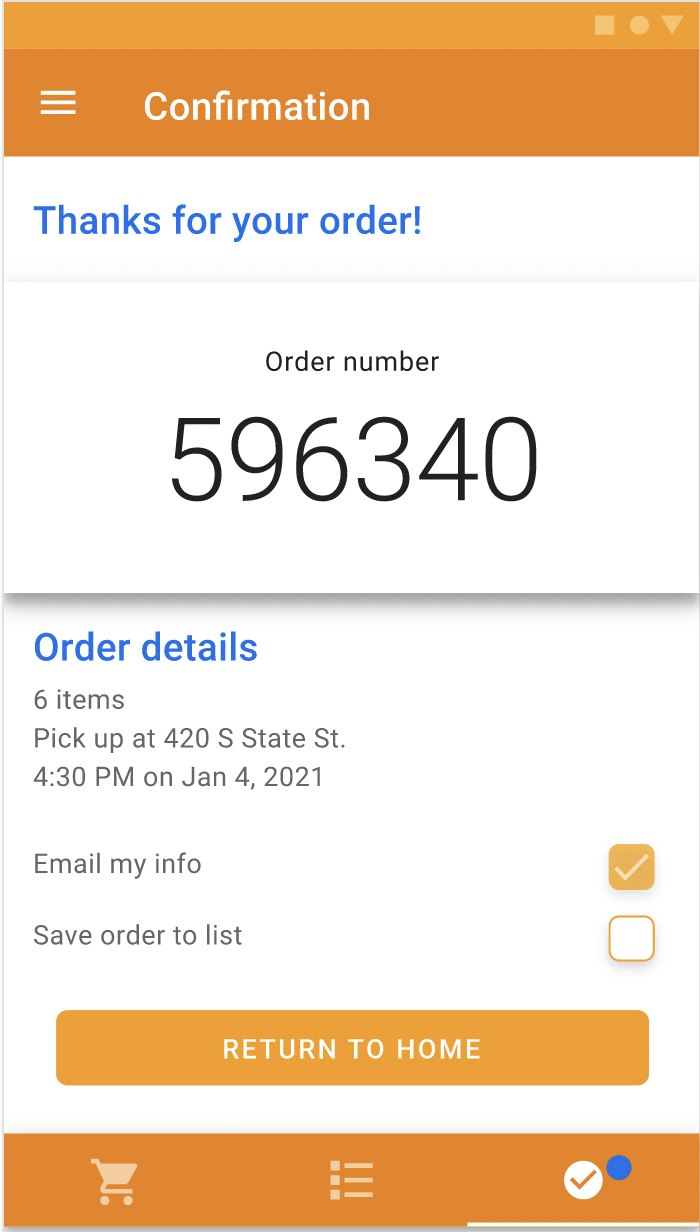
Confirmation
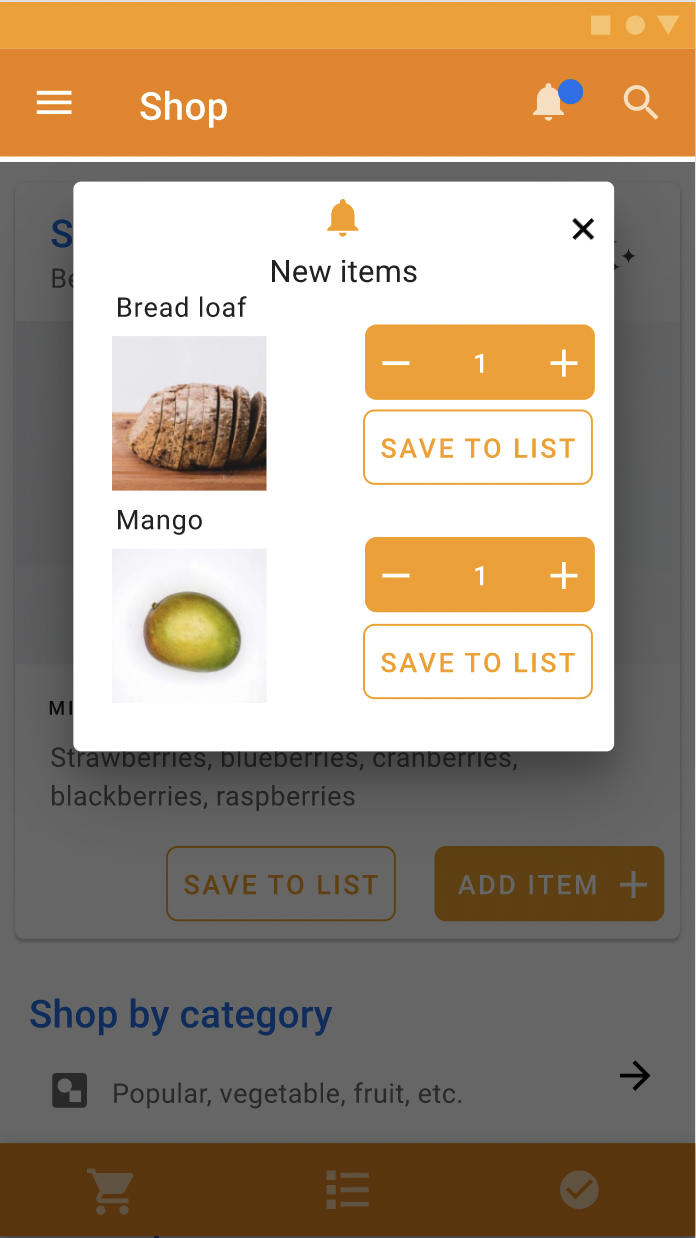
Alerts
Demo
For a demo, check out my Loom video.
Feedback
“The wow factor to me is Phil's research and need-finding process. He was able to develop his solution through engaging and working with the MBC, to support the existing infrastructure in place that's both innovative and inclusive of a wide array of users.”
— Colleague 1
“Most platforms appeal to one identity of its users, without much opportunity for them to switch roles. Phil’s multi-faceted design allows for seamless transitioning to different roles at the MBC.”
— Colleague 2
“Phil's solution has a future beyond this course. It offers an opportunity for the MBC (and other non-profit organizations centered around food accessibility) to provide equitable access to food more effectively.”
— Colleague 3