Engage Week: designing an experience students love
School has been the same way for a long time: lectures, homework, exams, bell schedules. But is that what students really need?
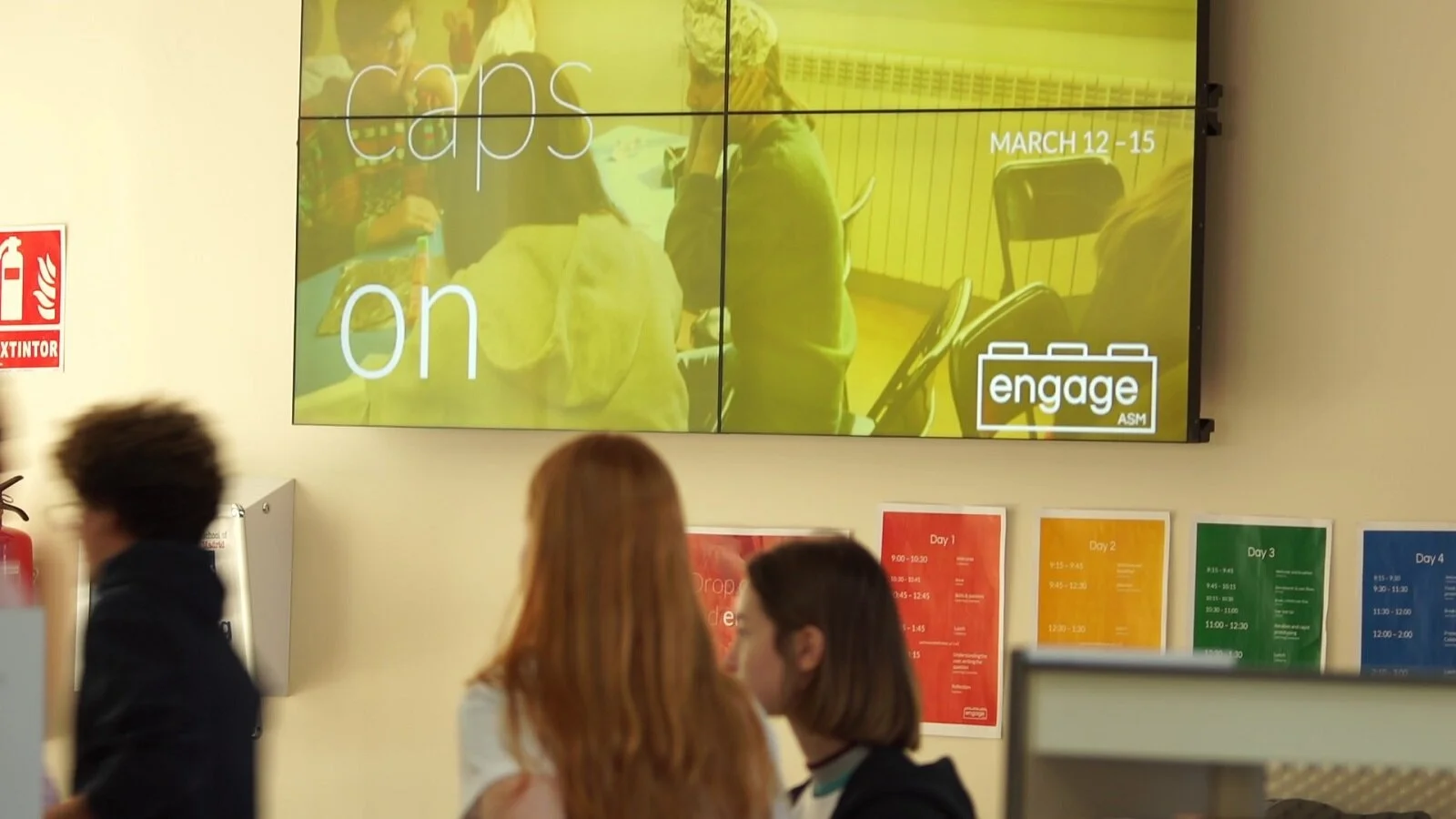
Students at Engage Week
Discover
Research & Development
Being teachers, a lot of discussion, research, and thinking went into the event design. We considered how students enter, find a seat, engage in activities, and walk away with meaningful experiences.
Three competitors (or models) stood out in our Discover phase:
The Future Design School project based in Toronto, Ontario
The Learning by Design project at the International School of Brussels
Research on the future of learning by Ted Dintersmith and Tony Wagner
We used that as ground to build a prototype (or “pilot”) of our learning event.
Prototype Goals
Testing the event at-scale, as a prototype, is an idea I stole from Make Space: How to Set the Stage for Creative Collaboration by Scott Doorley and Scott Witthoft.
Our goals were to:
experiment with physical spaces
explore patterns of movement and social organization
gauge students’ interest in activities
generate ideas from students about what to improve at the school
In sum, we ran 2 at-scale prototypes of the event with 160 participants, participatory design sessions, and group interviews to (1) test and (2) generate ideas.
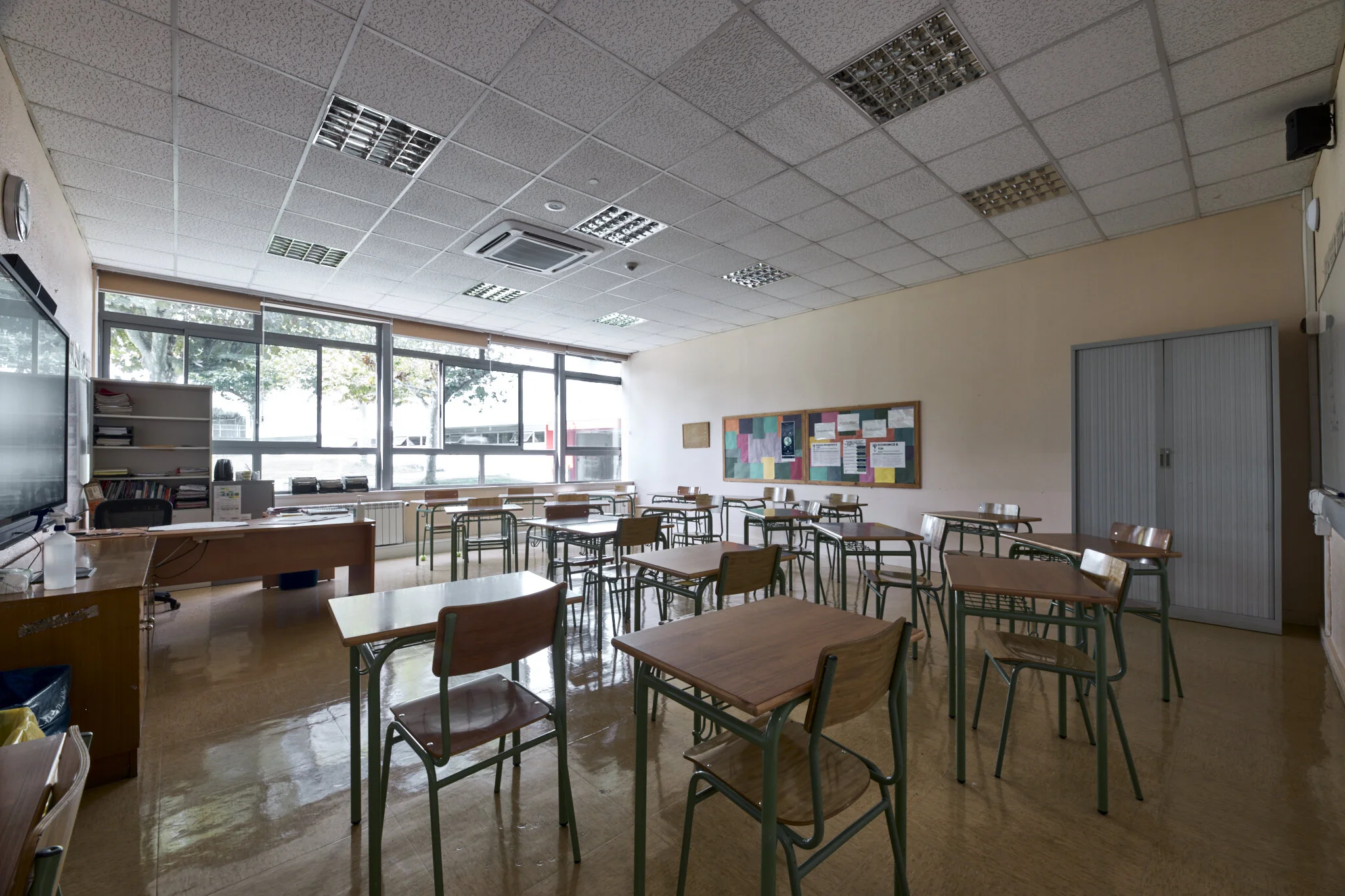
A typical classroom
The pilot space
Research highlights
At-scale prototypes
We knew one of the greatest challenges would be creating an intentional space for 160 people to work together: a human-centered space to think, move, isolate, perch, snack, share, gather, break, relax, and dig in.
We pitched to administration the idea of running two one-hour sessions at-scale, with 160 students, and got approved.
Participatory design sessions
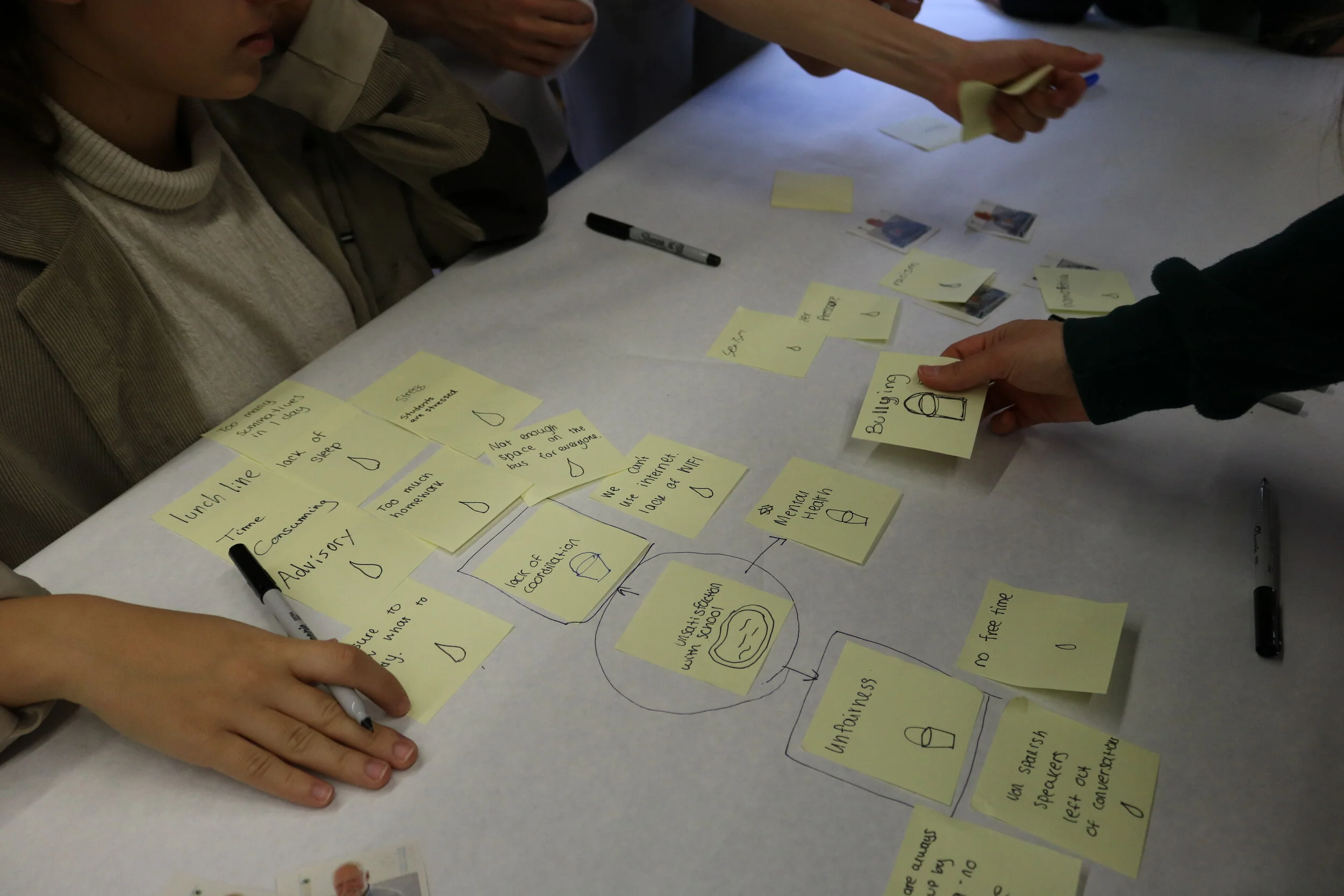
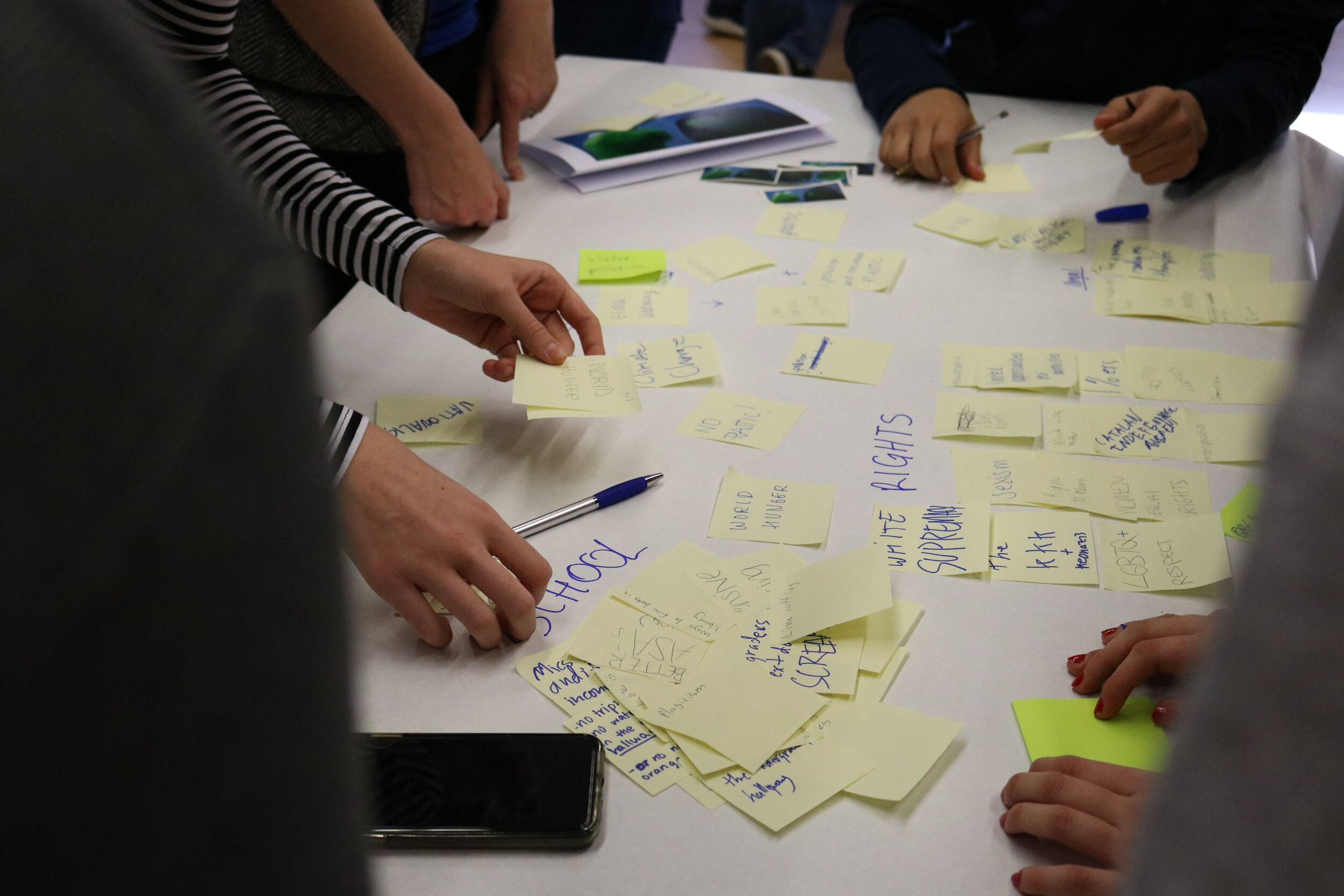
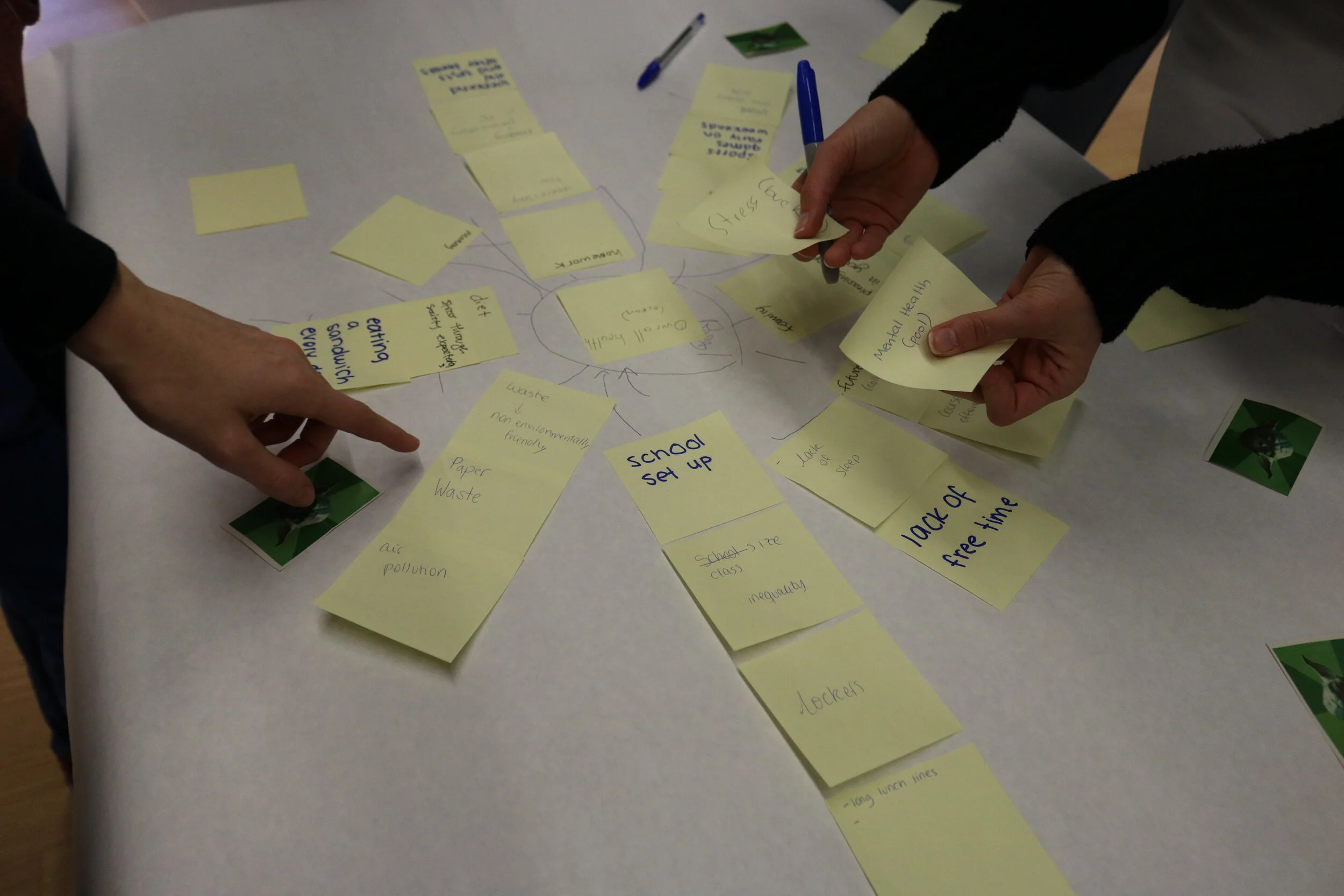
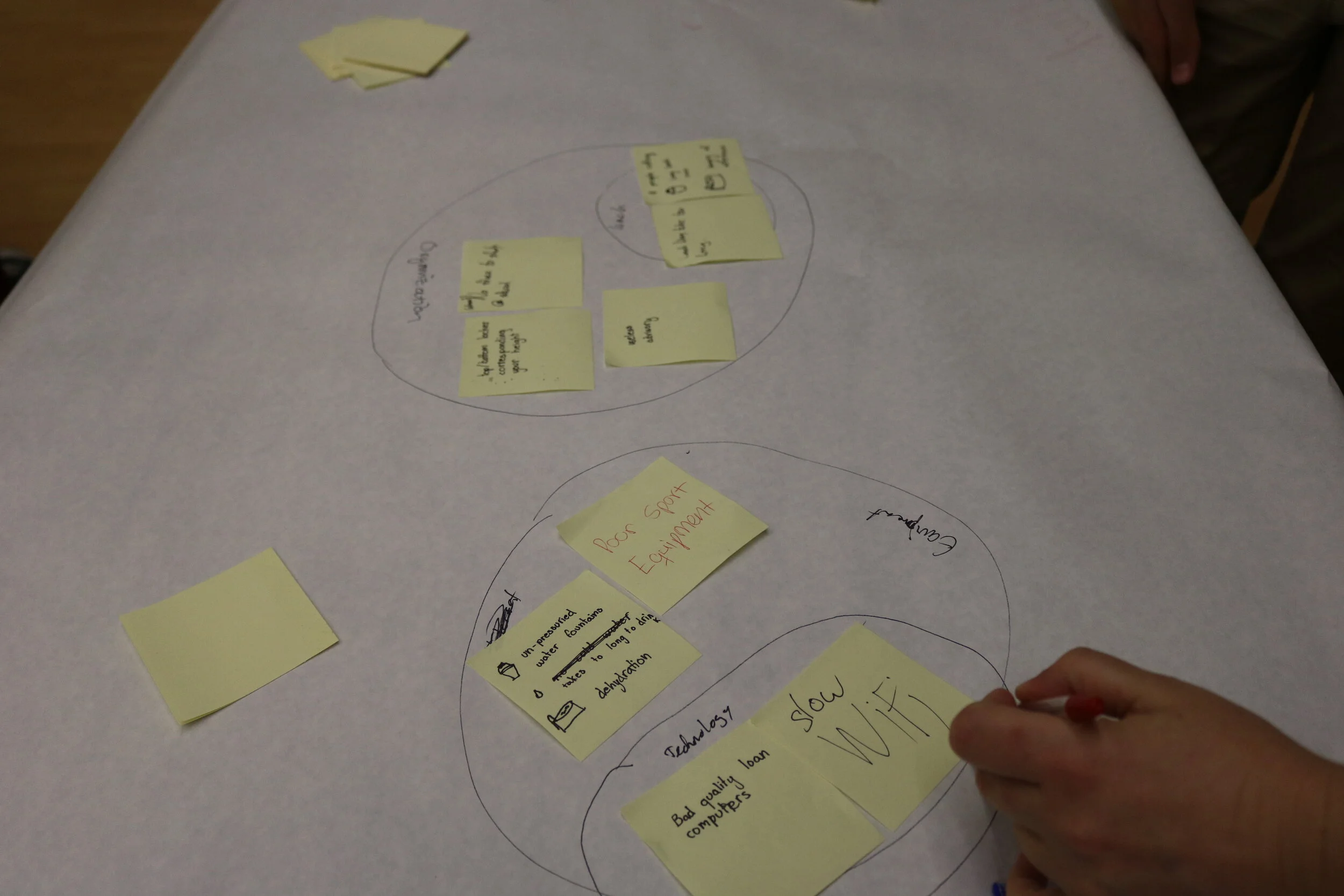
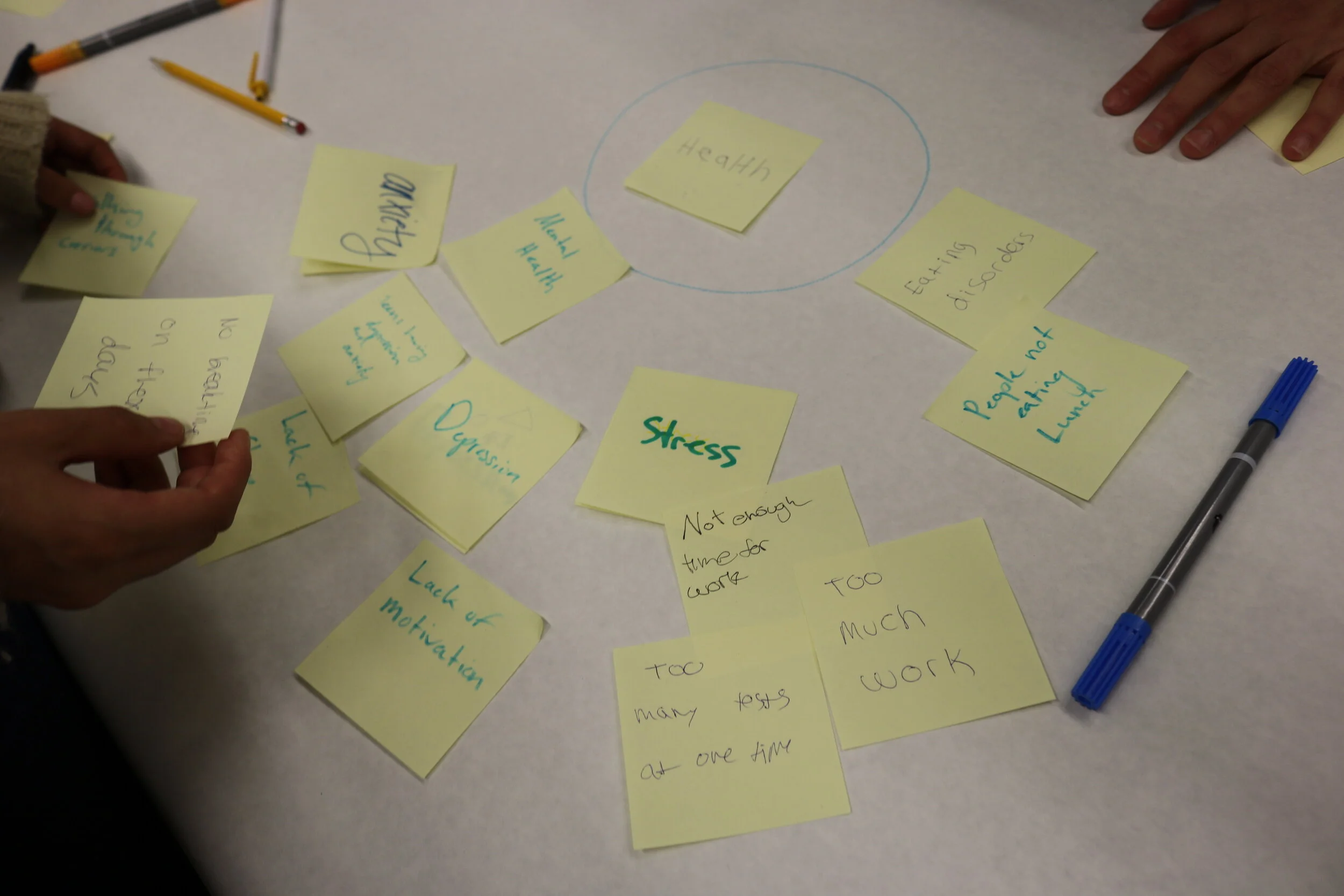
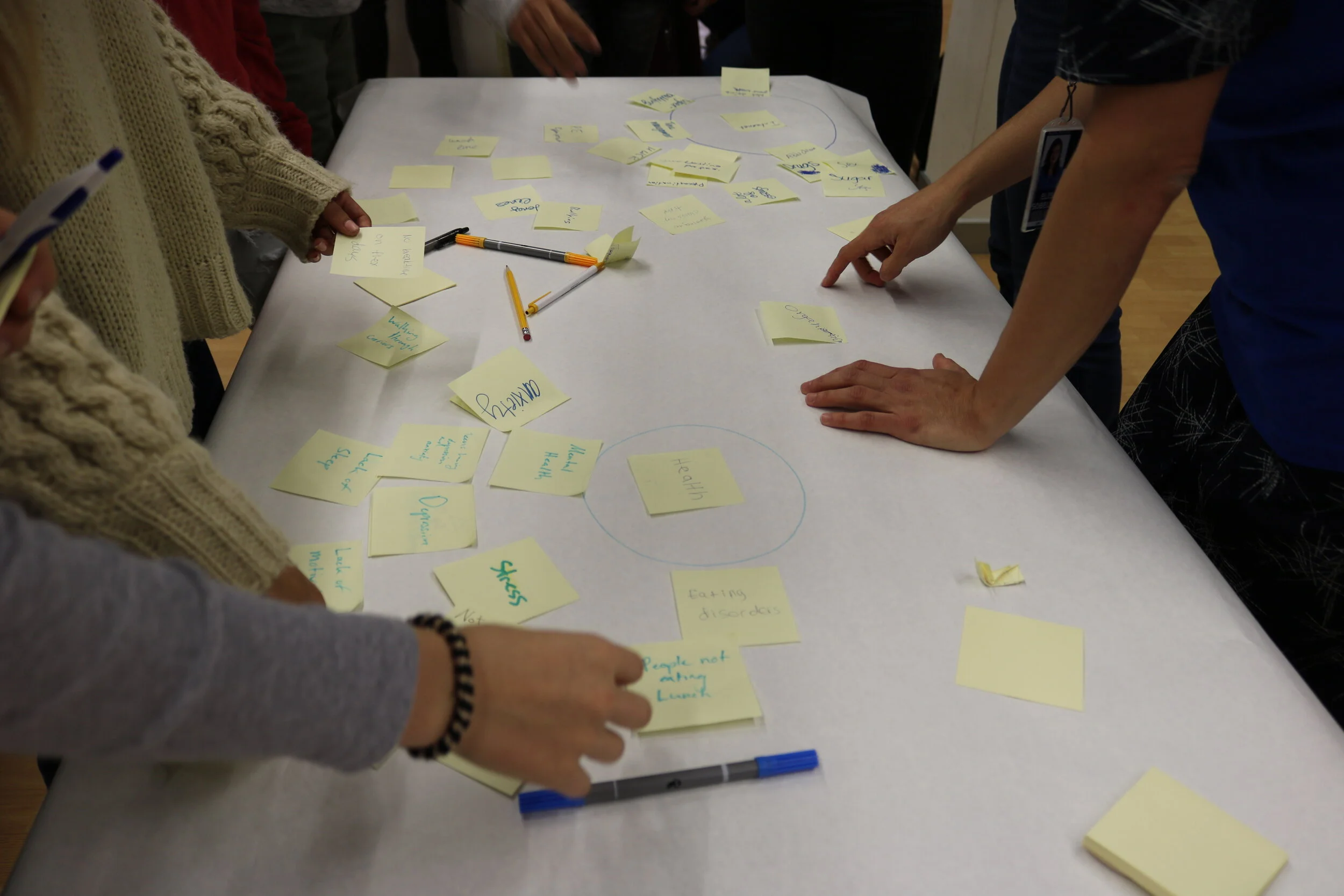
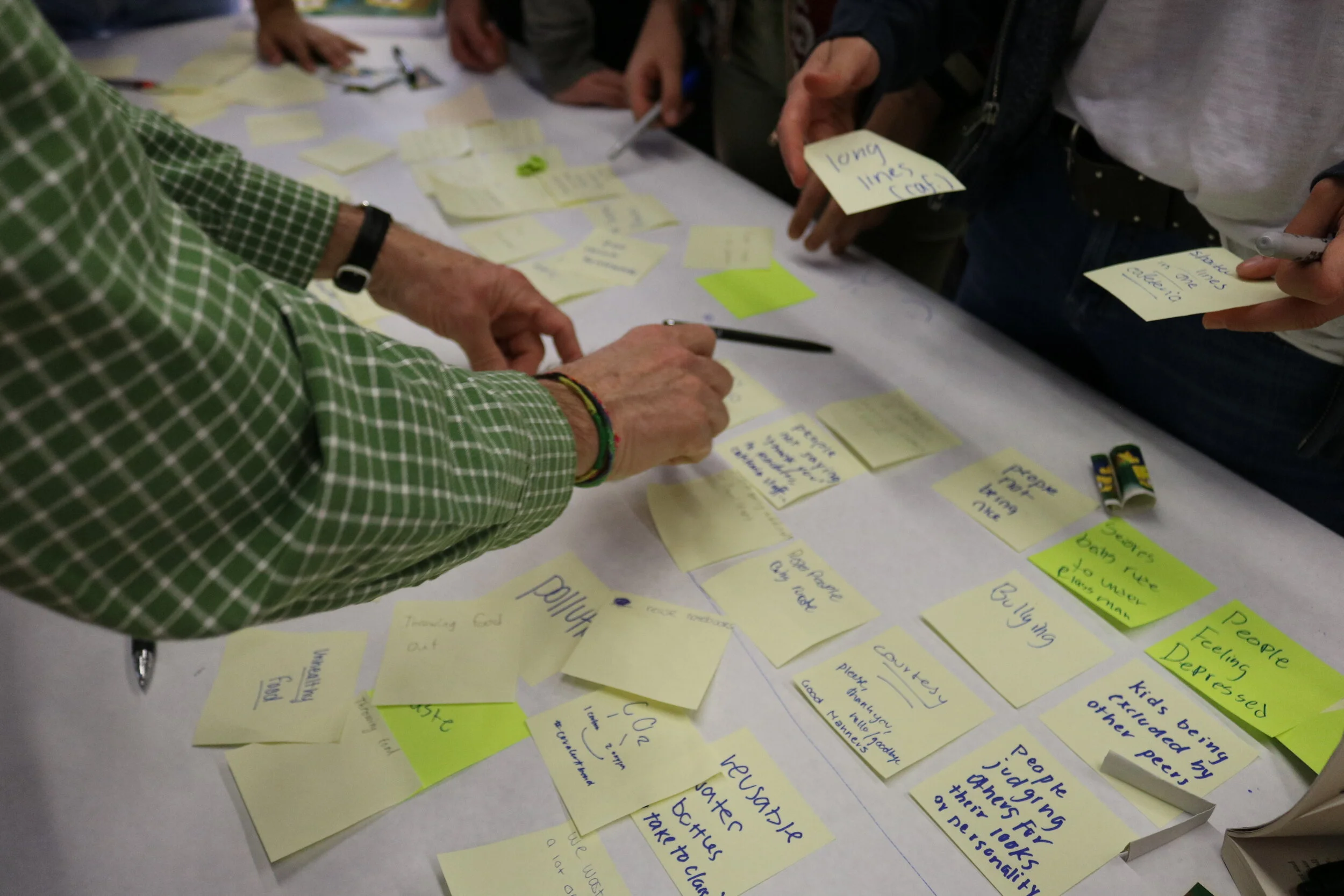
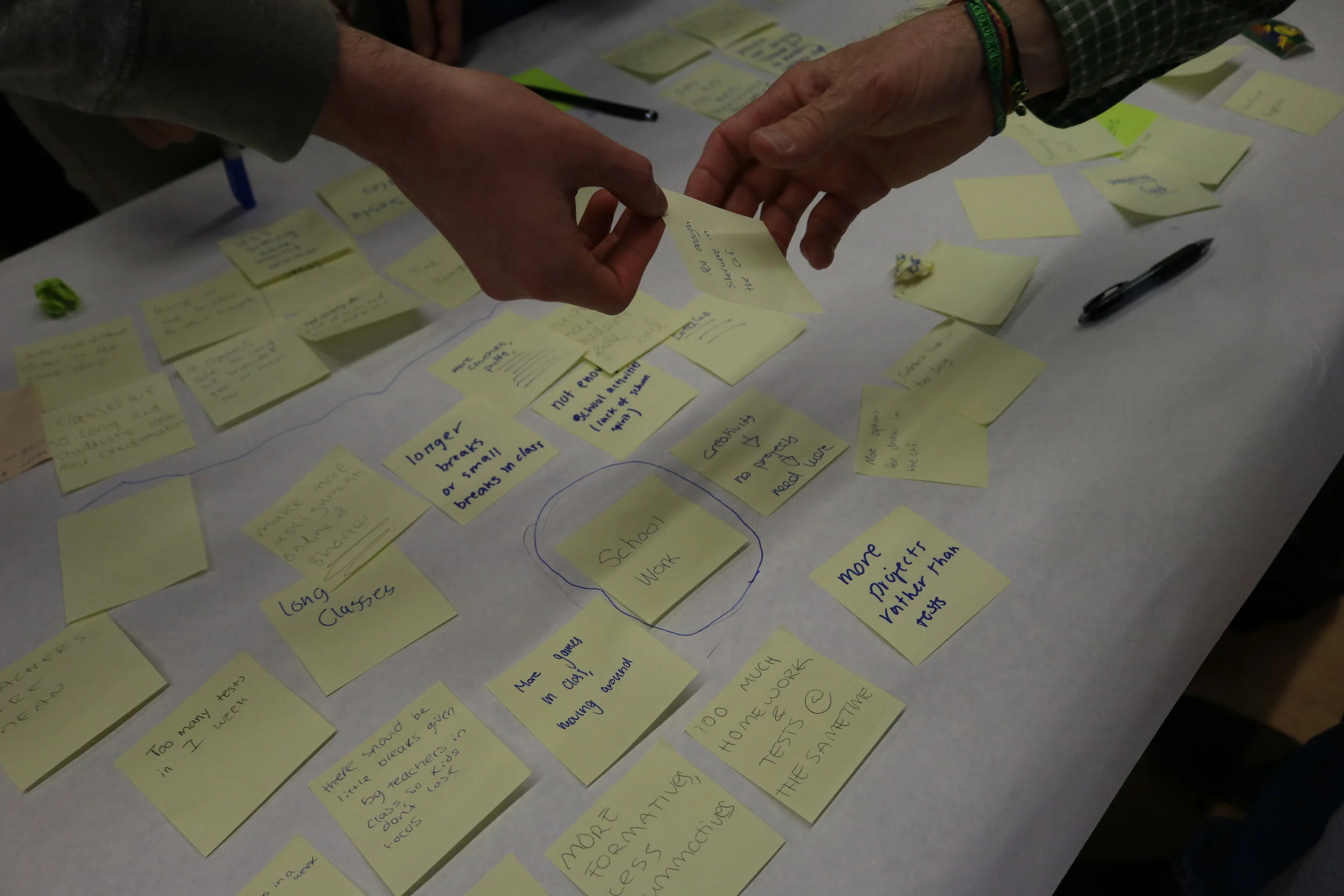
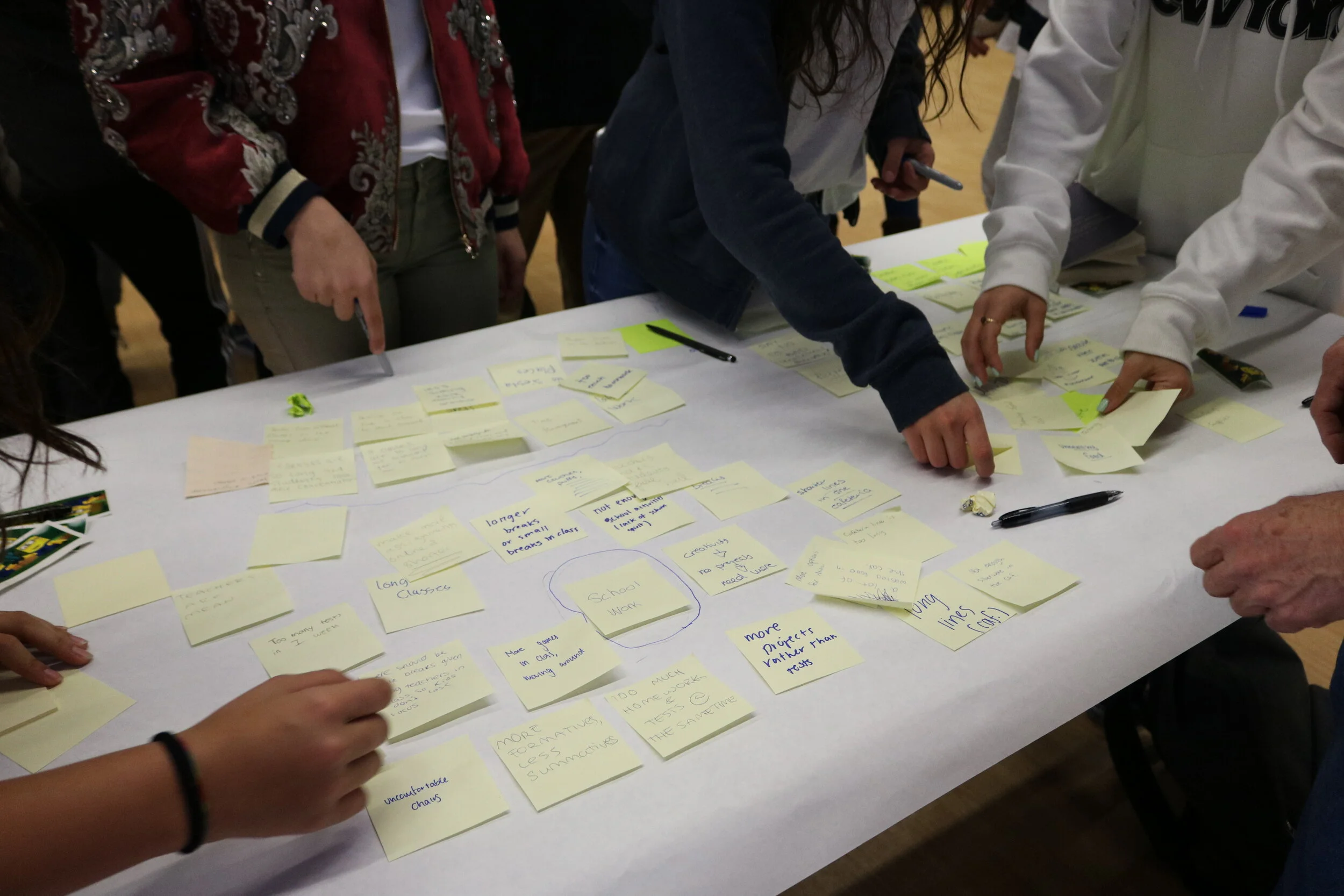
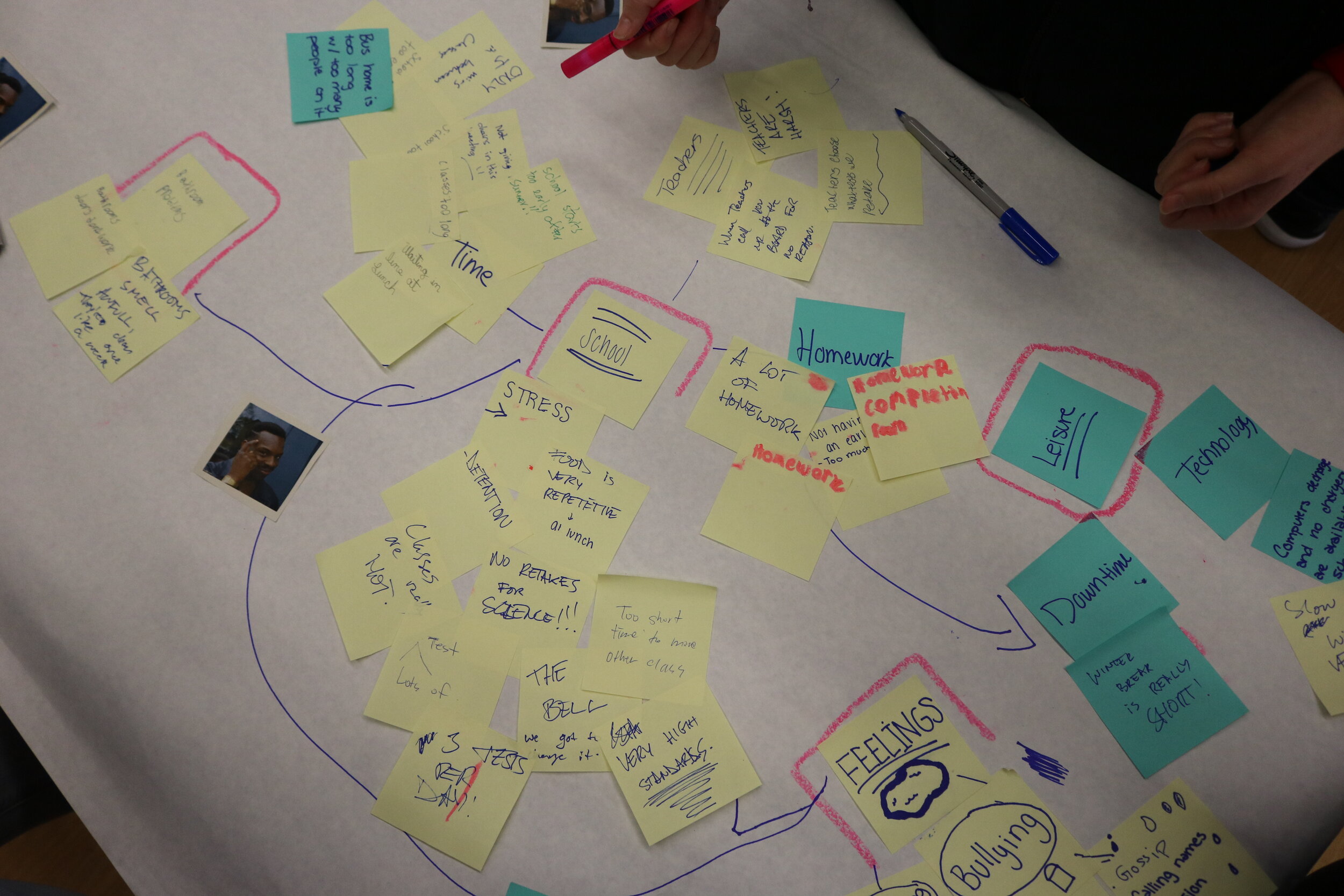
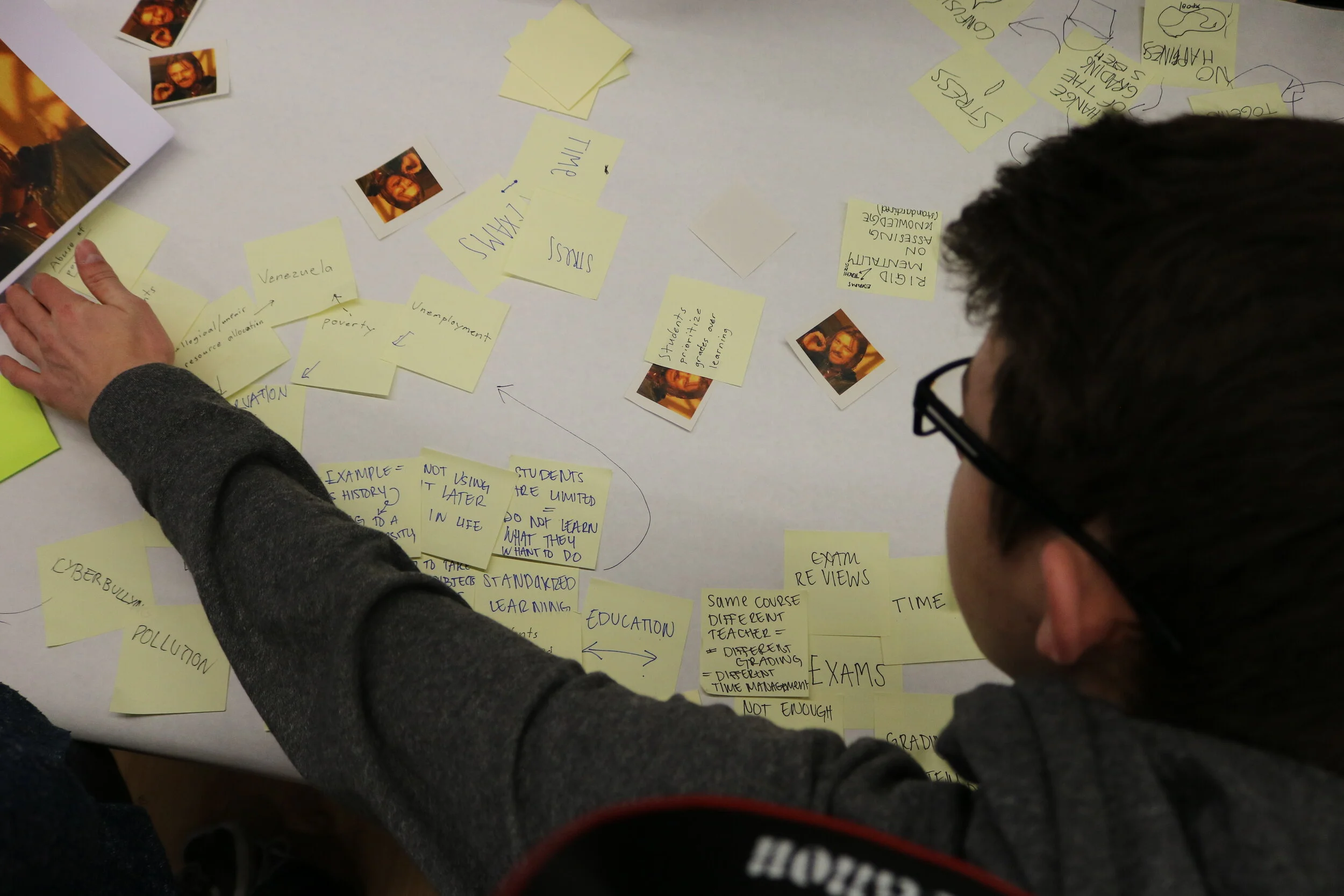
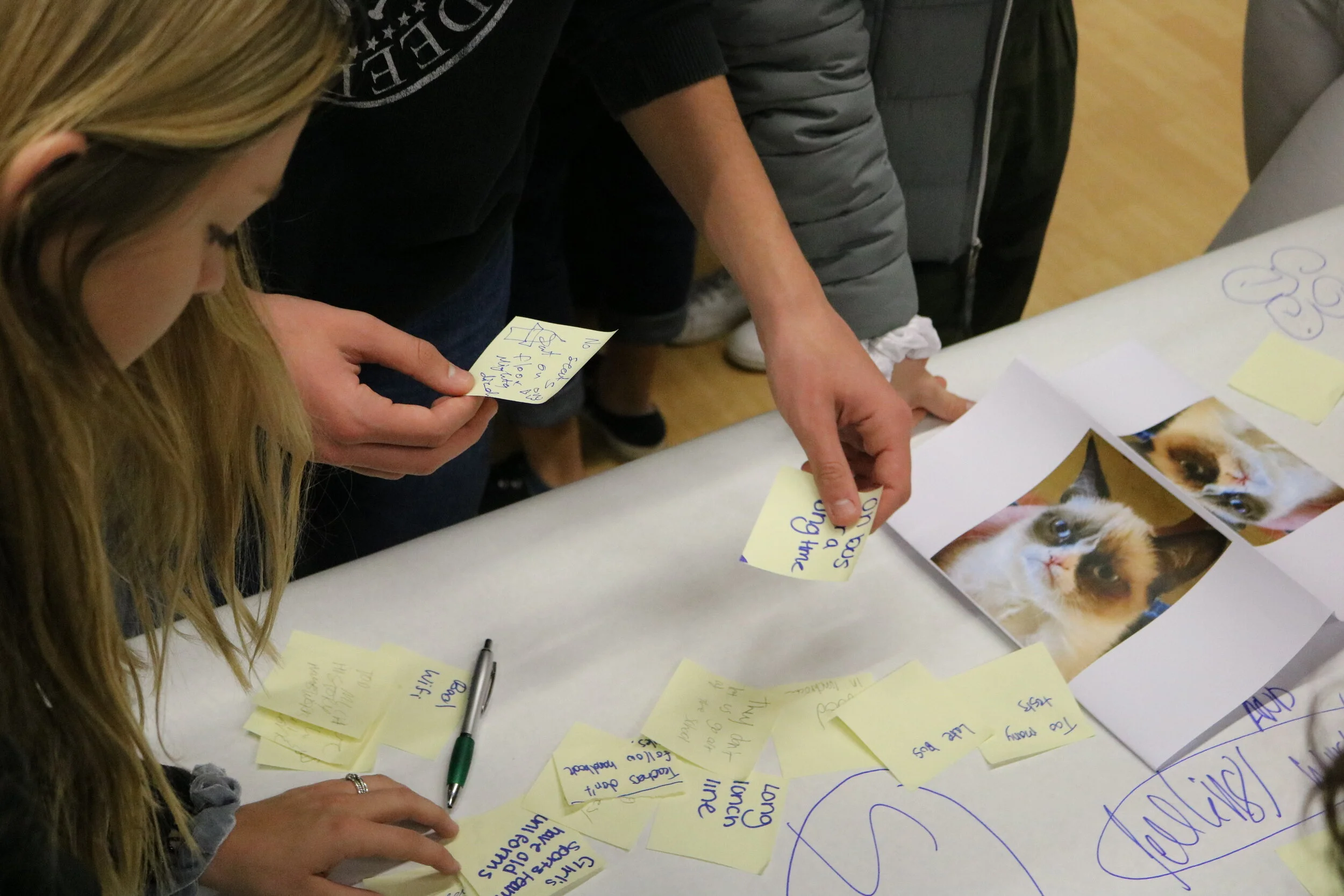
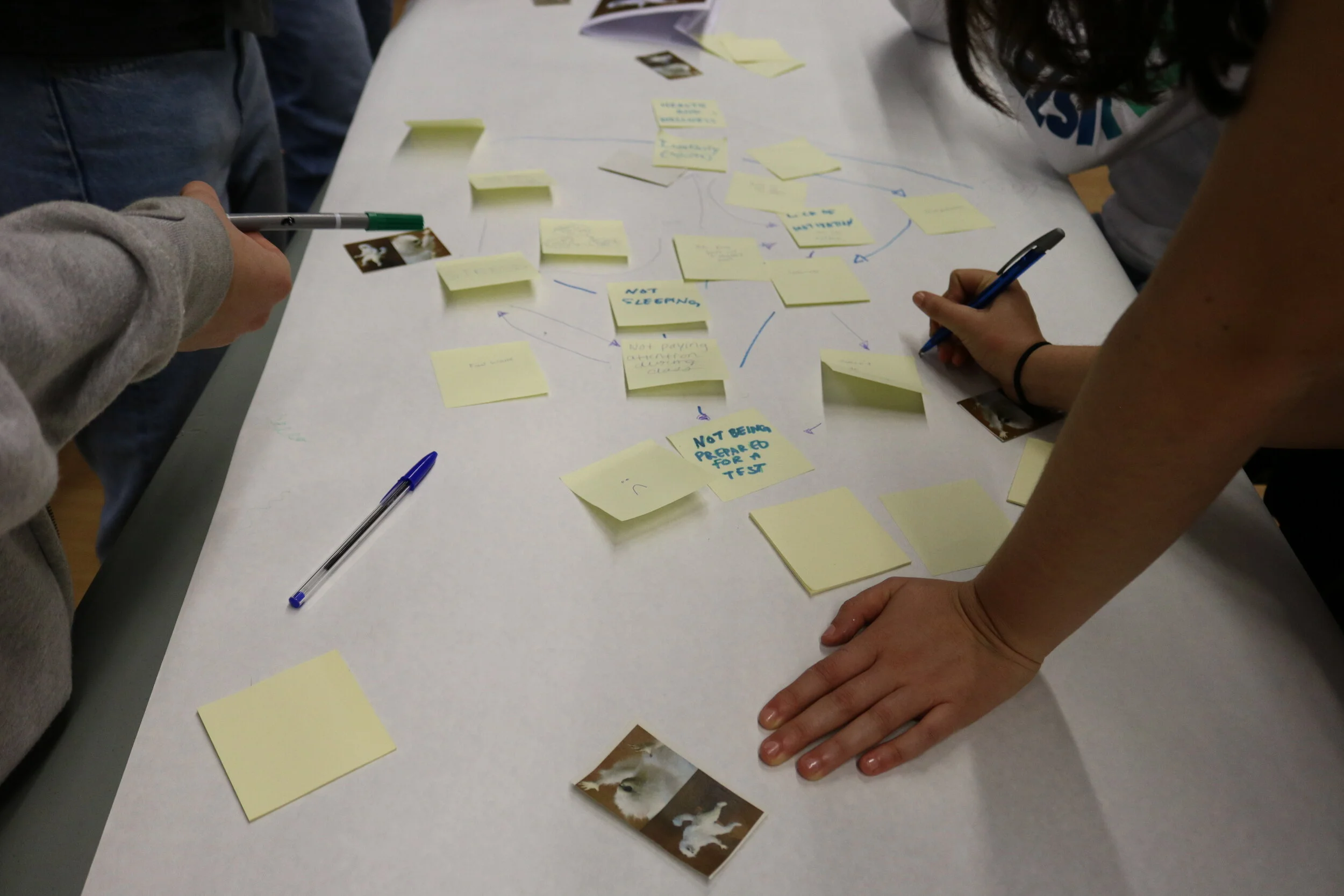
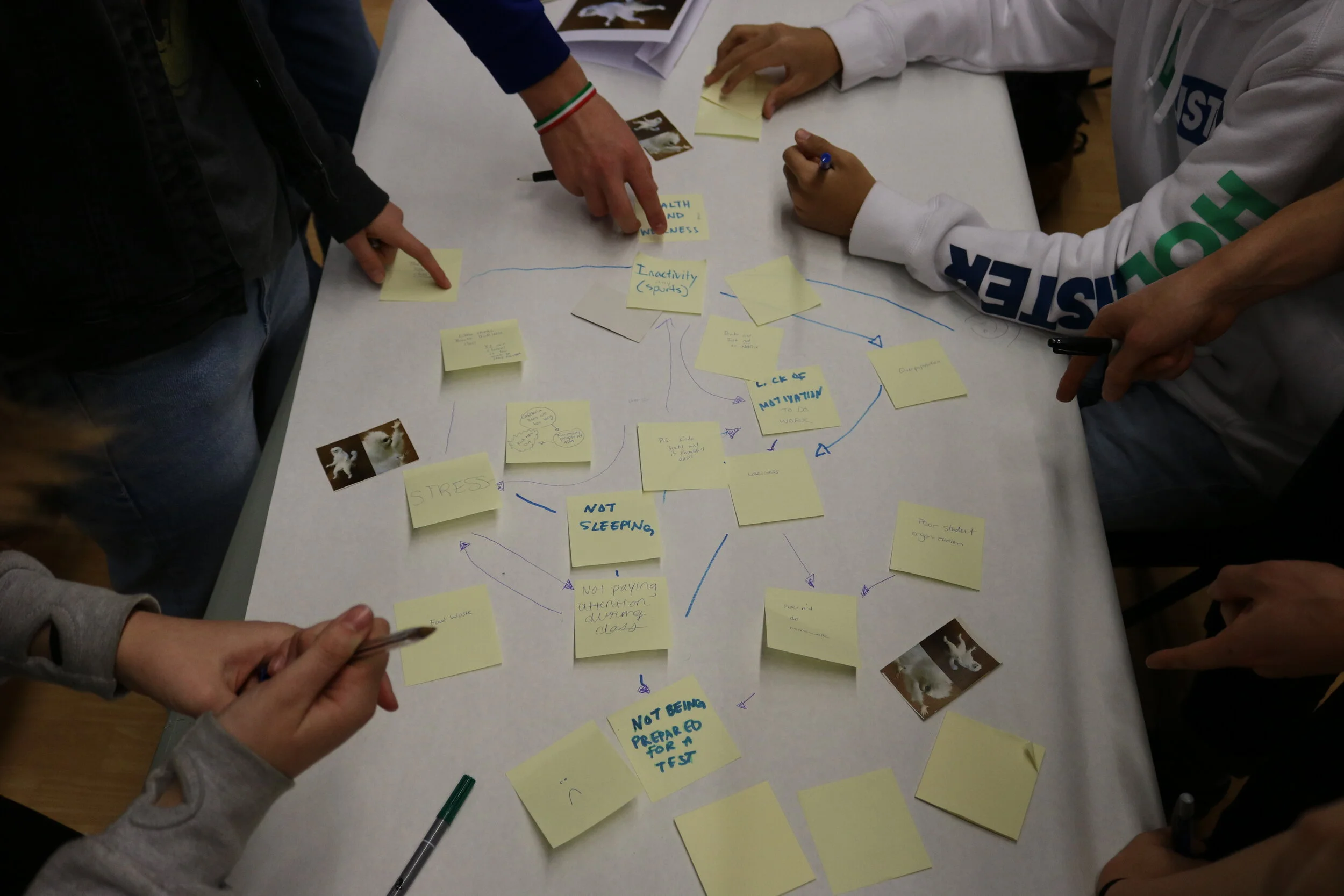
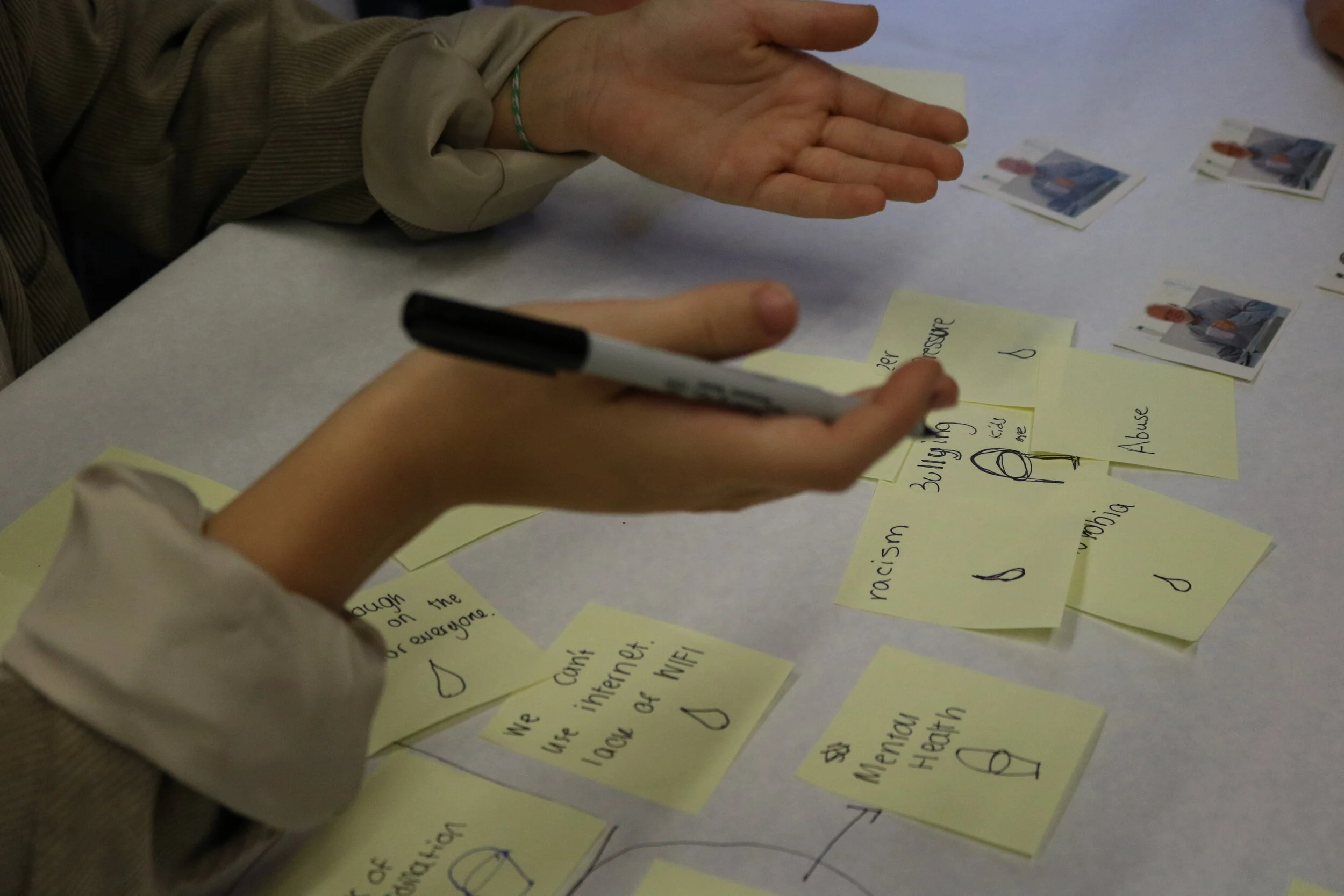
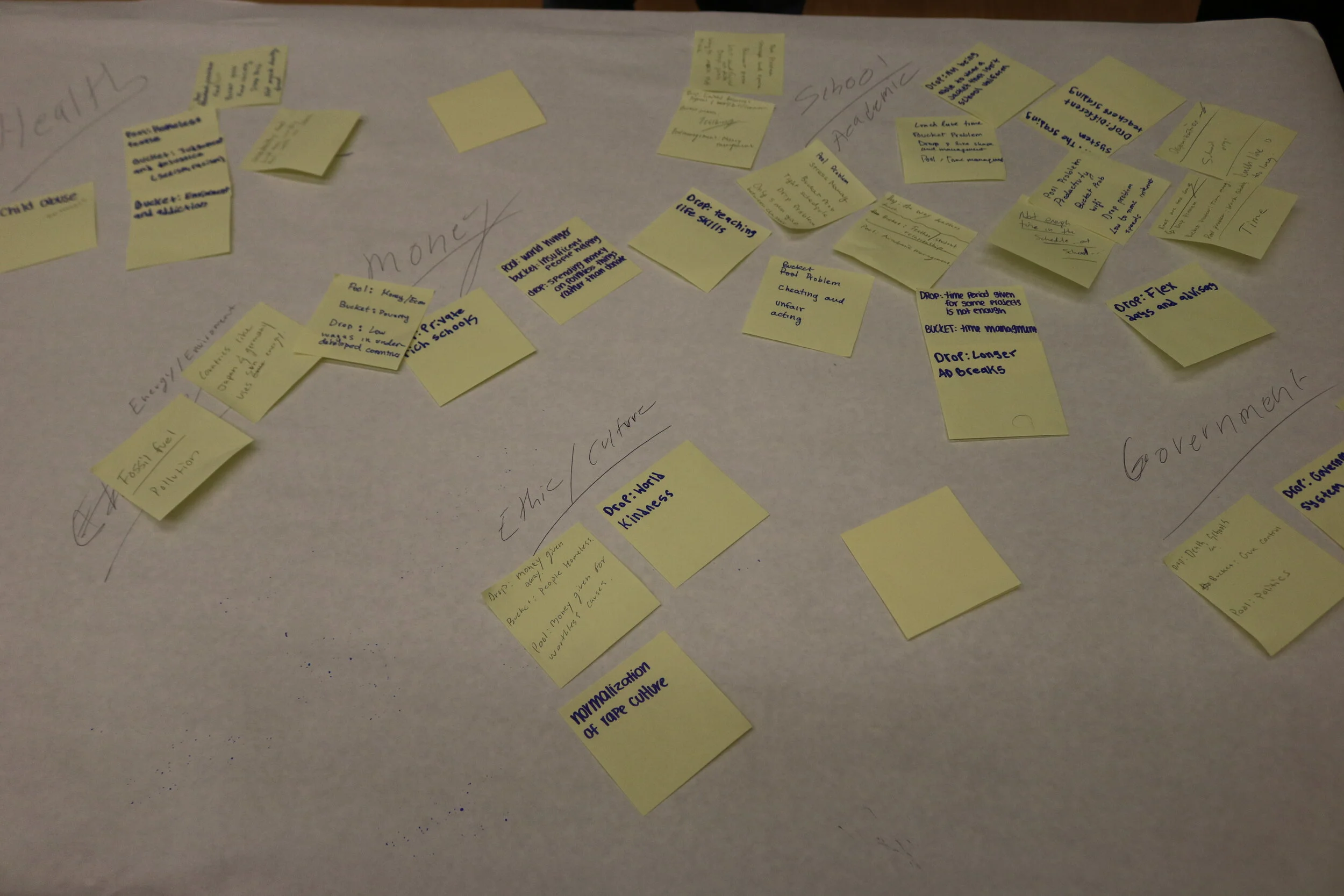
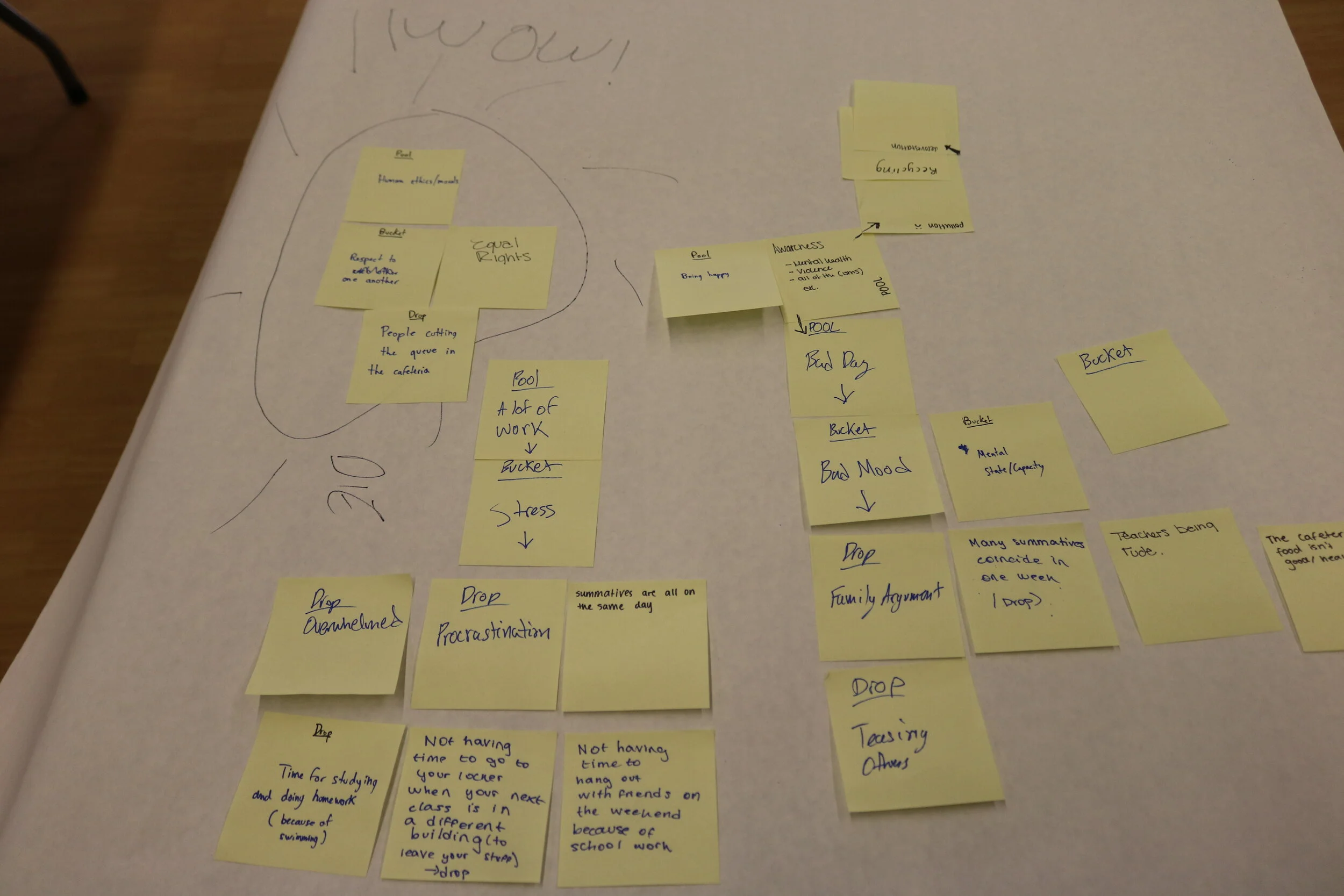
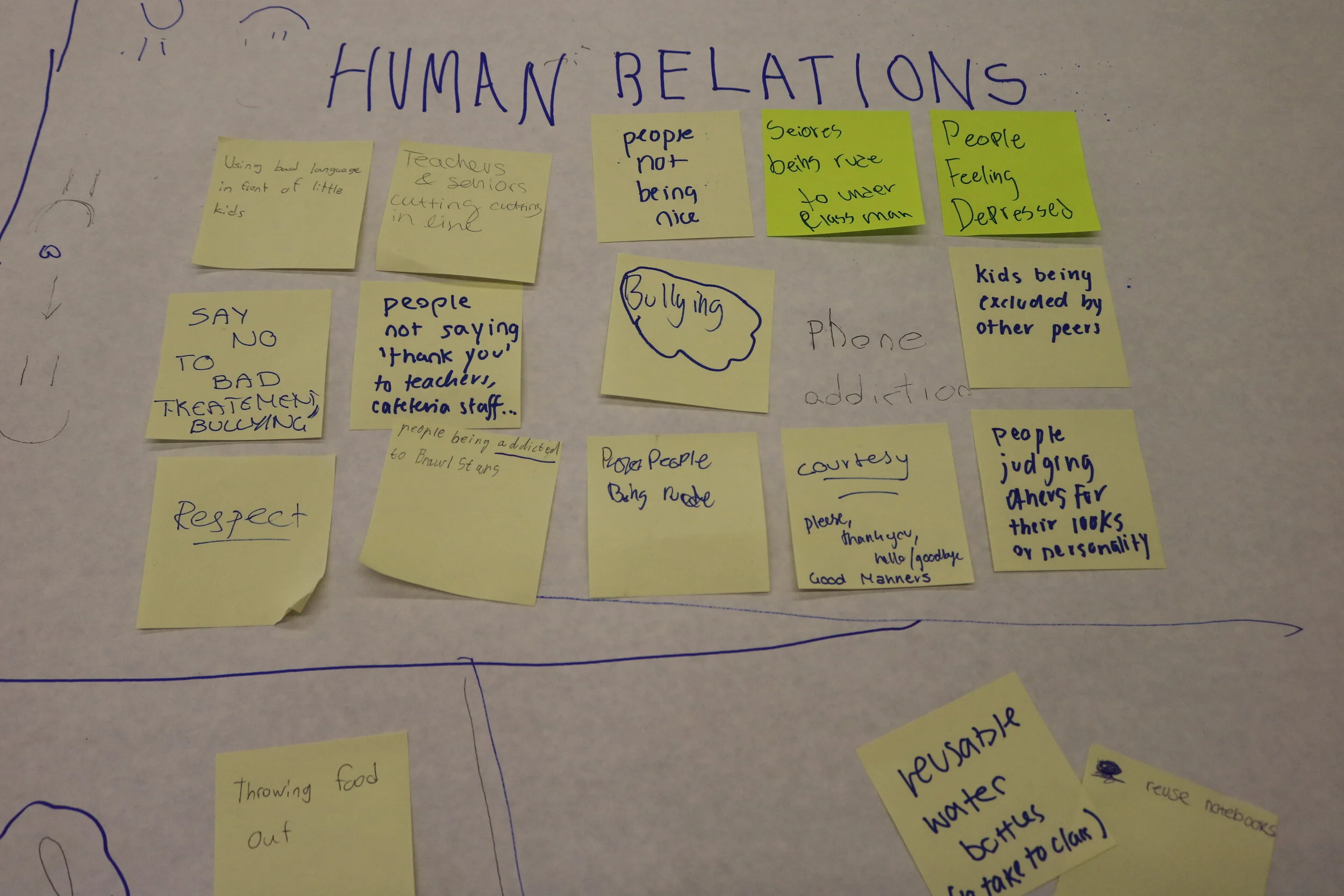
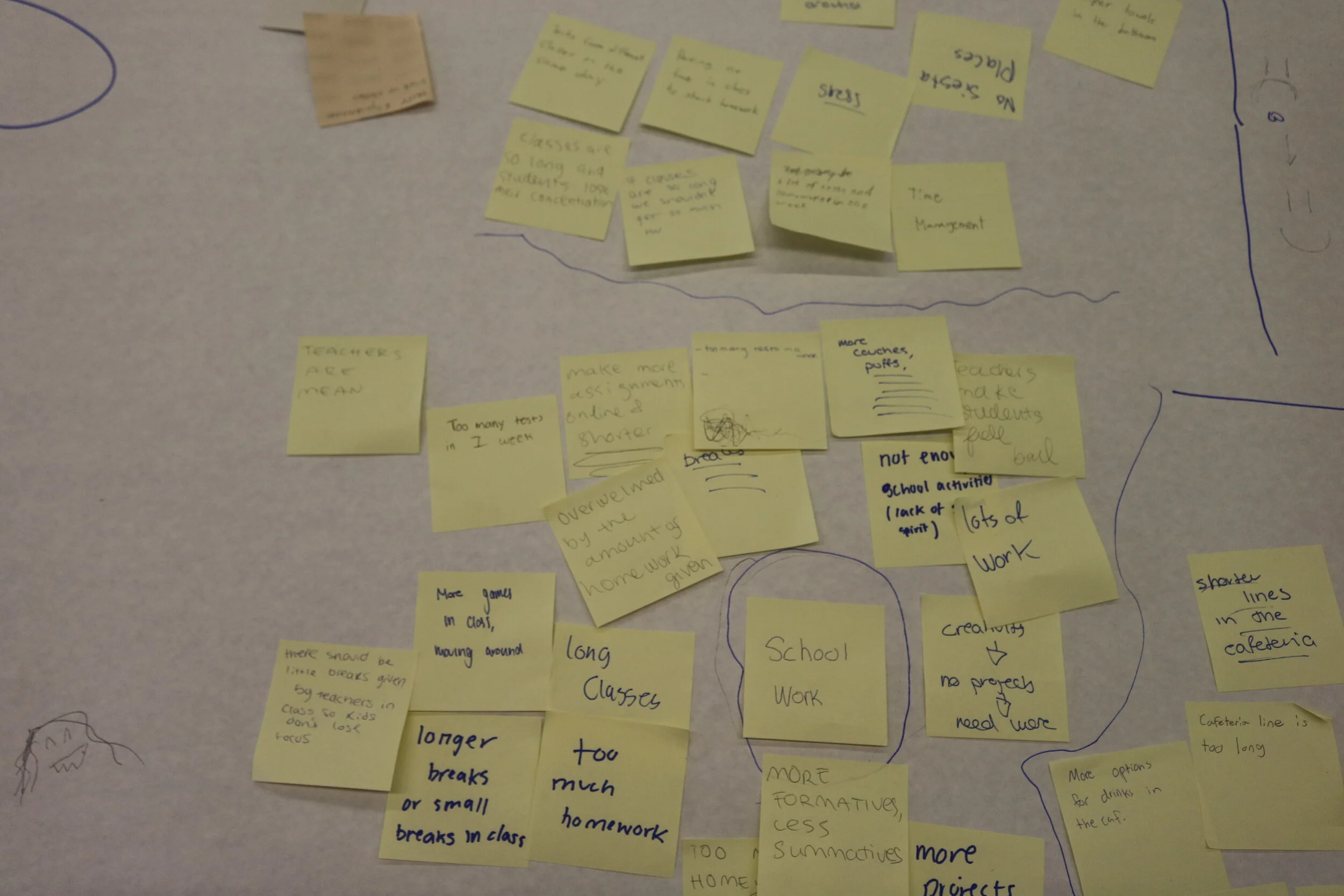
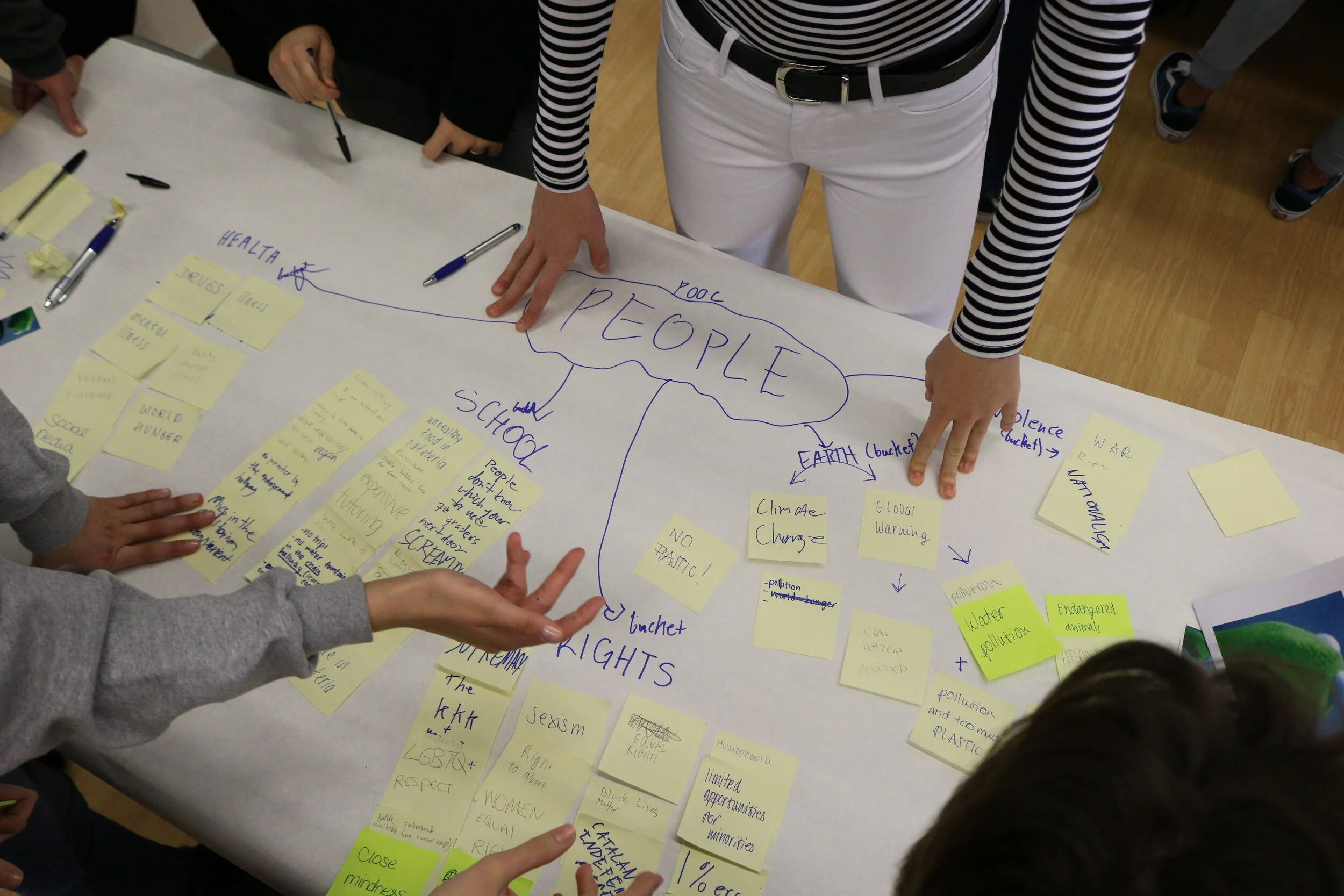
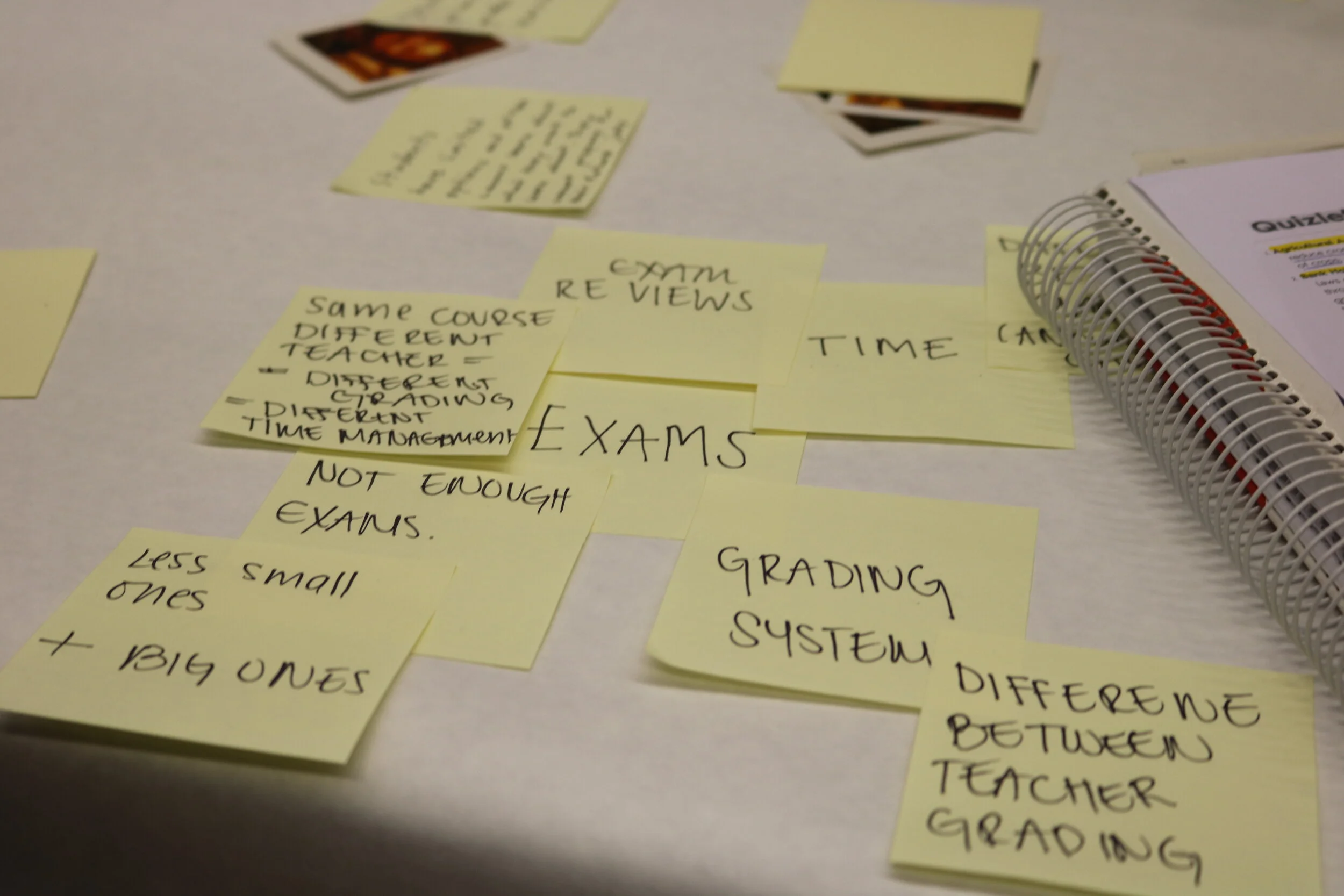
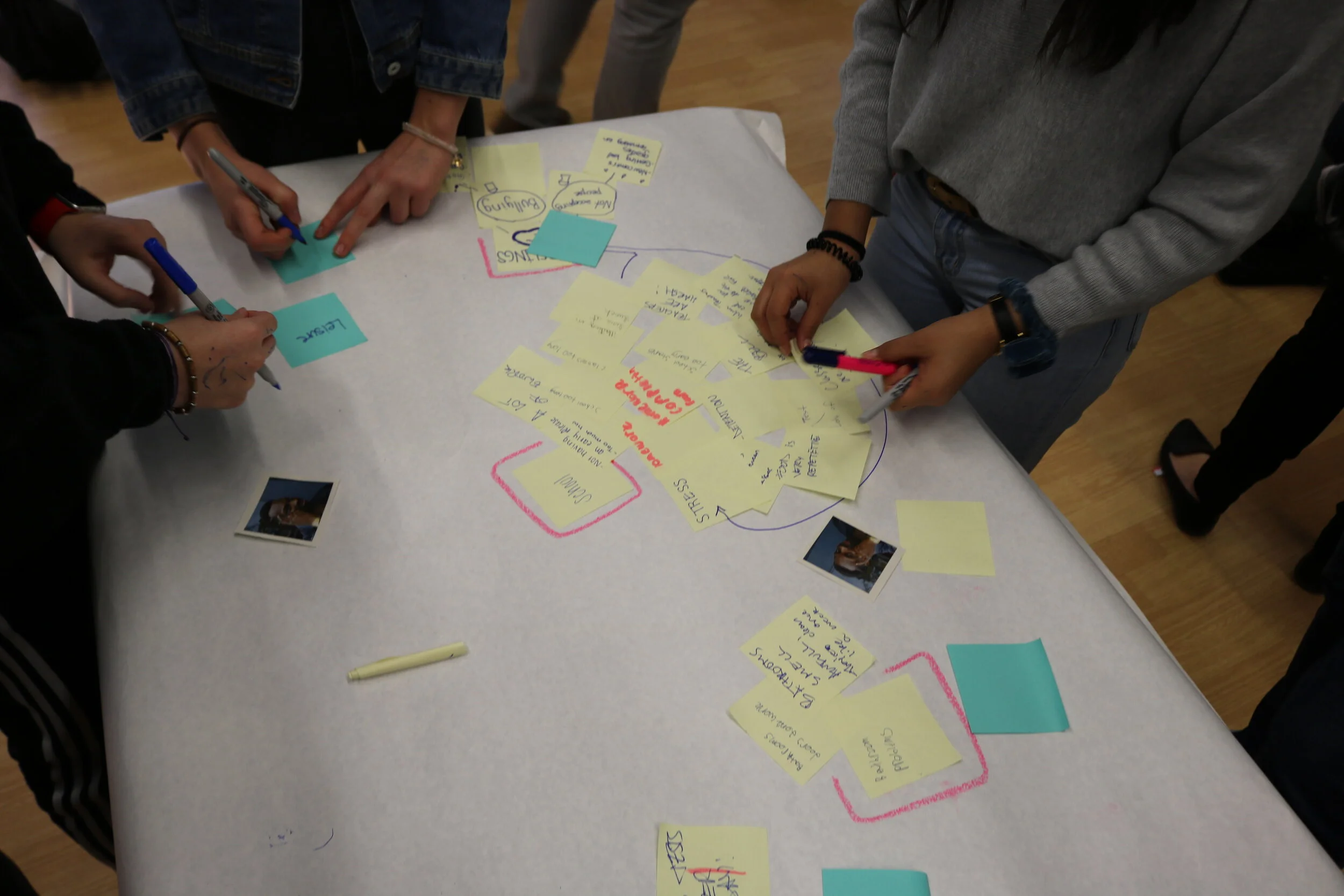
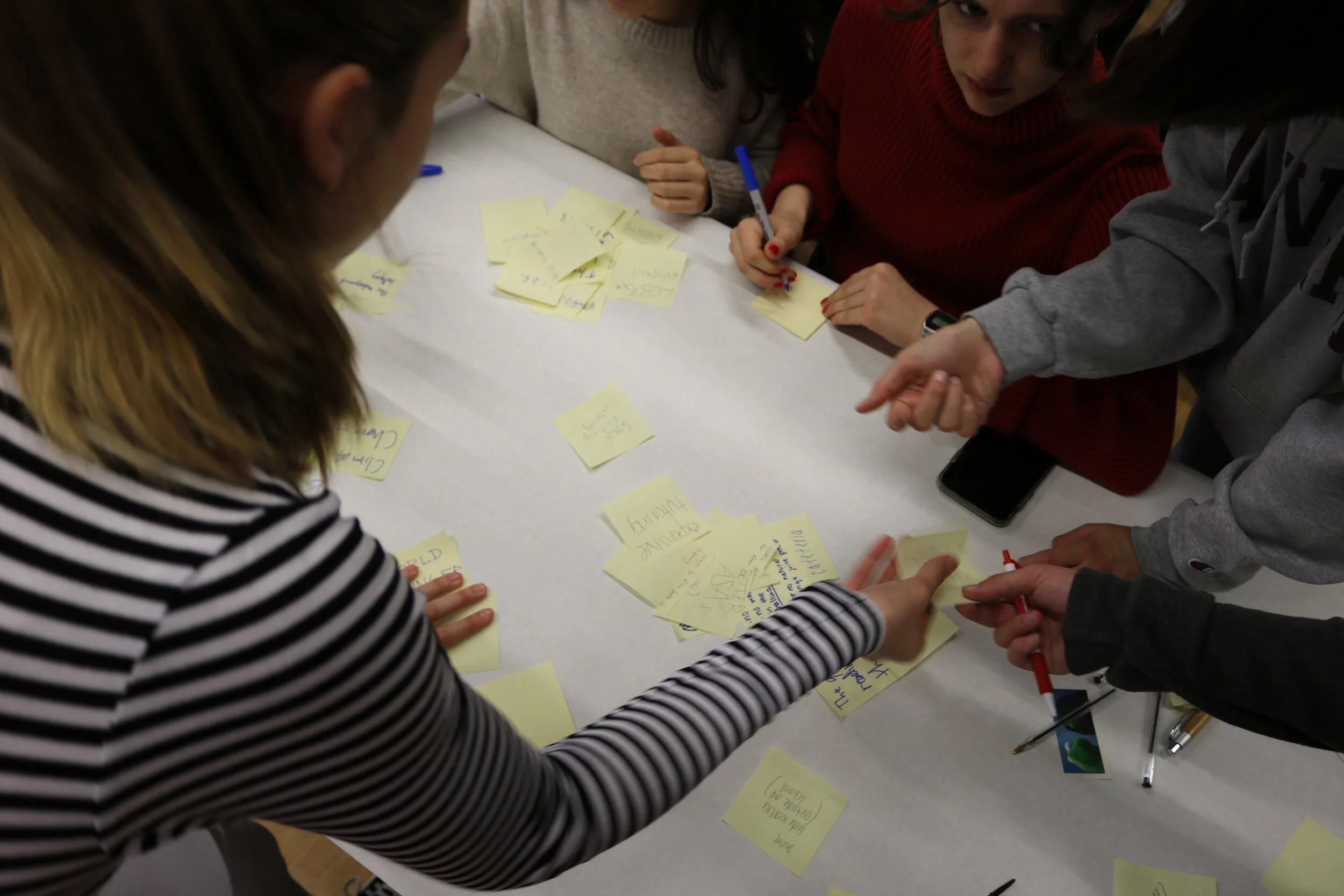
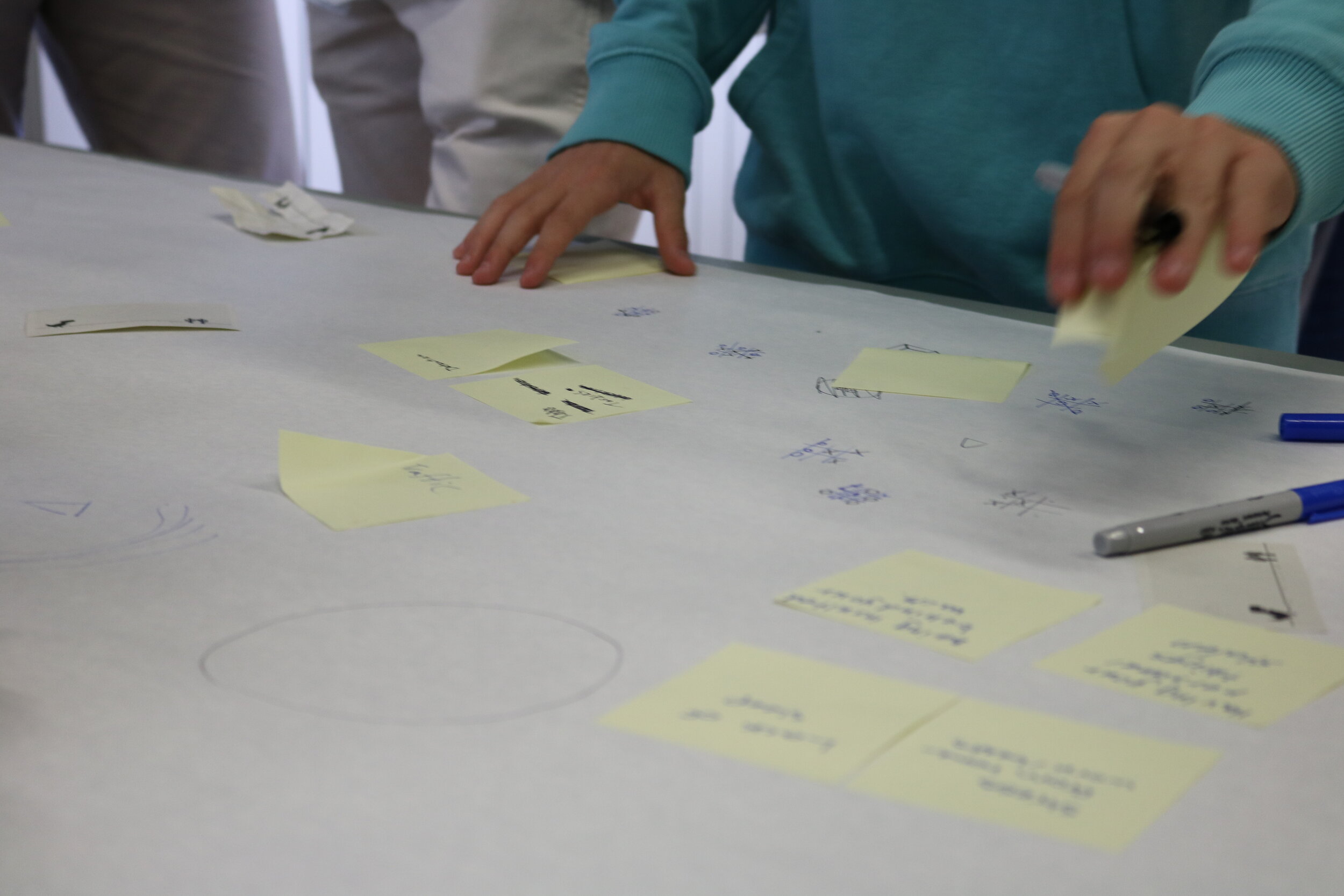
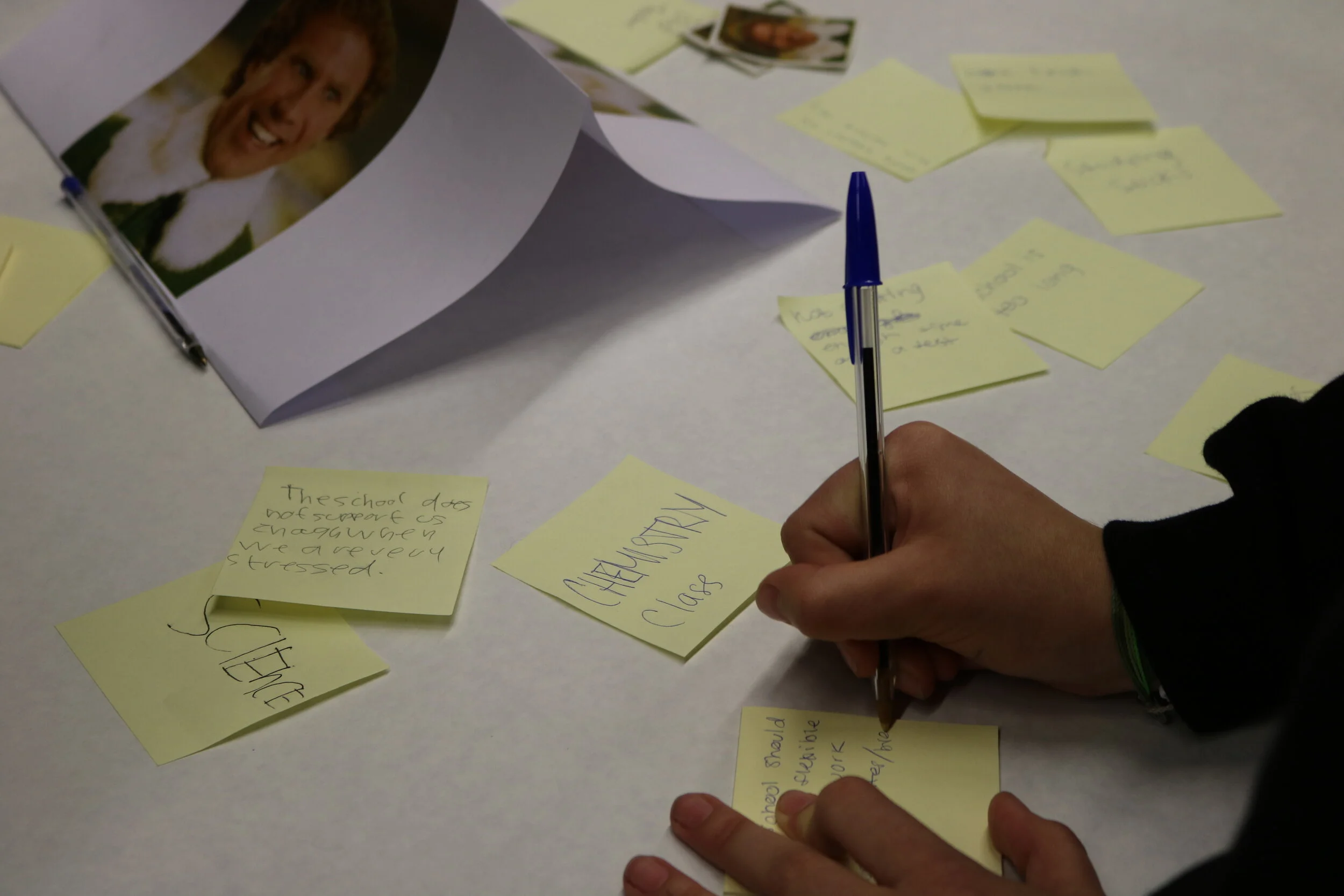
We designed a protocol to co-create areas of exploration for the event with all 160 students.
Together we generated ideas about bullying, WiFi speeds, cultural divides, lunch lines, lack of sleep, and space on the bus.
We also aggregated the data. More on that in a bit.
Group interviews
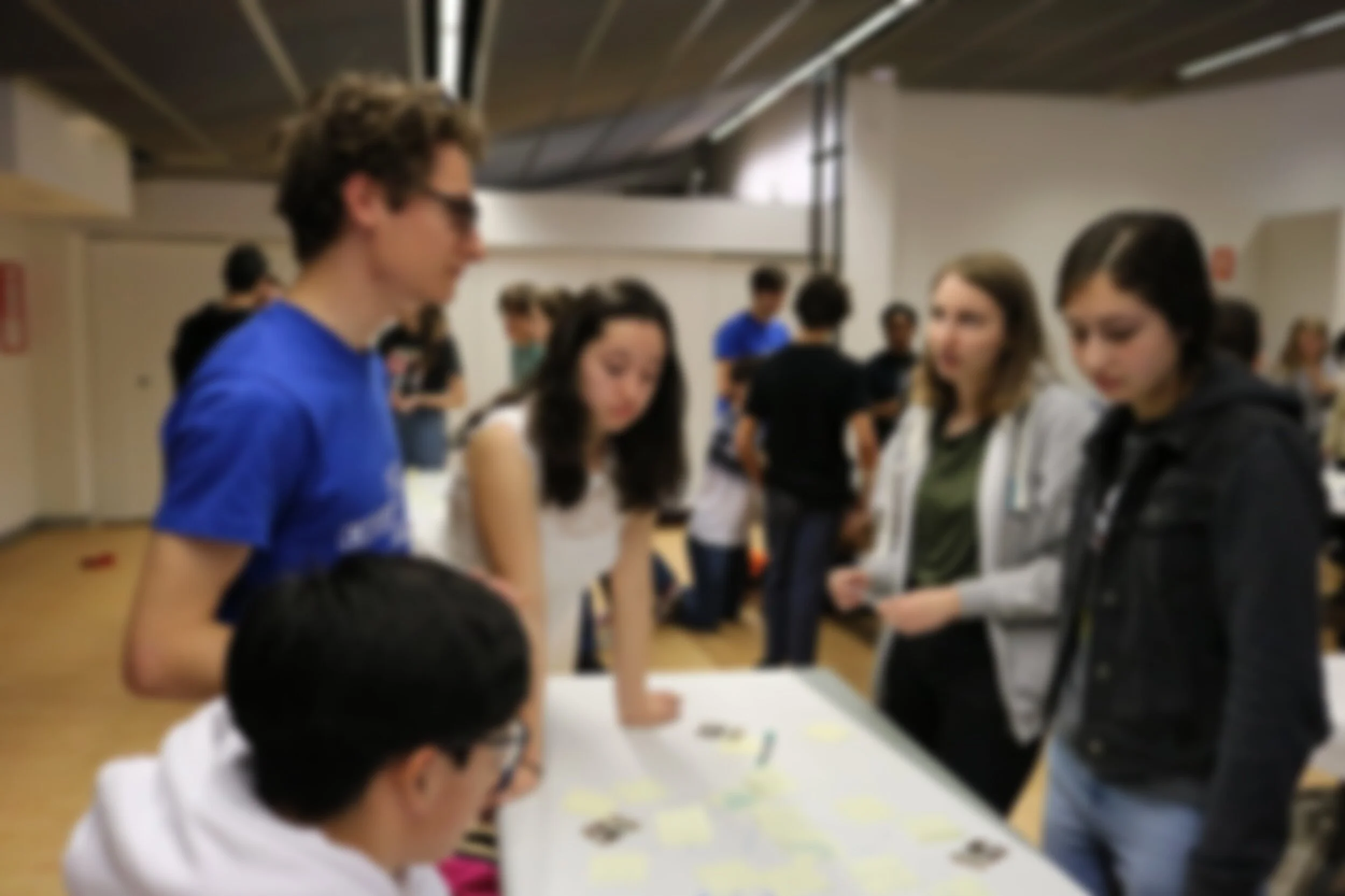
We trained facilitators to ask open-ended, probing questions with intentional silence using protocols like 5 whys. That helped us dig deep and understand what students really need.
Define
Participatory design insights
We aggregated the data from the participatory design sessions in a Google Doc to promote discussion, permanence, and access.
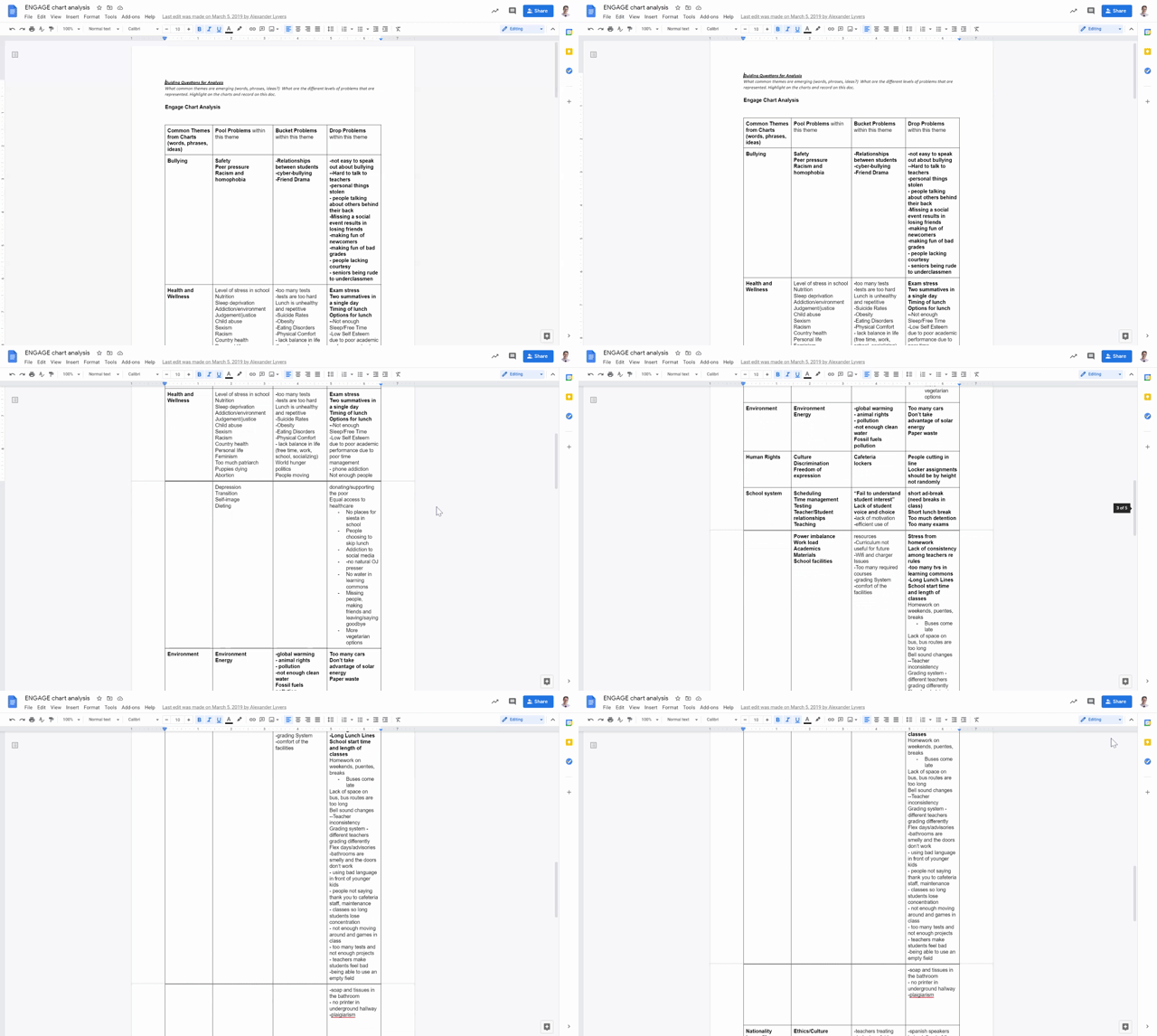
Data from the participatory sessions organized in a table
Big idea #1
From this data, we identified three big themes. Students wanted experiences that involved:
Environmental Stewardship
Cultural and Social Diversity
Service Learning
Group interview insights
We pulled our facilitator notes from group interviews and picked three quotes that represented the most biggest, most common ideas.
“I really liked the design activities because that’s what the future is all about”
“I wish we had more time and space to do the acitivites”
“I loved having more freedom than I normally have in my classes”
Big idea #2
Students liked the idea of an event with a focus on choice, “real experiences,” and future-of-work skills —but they needed more time and space to work.
Develop
Objective
We met as a team to write a design brief (aka event charter). Basically, it was “the plan.”
The objective we developed was “to engage students in problem-solving and experiential learning around authentic challenges. Learning is interdisciplinary and will have some communicable outcome.”
Important features
We then wrote the important features of the experience:
Teacher interest and choice
Student interest and choice
Students define the guiding questions (through advisory work in February)
Students choose their top three topics to explore, define, design (these will serve as starting points, but can be modified later on)
Students will make full use of the resources available at the school - facilities, supplies, technology
Effective use of the 4Cs: creativity, collaboration, creative thinking, communication
The focus will be on process, not product. While all work is solutions-focused, the expectation is not necessarily that student work will end in a product of some kind.
The experience provides opportunities for further development (projects could turn into solutions presented in the community, student clubs/activities, precursors to CAS, etc.) of the experience
Tentative Schedule
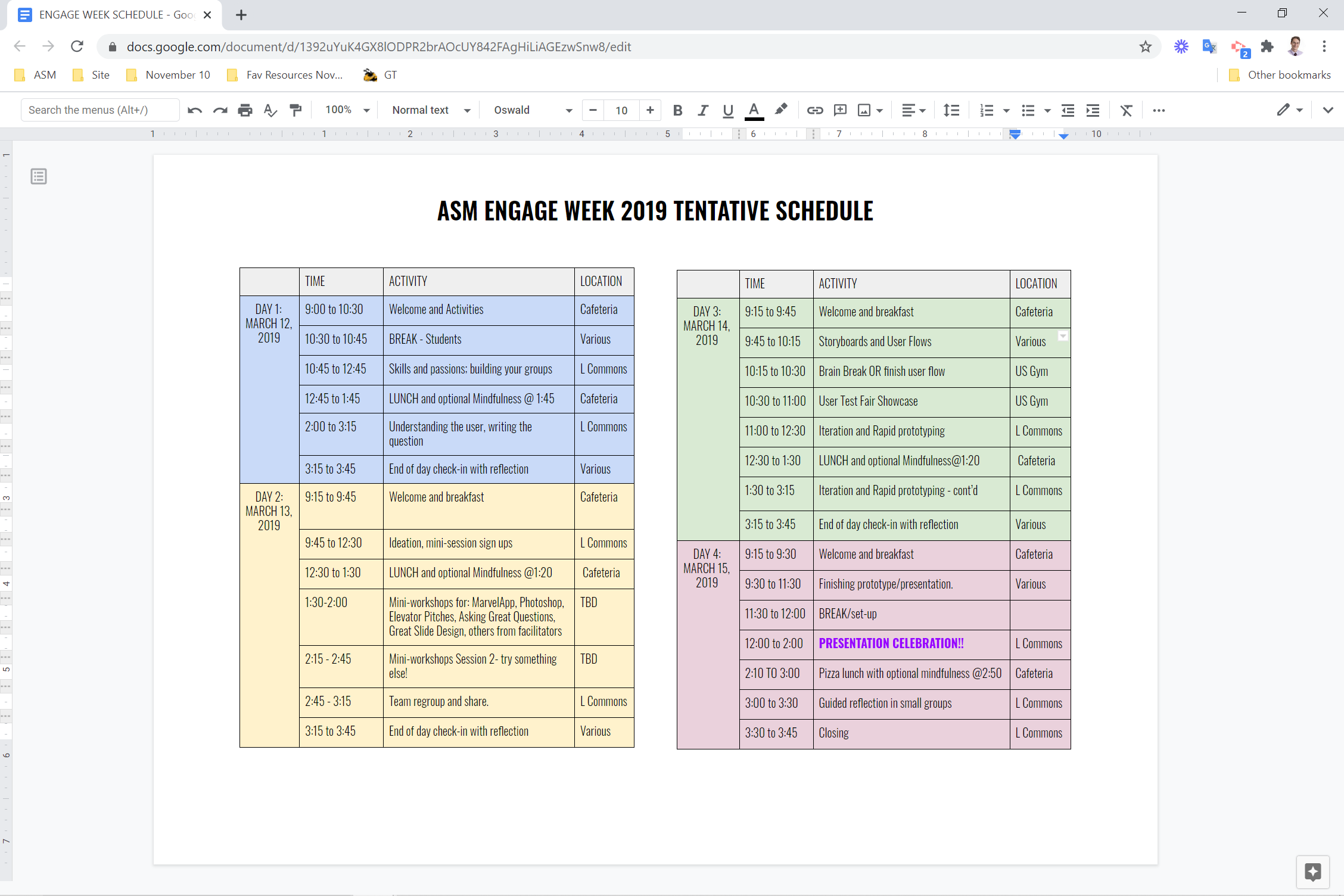
With the our project charter (objective and important features) as anchor points, and our research on other projects, we developed a tentative schedule.
Tentative schedule
In addition to designing the experience, managing logistics, and branding the event, I also ran mini-workshop sessions. I talked about my work as a User Experience Designer and what that looks like in a variety of contexts—from events to interfaces. Then, I worked with students to see what deliverables made sense for their project. How could they leverage UX?
Deliver
We transformed a week of school from study hall, physics, and history to open-ended explorations of skills, passions, and design thinking. Plus mindfulness, yoga, and snacks. It felt right.
Students leaned heavily on each other for feedback. Facilitators played co-creator roles.
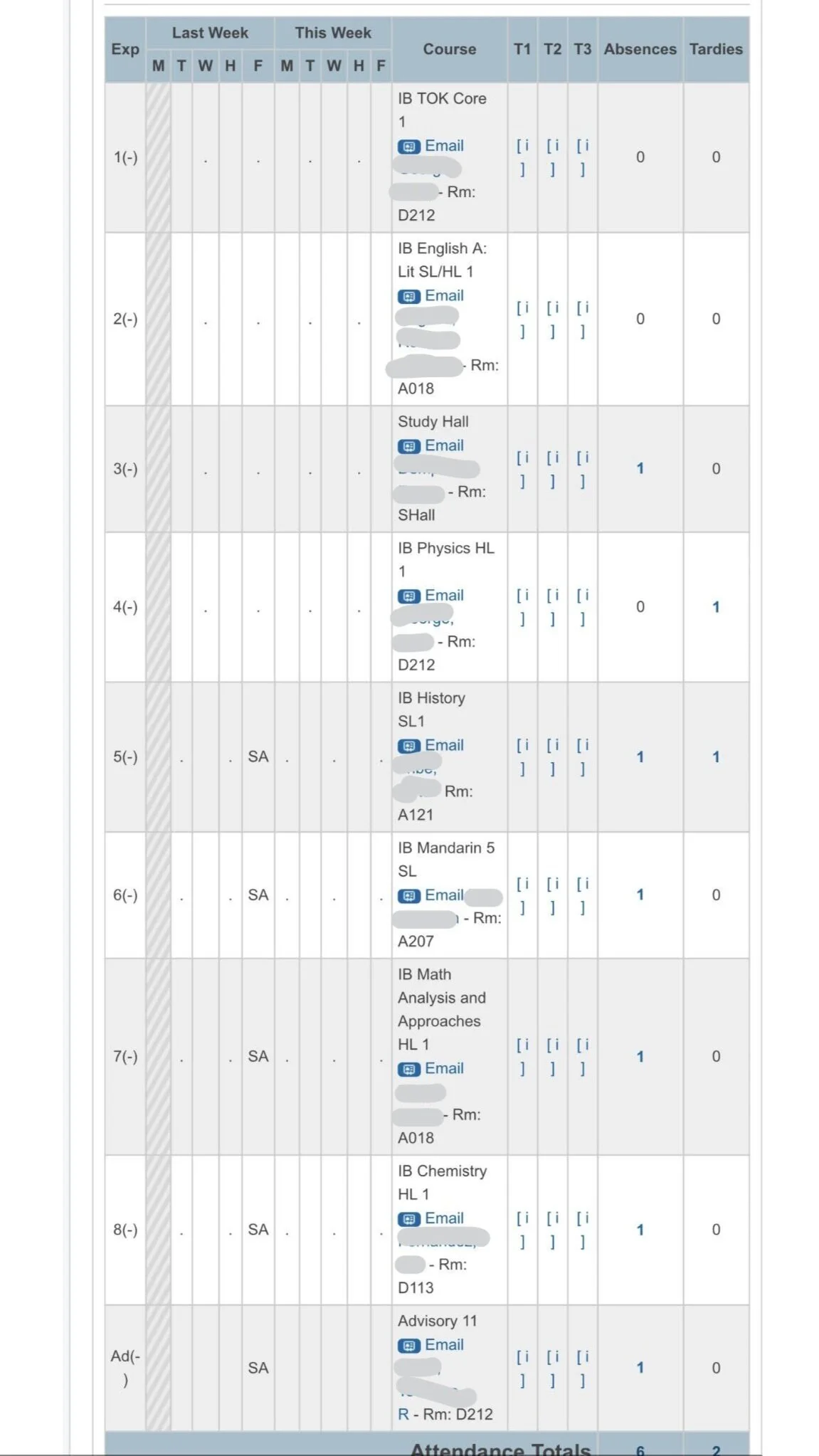
A typical schedule
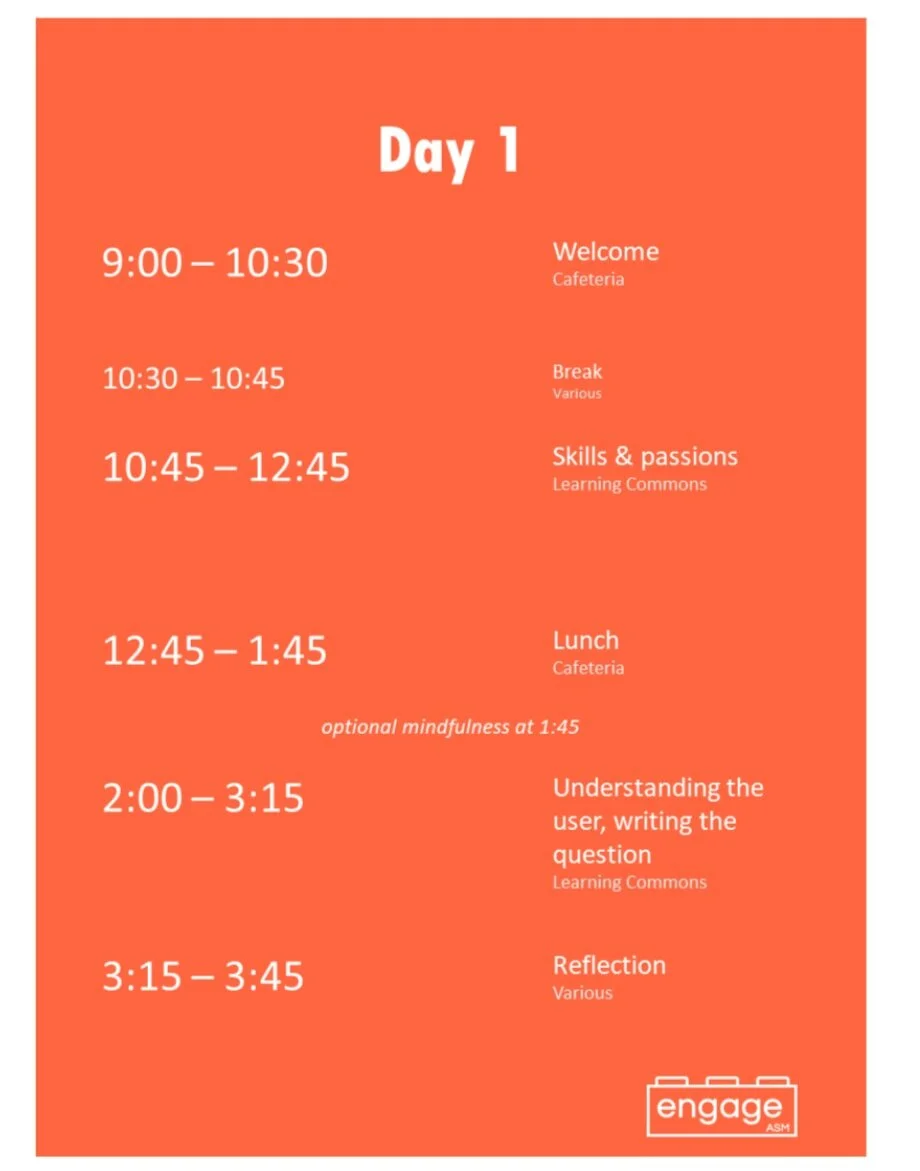
Day 1 of Engage
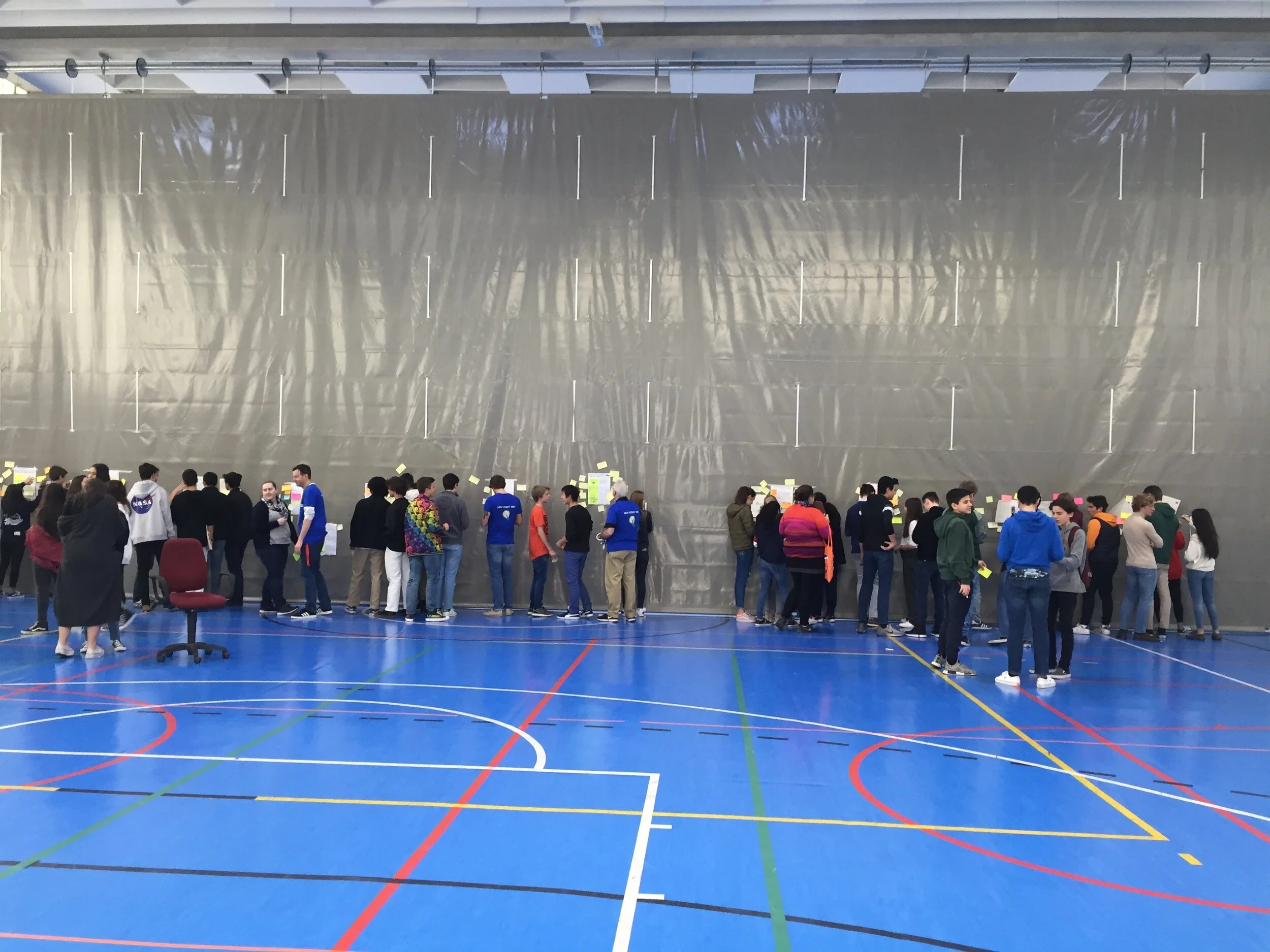
Participants leave critiques on storyboards
Quotes
Here’s what participants said.
“I think that the first day, discovering your passions and skills was really powerful. This is because it made me learn a lot about myself, and I saw how helpful the techniques used were.”
“When we were doing the presentations, I felt like many of the presentations were very powerful and shed light on some very important topics.”
“The most powerful learning moments were those in which the students were given responsibility. The students did not abuse this responsibility but used it wisely to get the prototype ready for showing.”
“I think having the students working on real life problems is vitally important to their learning. I would love to integrate this into my classroom.”
“My supervisor from the states was incredibly impressed with engage week as a whole. She was asking me how I could make this happen back in the states and what I could be doing to pursue inquiry based learning more in the classrooms.”
“I saw students get frustrated with, and then later adapt to, the iterative process. Seeing students take the critiques seriously showed me that we were doing something right.”
Video recap
Just to get an idea of the vibe.
Want more?
For more information about how we tackled challenges, organized teams, trained facilitators, designed the programs, branding, and reflections, visit my oportfolio hosted on github.
To see how we managed the event in covid times, check out the 2020 event site.