Center for Academic Innovation
We doubled the capacity of a design studio that took off during the pandemic.
Methods
Contextual inquiry
Semi-structured interviews
Thematic content analysis
Workflow models
Workshops
Outcomes
Increased capacity of the design studio
Successful buy-in from stakeholders
Reduced time in operations
Improved the experience for student residents
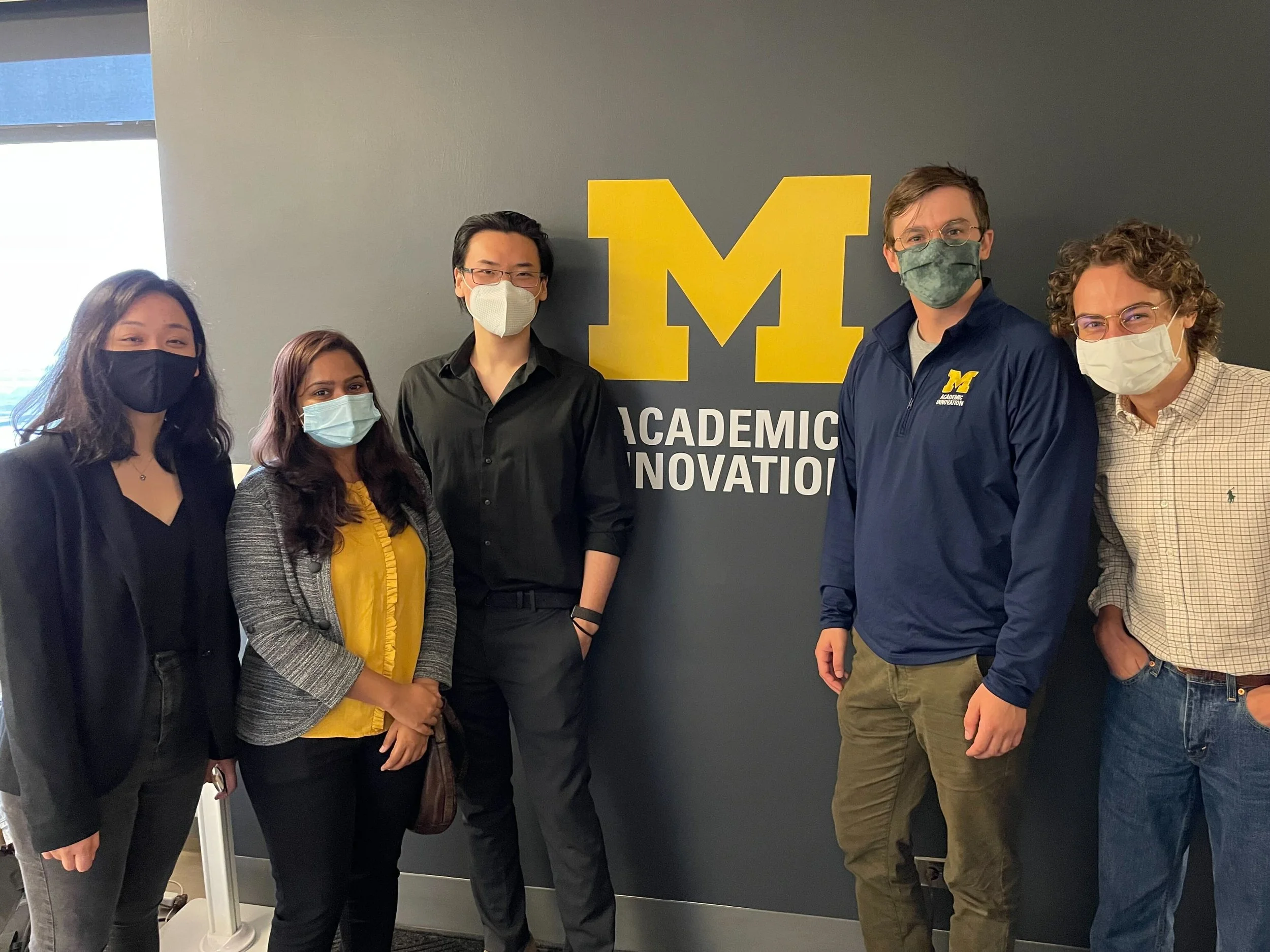
Our team with the client.
Discovery
To start, we did some purpose-setting exercises as a team.
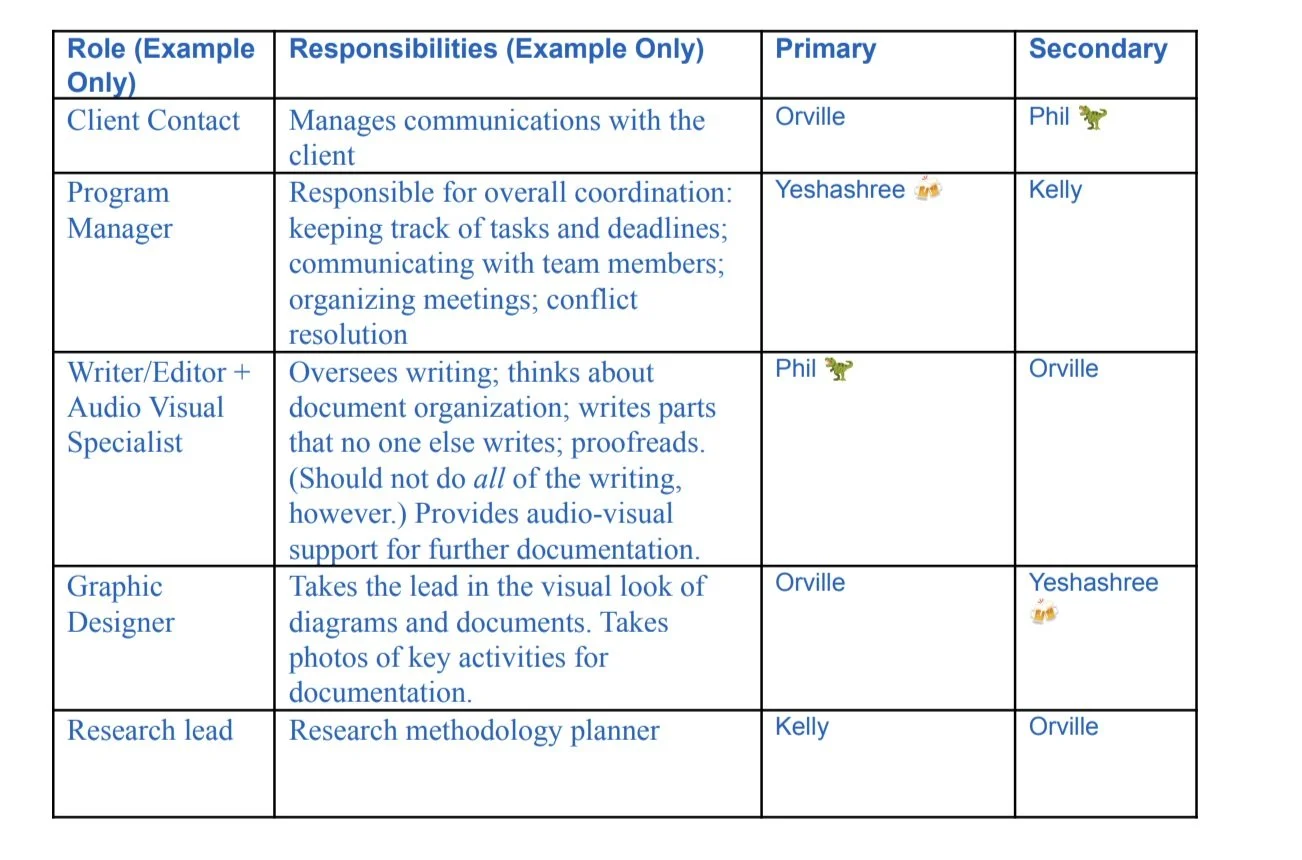
Team planning sharedxdoc
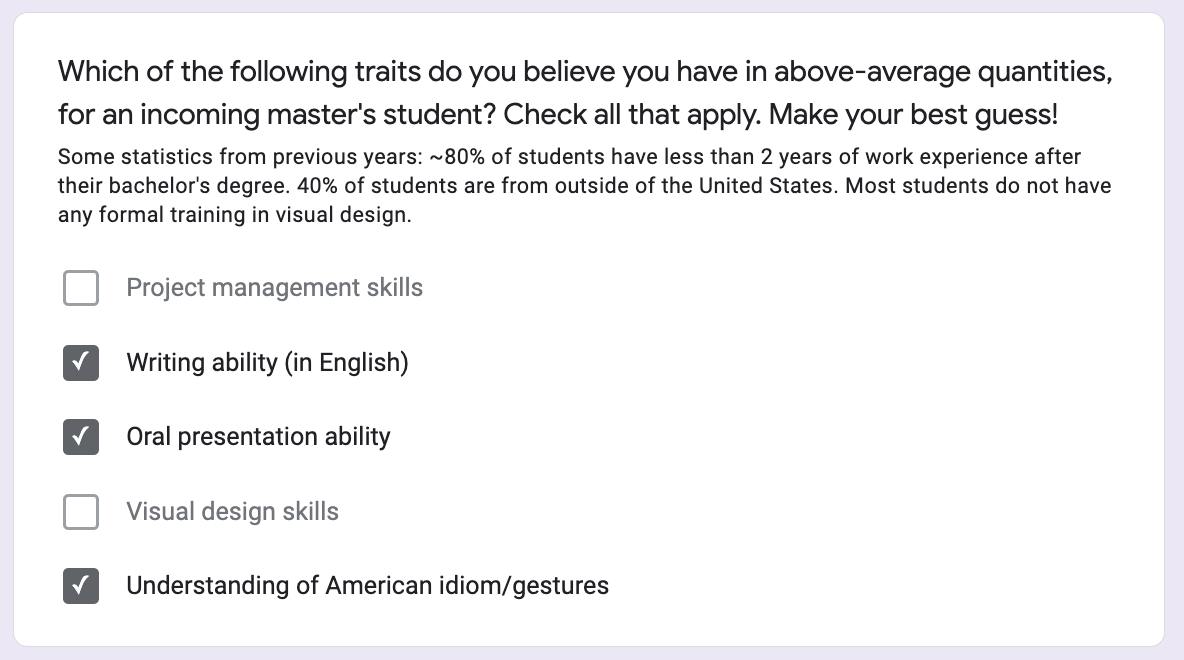
Work preferences survey
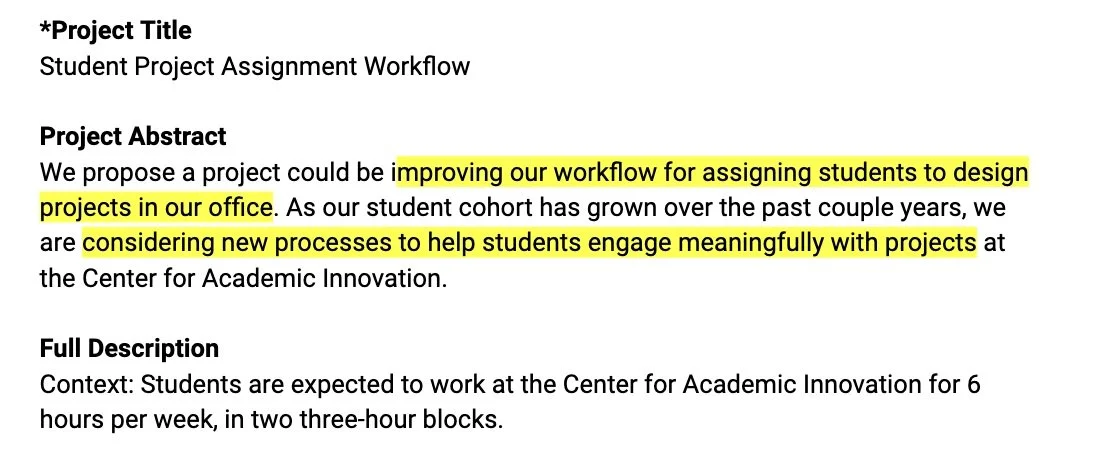
Client project description
The team ✌🏼
We had a diverse set of backgrounds: teaching, visual art, psychology, and programming.
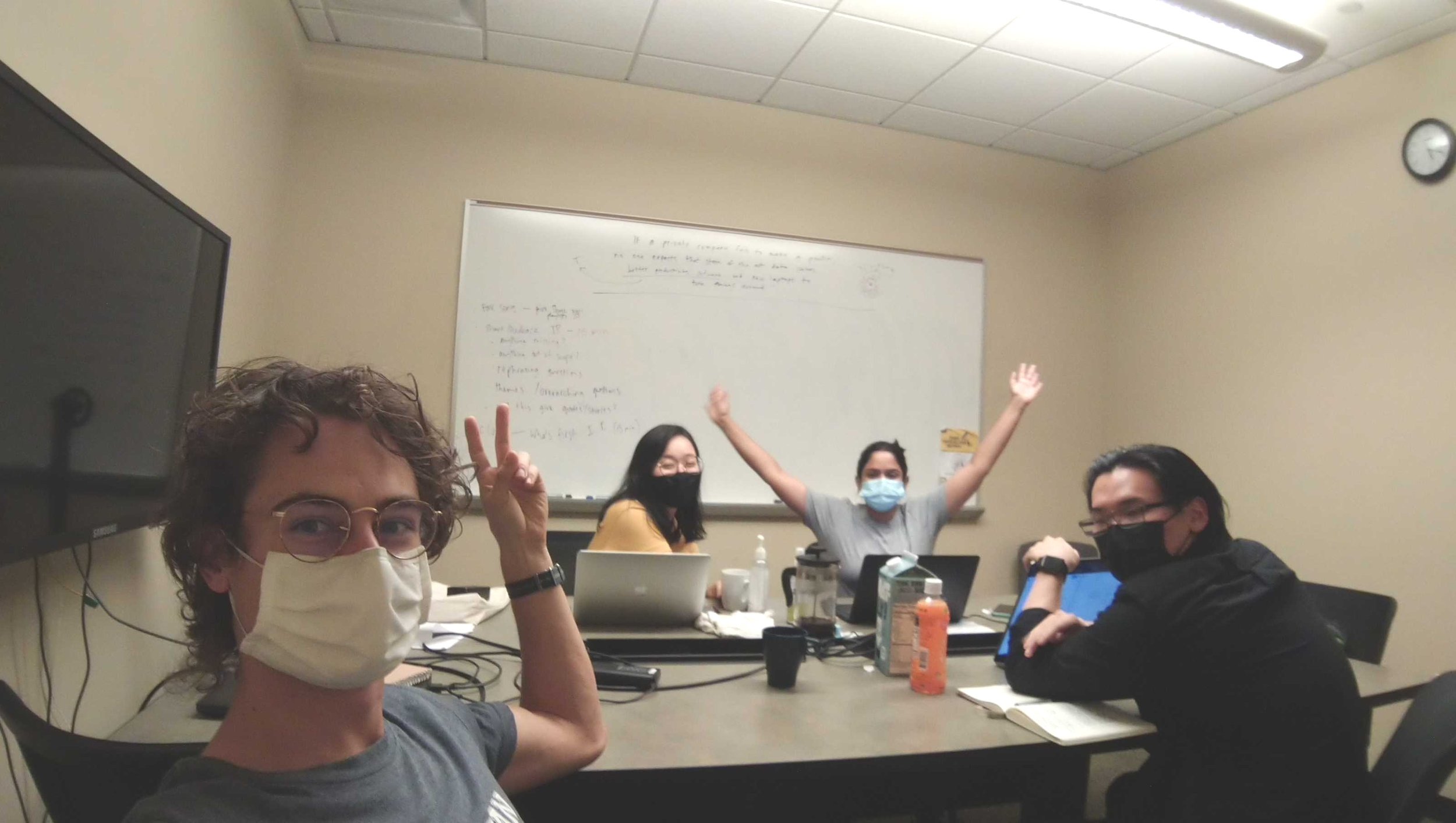
An early meeting.
Stakeholder management
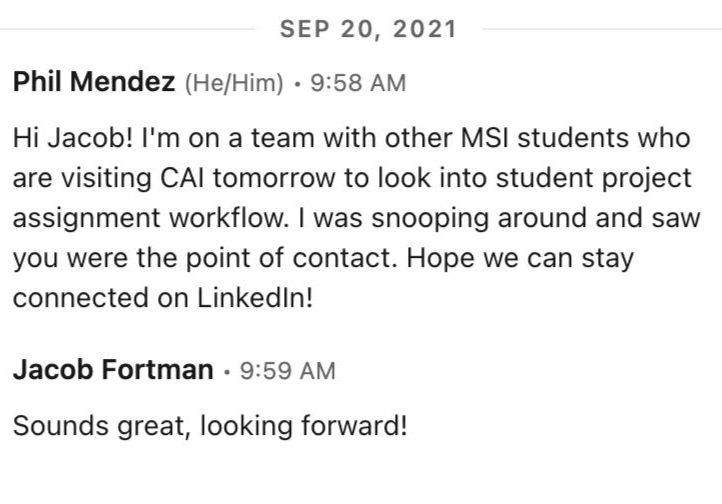
to the client
Connecting
Before meeting, I shared my enthusiasm for the project with our stakeholders. Building that relationship is important.
Initial client meeting
This was a chance for us to ask clarifying questions.
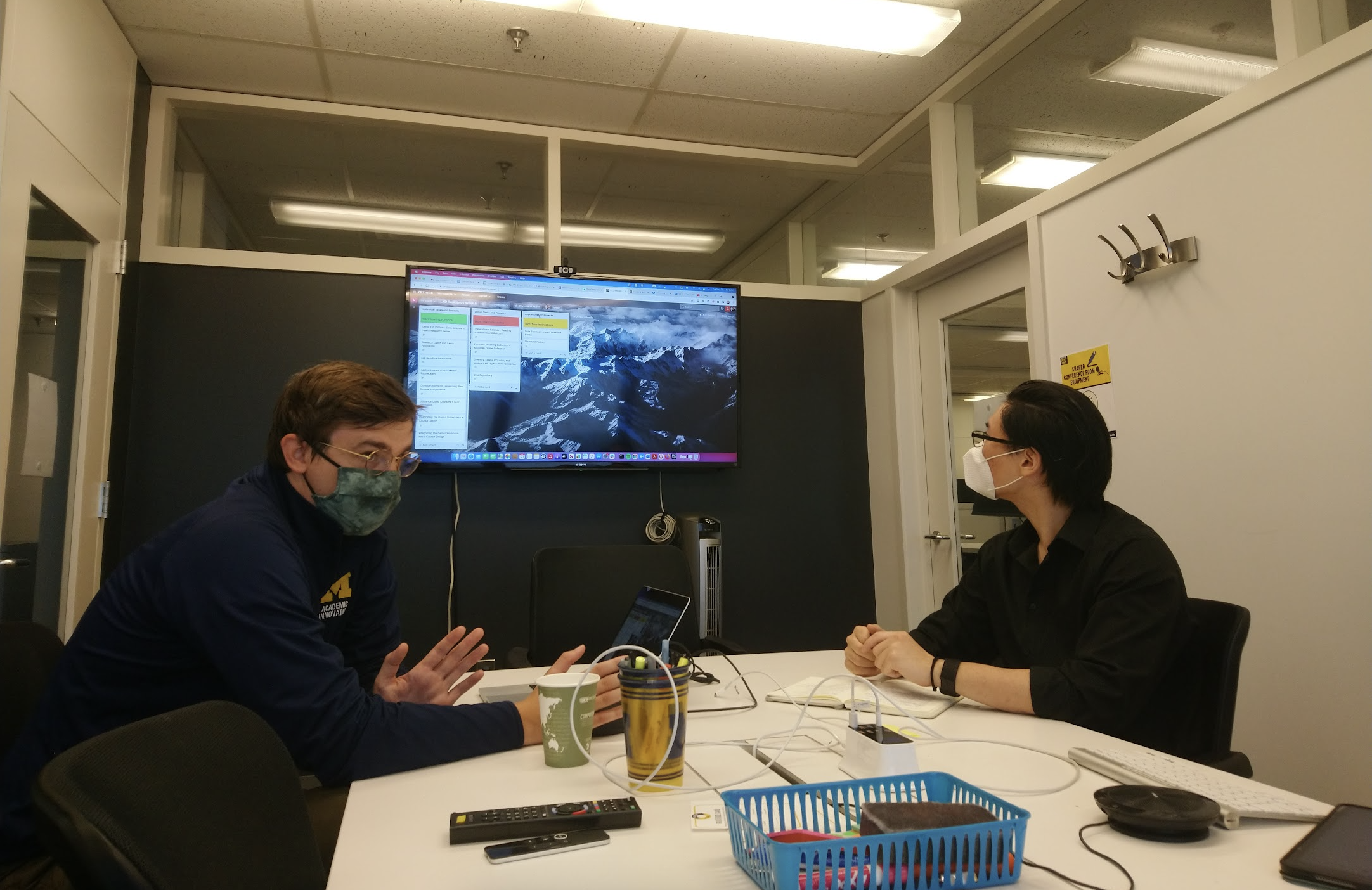
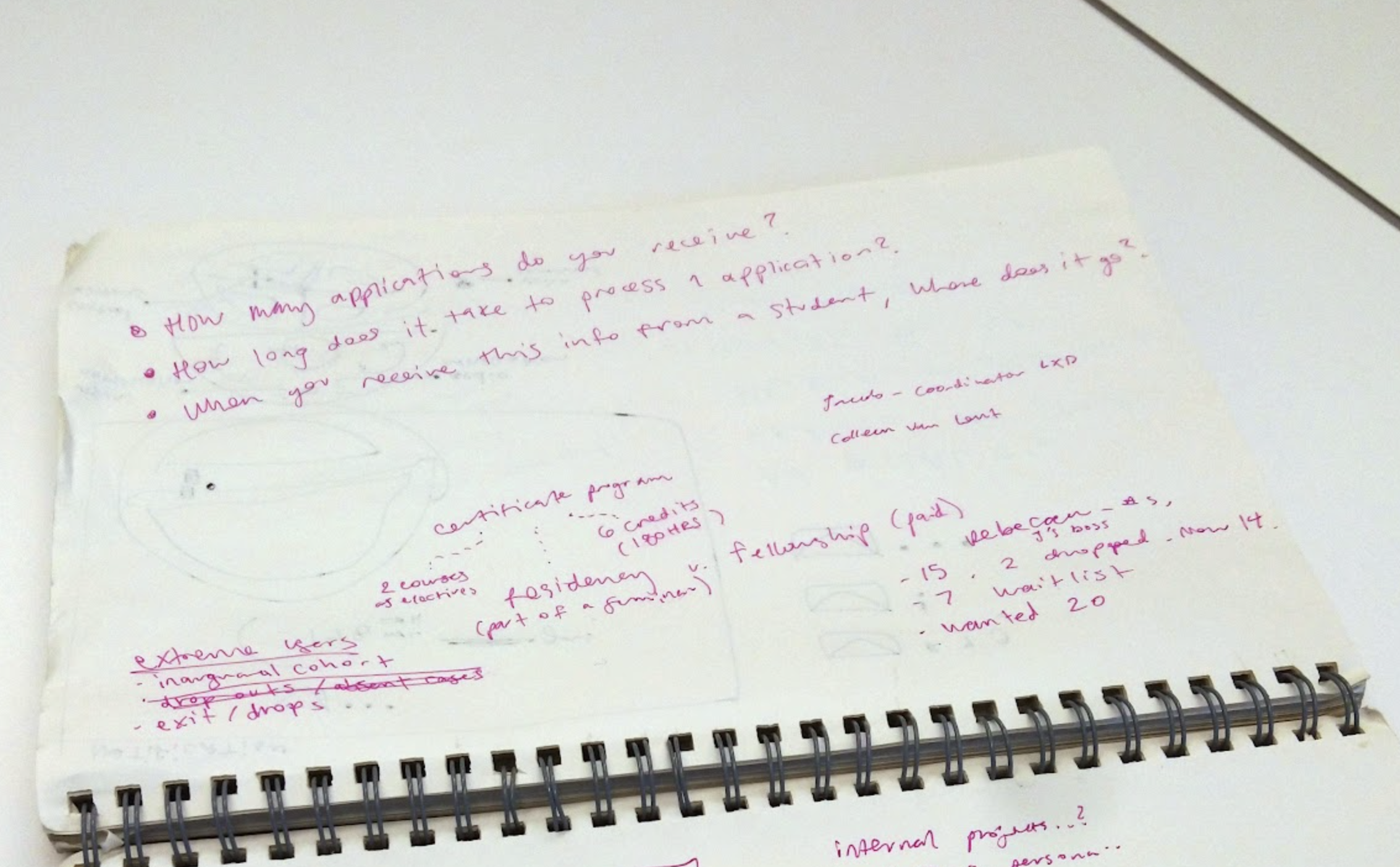
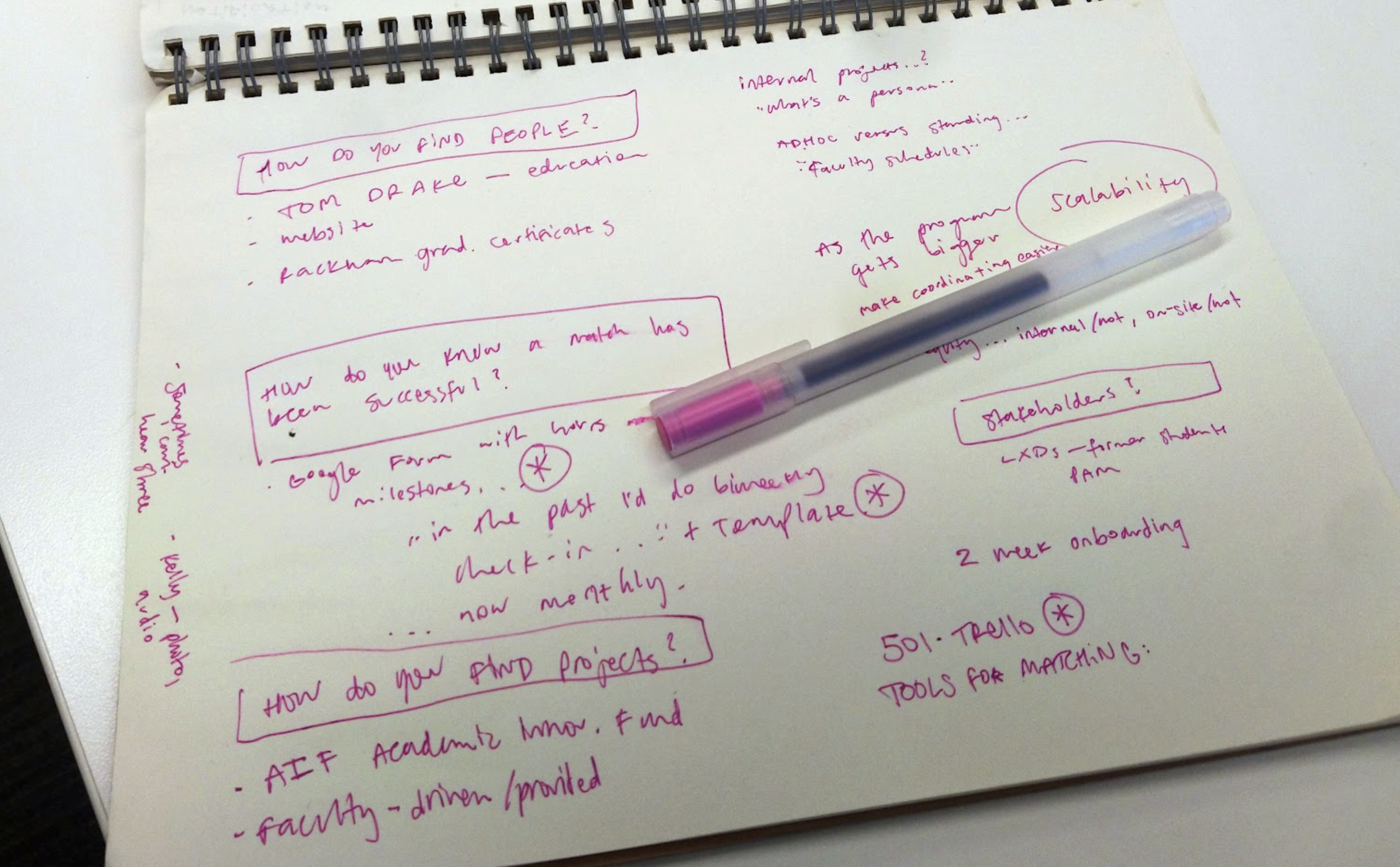
To prep, we made a list of questions and goals. These were pretty general. For example,
Tell me about your role.
What does the workflow look like?
Building trust 🙏🏼
I also suggested to the team we leave a 1-page-handout about us (our strengths, backgrounds, and research plans). Sometimes an old-fashioned printed paper is better than email. That client appreciated the thoughtful gesture.
Getting more information 🔎
We asked for further documentation in a follow-up email.
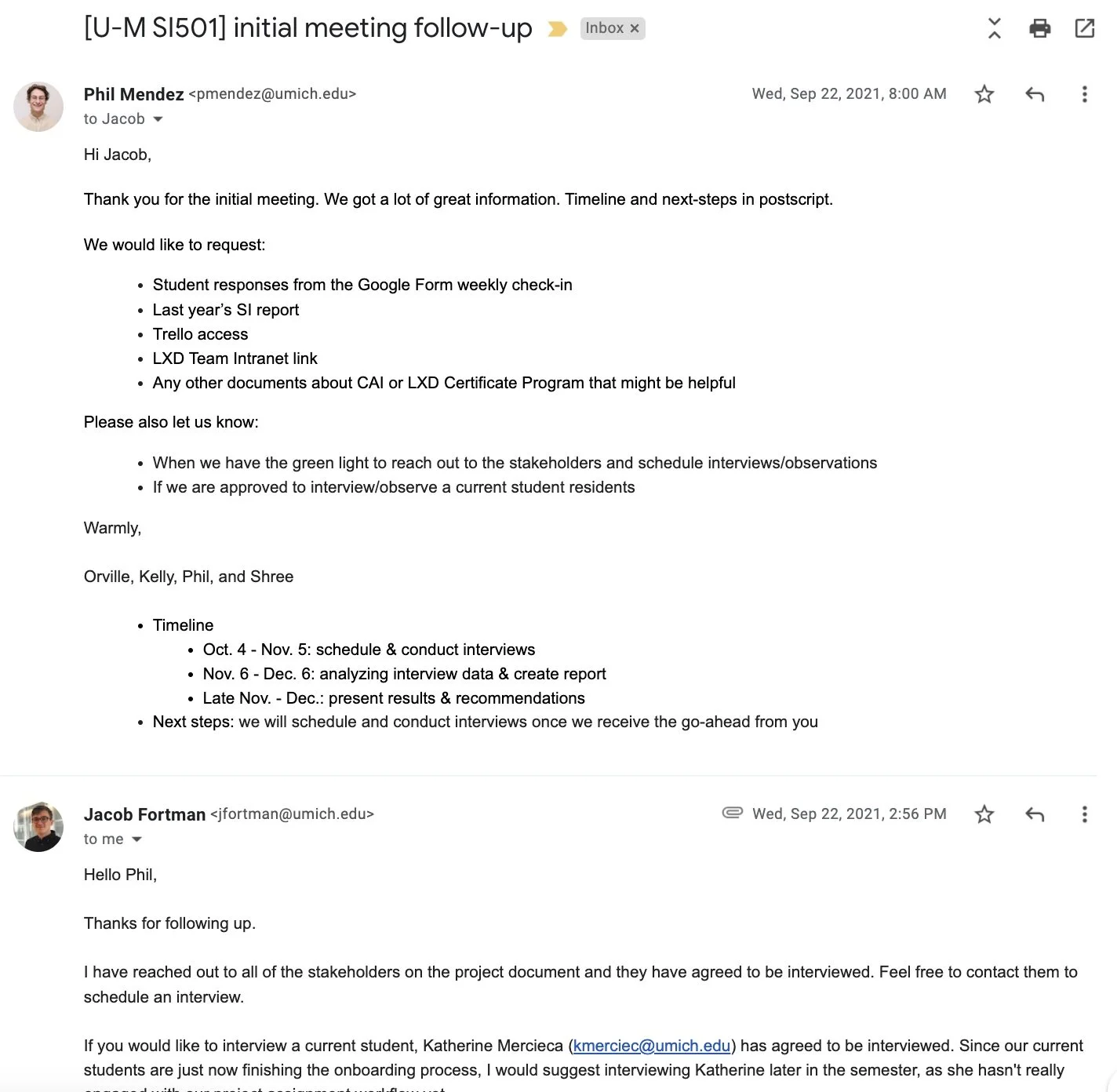
Celebrating small and early wins 🎉
Shree and I gave each other a virtual high five after the initial client meeting.
Interviews
Research question ❓
We had this question, “how can we improve workflow at CAI?” We had some ideas, but we still had a lot to learn.
Selection criteria 🧪
Our selection criteria for interviews included stakeholders from three different areas:
Student Residents in the certificate program
Learning Experience Designers (LXDs)
Leadership
Though we didn’t initially have a Student Resident participant, we later got one. We noted the importance of including Student Residents in future research.
Interview protocol 💻
For each of stakeholder type, we wrote an interview protocol with necessary preamble (“can we record?”), research goals, overarching questions, contextual questions, and probing questions.
Recruiting participants 🔭
We didn’t have to worry about recruiting. Our client gave us names and emails and we reached out for scheduling.
Having done this a few different ways, I think…
The benefit of the client doing the recruiting is they know their audience. They know who will be “good to talk to” (open, friendly, opinionated).
The drawback is sampling biases. It was our task as researchers is to be aware of and disclose these to the client in the written report.
Just how selective to get on sampling depends on the goals and constraints of the project.
Conducting interviews 🎤
I was first to interview an LXD named Jacob. Our notetaker was Shree.
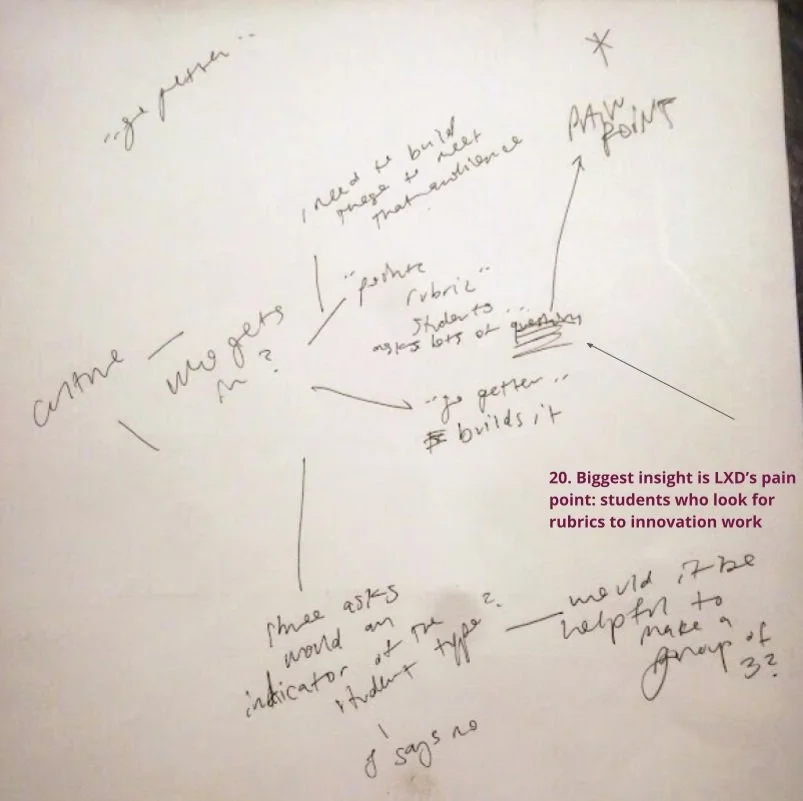
Even though we rehearsed the interview protocol several times, the questions we wrote bombed. LXDs didn’t have much to say about project management or workflows. But they did have things to say about working with students.
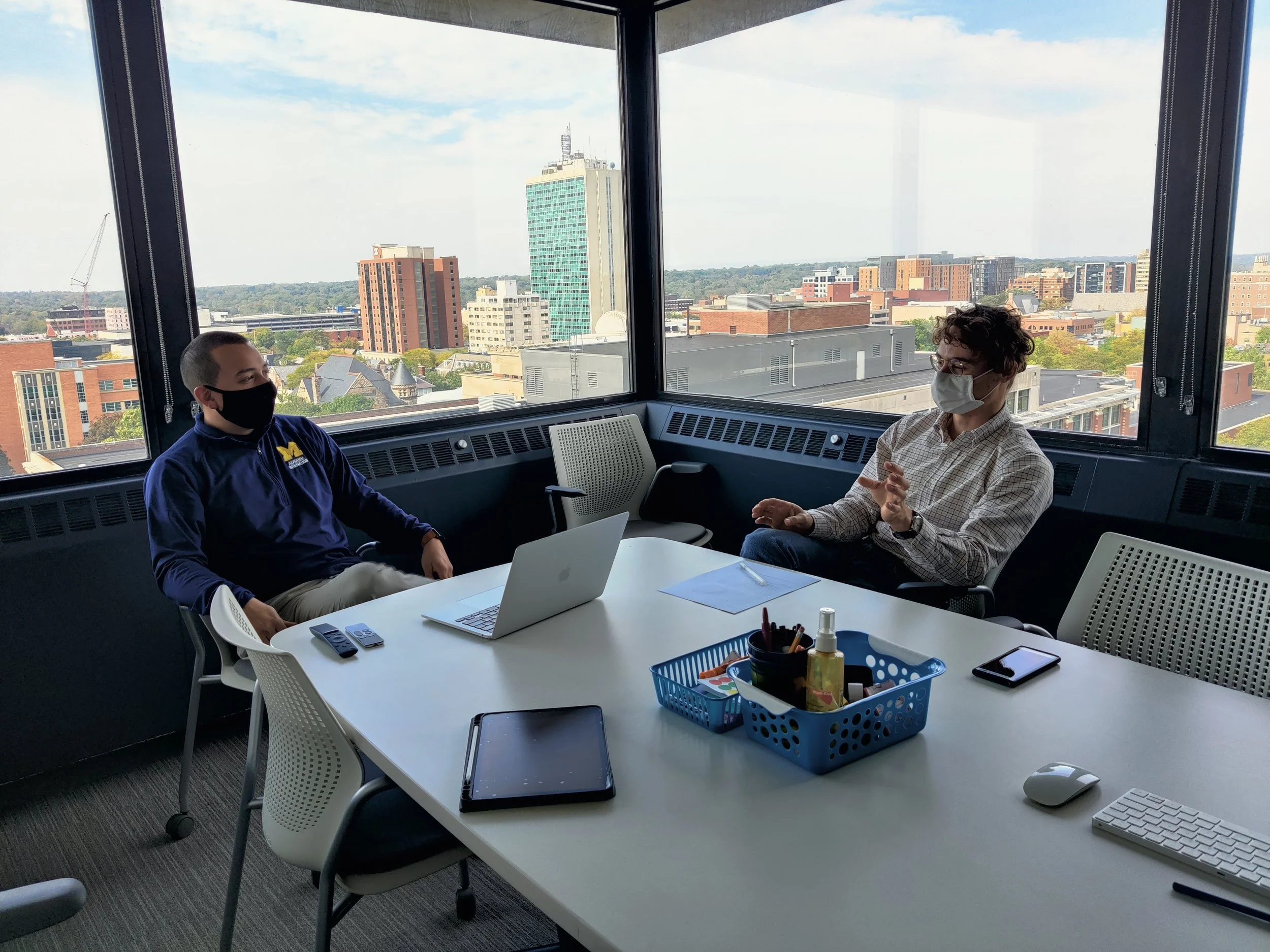
Warming up with an LXD in a conference room
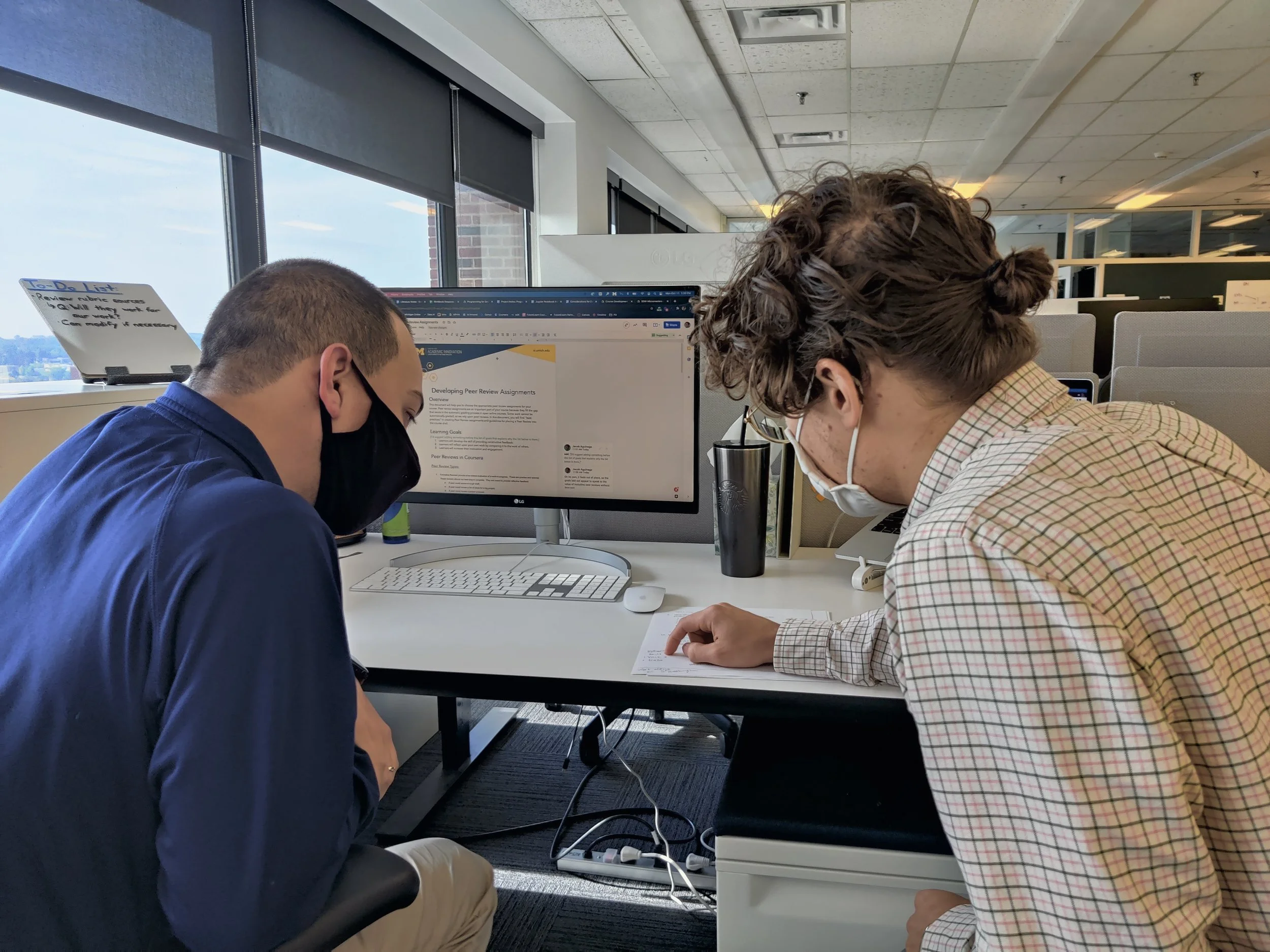
Sitting with an LXD at their desk looking at a document
Thinking off the cuff 👏🏼
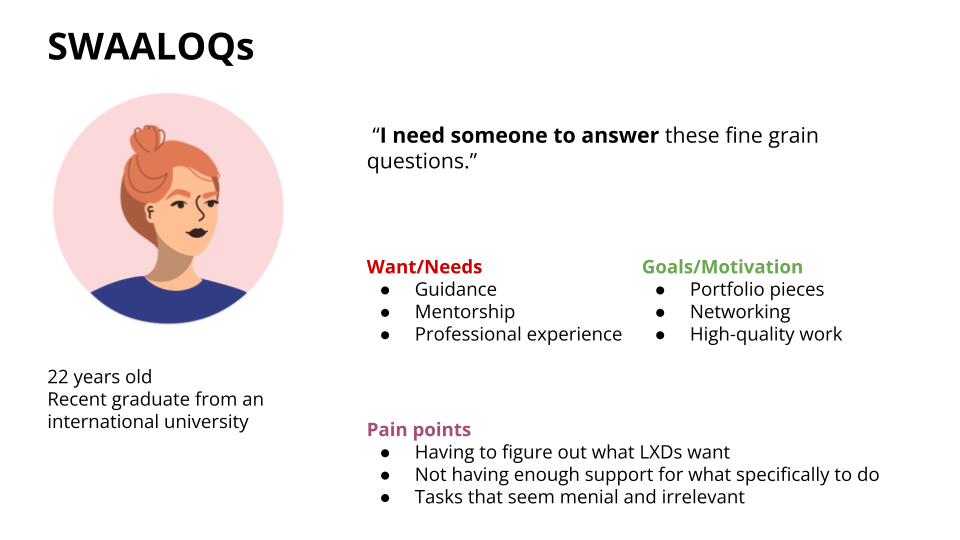
I had to pivot and go off-script. I asked things LXDs knew about, like, “who was the last student you worked with, can you tell me about that?” We got wonderful insights.
This, in fact, led to one of our client’s favorite recommendations: two “student resident personas” that would allow LXDs to tailor meaningful experiences based on students’ unique needs and profile, even as CAI continues to scale.

Revising the interview protocol 📝
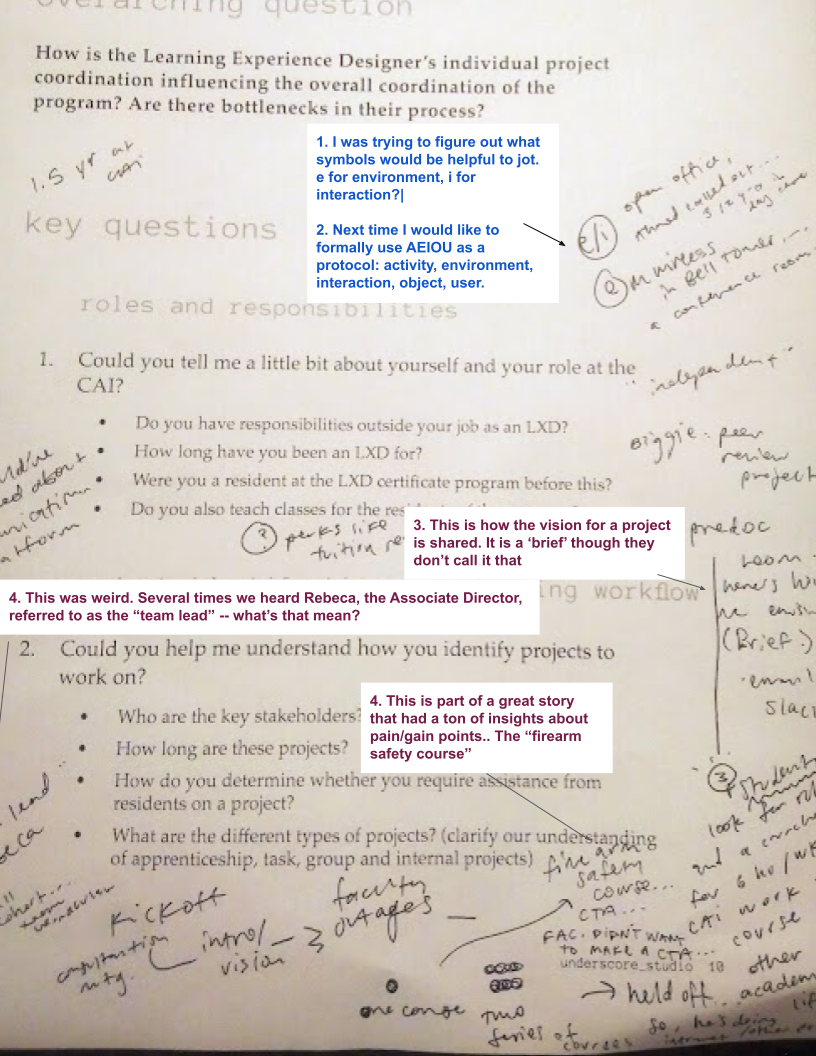
Here, you can see part of my annotated interview notes, as I was thinking through the content (purple) and mechanics (blue) of the notes I took.
Other interviews
I also interviewed the Associate Director (leadership) and was the notetaker for interviews with an Accessibility Specialist (LXD) and a Student Resident.
Area of growth
As a notetaker, I used to write down every little thing the interviewee said. I’m getting better at being selective and thinking as I’m notetaking. I ask better follow-up questions. I gather better data.
Define
Analyzing the data 📑
I love thematic content analysis. Honestly, I can’t believe I get to do this.
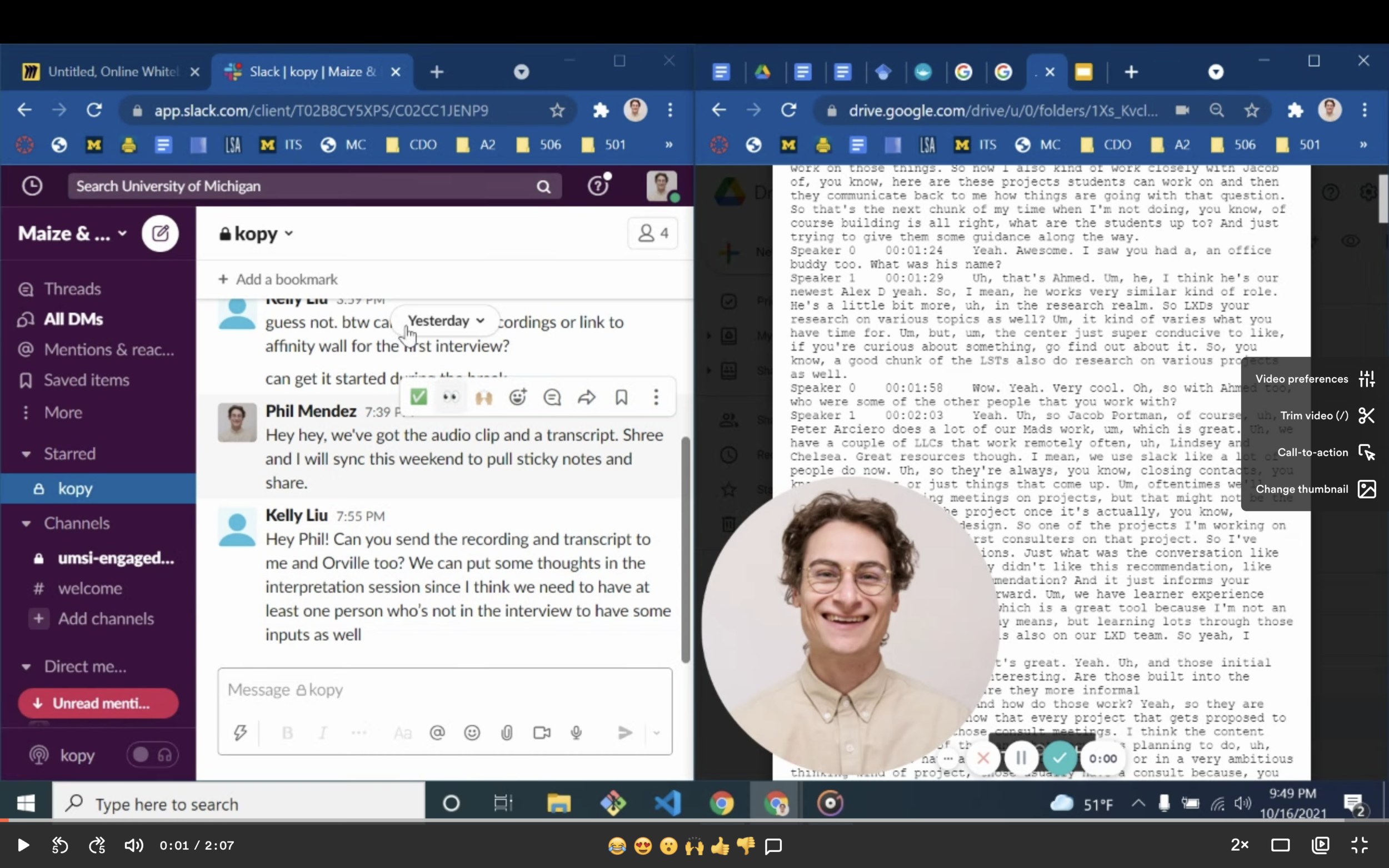
Once the interviews were transcribed and we aligned on our method, we met several times as a full-team to breakdown the data.
We produced and read transcripts of interviews
We listened to the audio recordings
We paused occasionally to discuss
We entered notes into a spreadsheet: direct quotes, questions, comments, insights
Solving a problem we didn’t expect ⏰
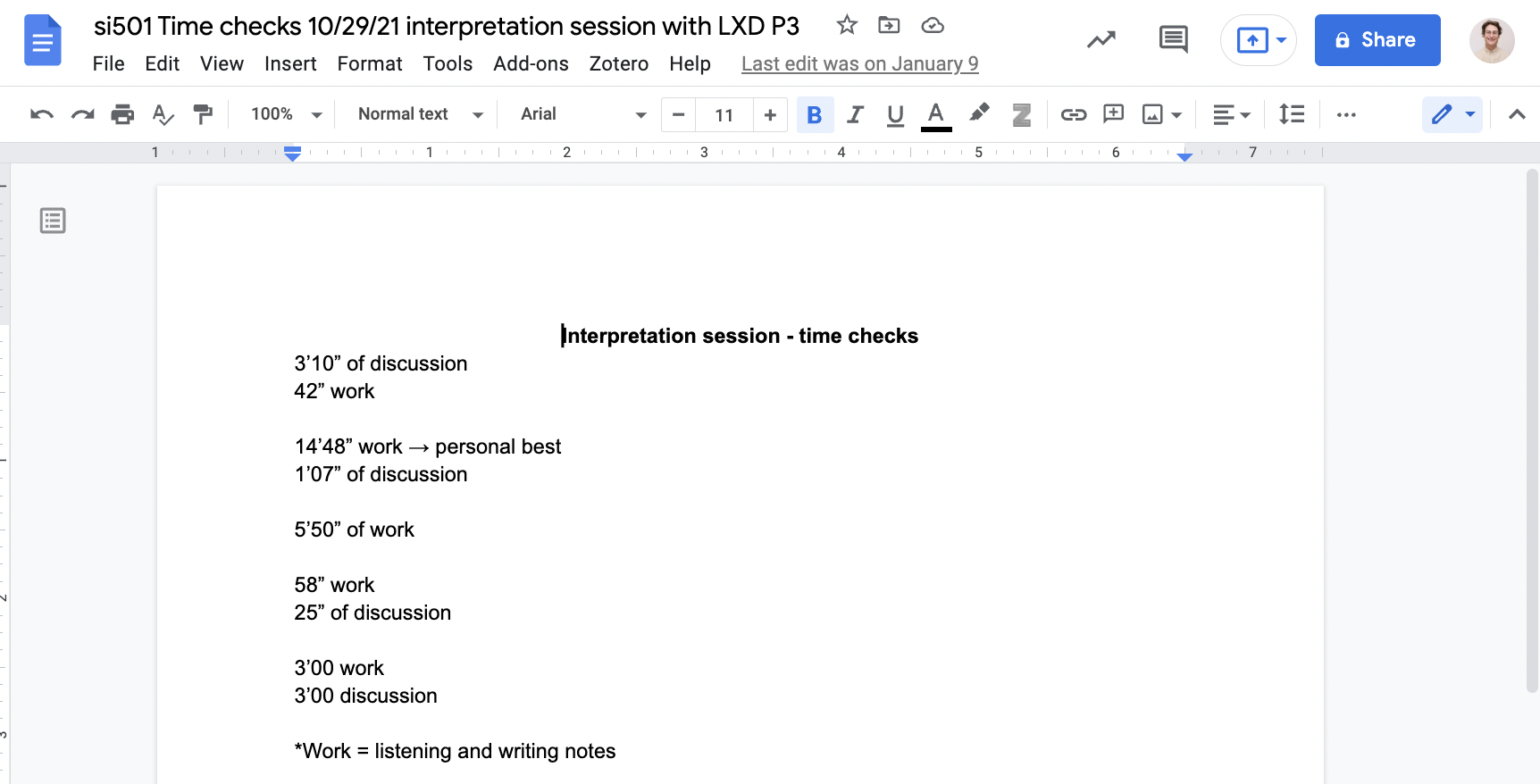
It was taking us days to break down one interview recording into affinity notes. For every three minutes of discussion, we got about 1 minute into the recording. It was taking us three times as long as was recommended by our senior research manager. I used a stopwatch to track our times, and this helped us meet the deadline.
Clustering data in Miro ✨
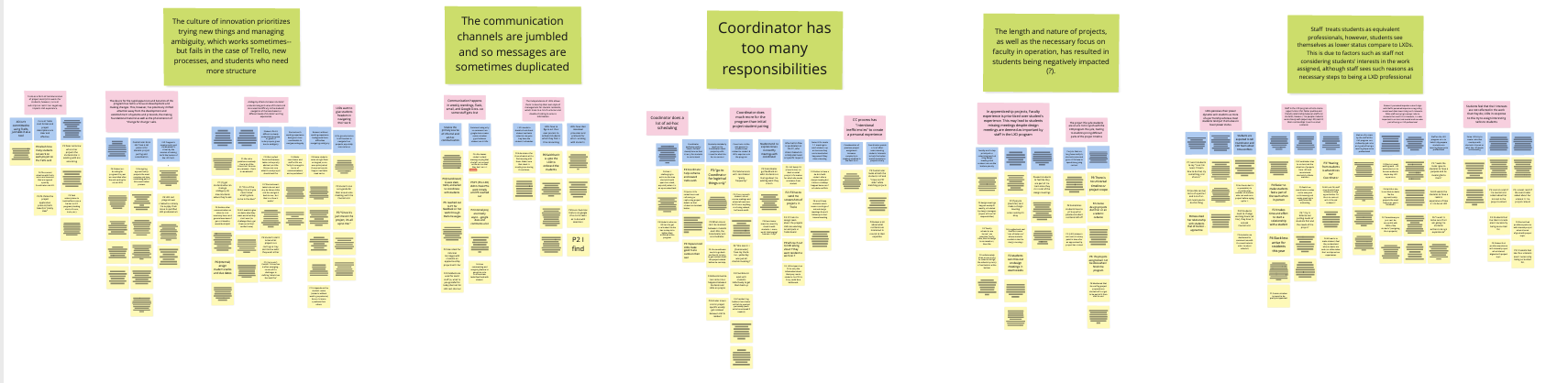
Once we had good data in excel, we transferred it into Miro to build an Affinity Wall.
We randomized all of our notes
We independently explored
We started forming group
We discussed as a team off and on again
Slowly, we started to form clusters with “lone wolves” and “families”
This KJ Method process is described by Raymond Scupin as 1) label making, 2) label grouping, 3) chart making and 4) writing of explanations.
Building an affinity wall
We built an affinity wall, presented it to our colleagues, got feedback, and re-did the whole thing. We thought we could do better, so we made a Version 2. It was exhausting. Looking back, well worth it.
Develop
Building solutions
We developed a rubric to evaluate 50 solutions for two problems:
P3 needs to increase his capacity (i.e., give him less stuff or make stuff more efficient)
Students need more support (i.e., professional development, clear expectations, structuring meetings with LXDs)

Working in the dark
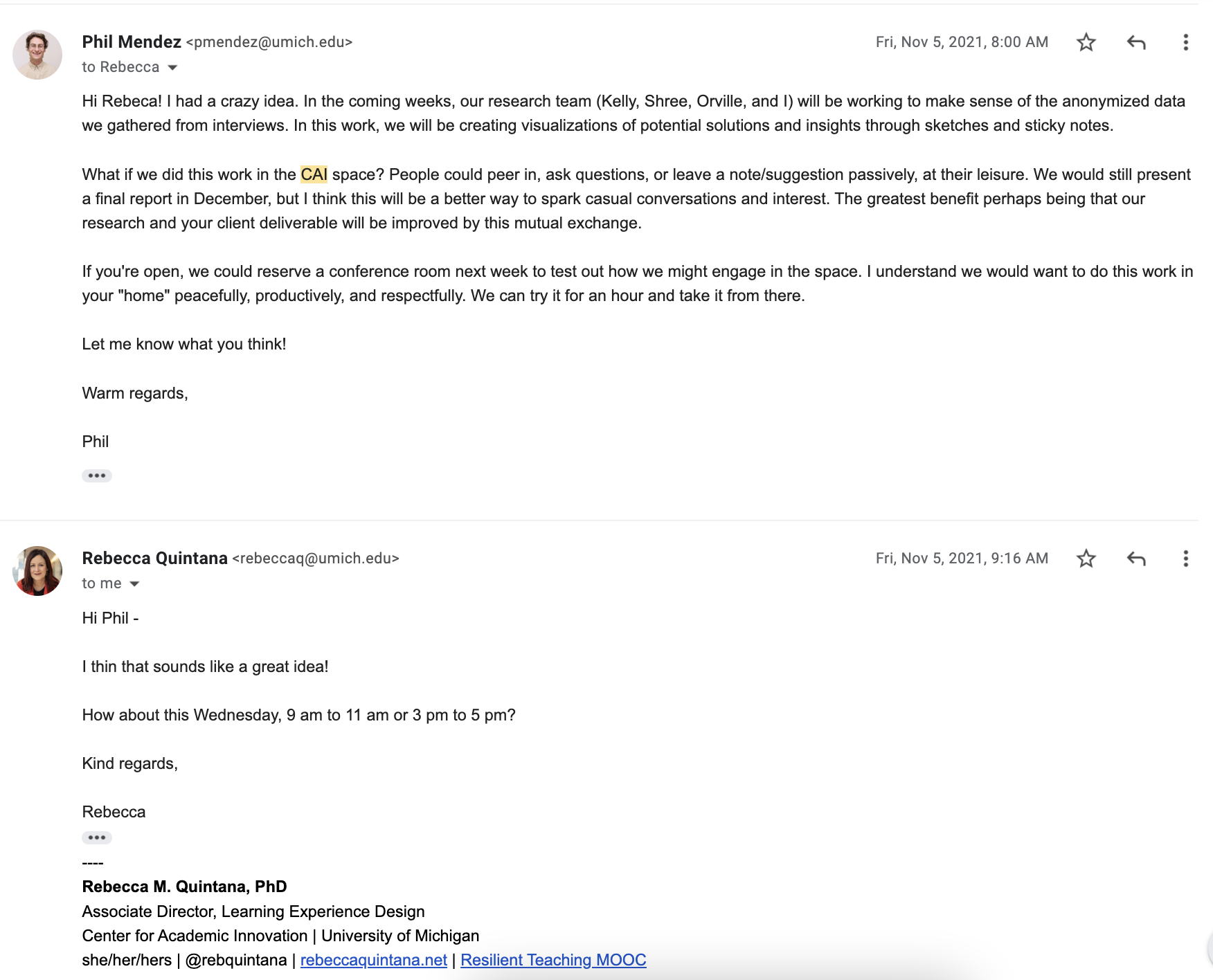
We were sitting on a ton of insights. We thought we knew what would work best, but we were “working in the dark.” I didn’t want our research to happen alone in a silo, so I decided to reach out to our contact to see if we could get feedback.
The Associate Director approving our request to run an open workshop.
Open workshop
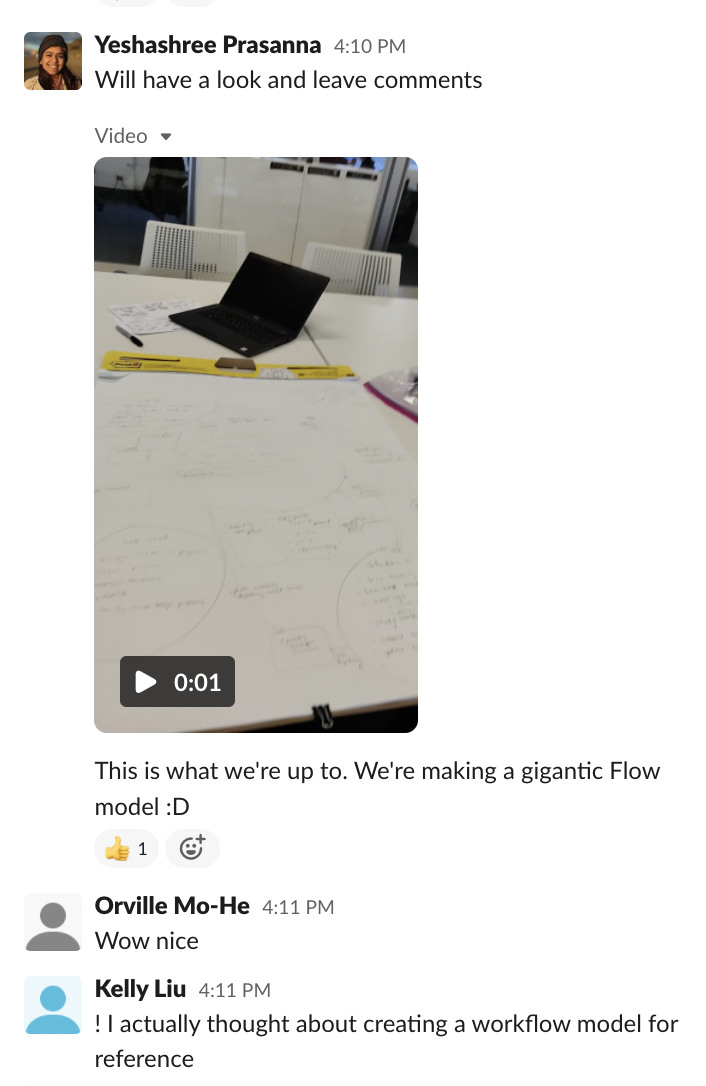
We pressure-tested our concepts in an open workshop. We included an interactive co-design element. We had 3 people stop in and leave comments and suggestions. One was the Associate Director of the program. This was very helpful in getting buy-in.
Shree and I report back to the team in Slack.
Improving our models
After the workshop, we generated new models to include in our final presentation and report. The model below is part of the problems we defined earlier: (1) P3 has too much stuff, (2) students need more support.
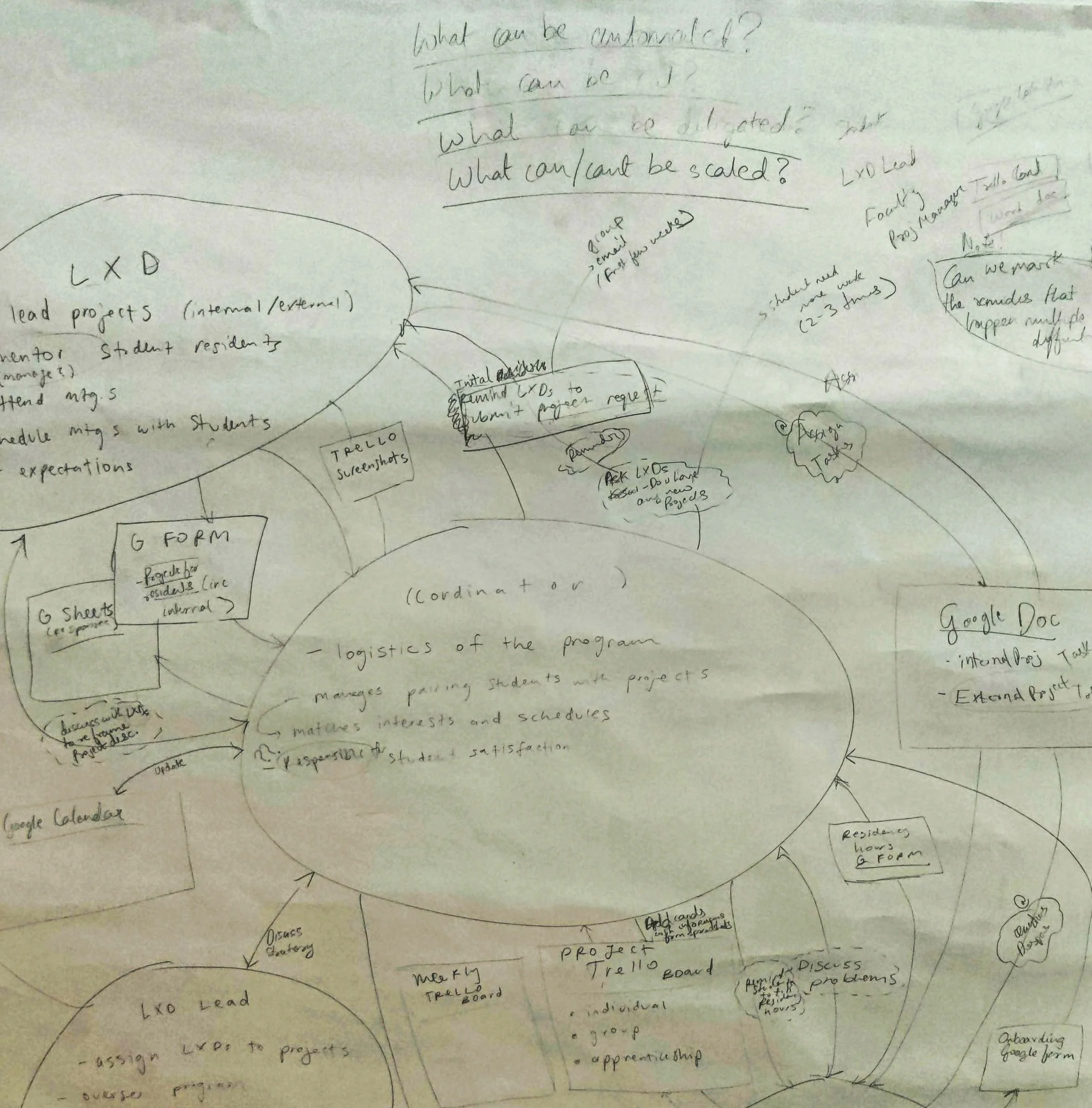
Low fidelity
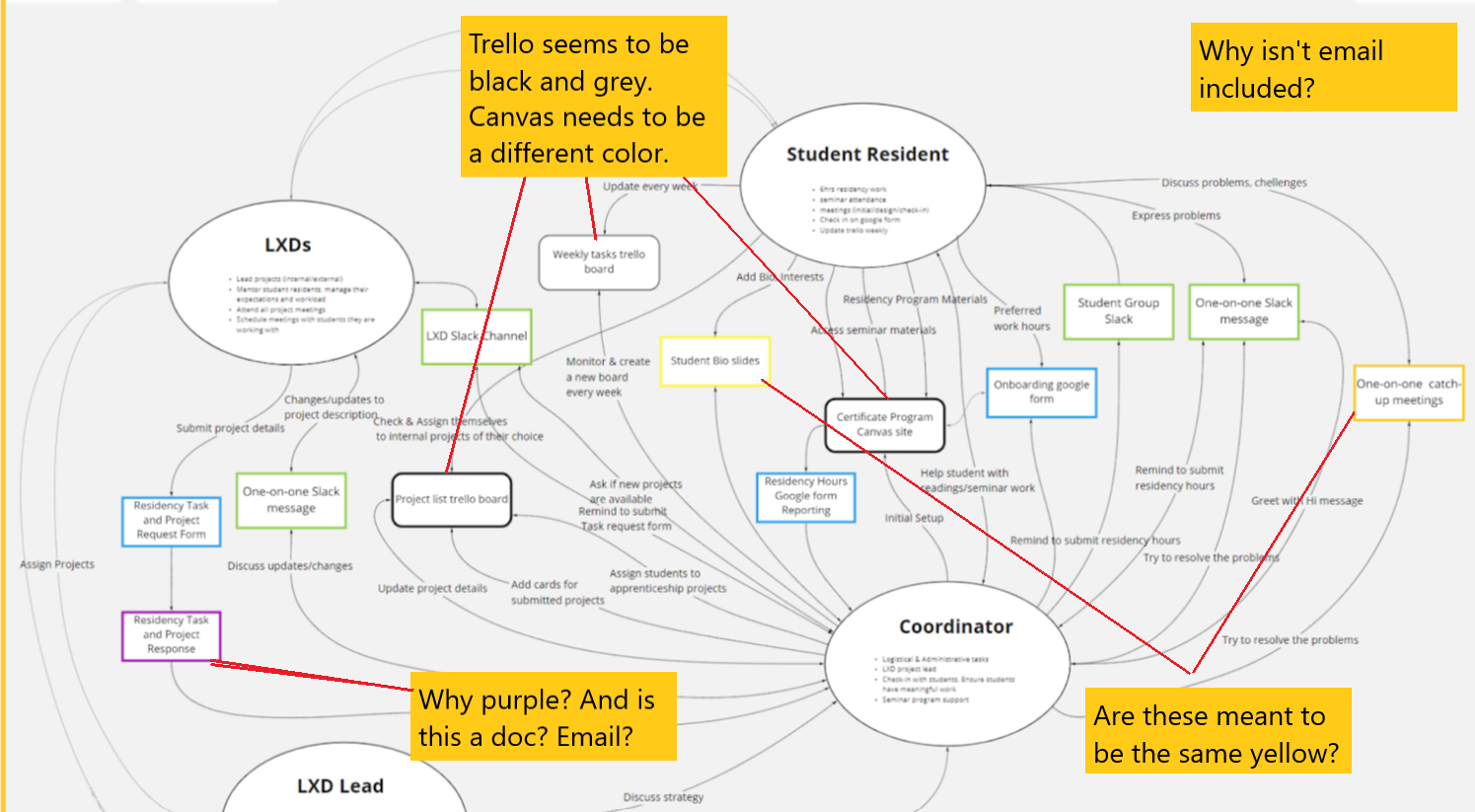
High fidelity
Last word
Our final design recommendations included a range of quick-fix and long-range solutions. For example,
Use Google Calendar to hold office hours for students to meet with mentors.
Assign students to mentors (instead of projects) to promote 1-1 support.
Delivery
What we shared
Client feedback
Here is what our client had to say:
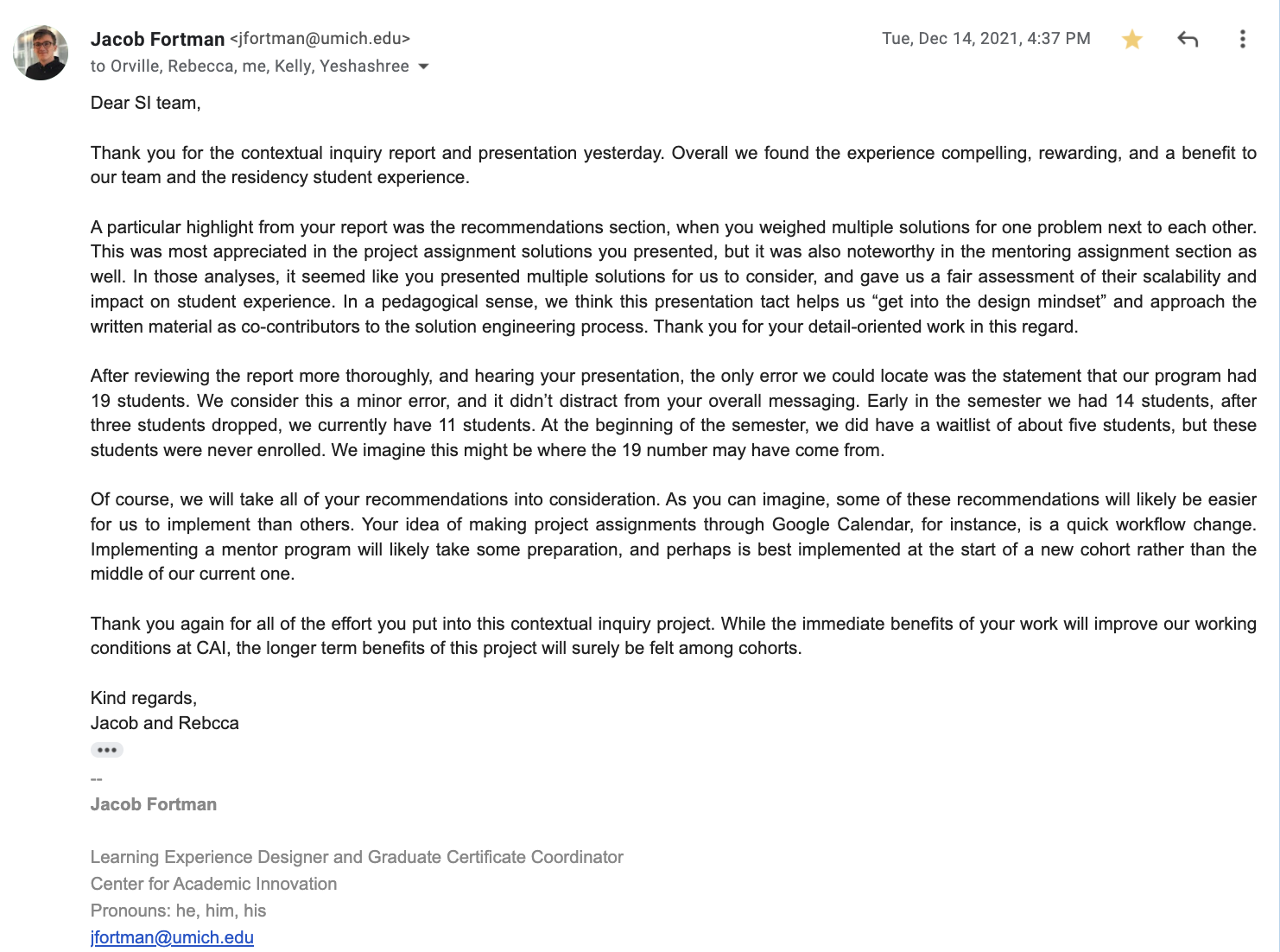
How I grew as a UX Researcher:
Building trust on a team early on is really important
It’s okay to own your strengths—everybody brings something different to the table
Working with stakeholders and looping them in on the process is invaluable
Using continuous cycles of improvement is critical to staying sharp (document, reflect, use feedback, iterate)